
← Species Repository
Giant African Millipede
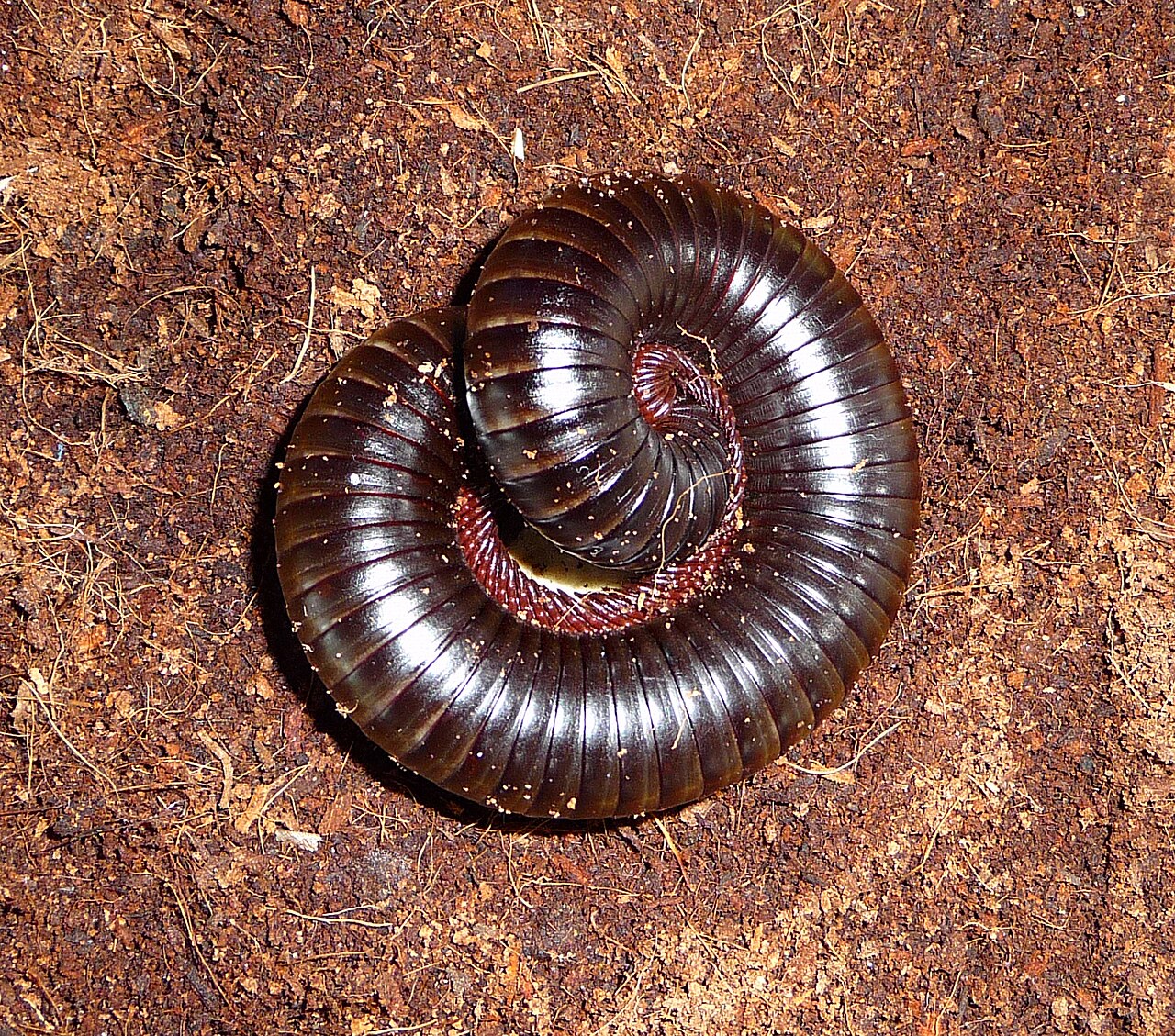
Photo: George Chernilevsky, public domain
Other Inverts
Beginner
Archispirostreptus gigas
Lifespan
7-10 years
Adult size
Body 25-33 cm
Temperament
Docile, slow, tolerates handling
Temperature
20–27°C
Humidity
70–85%
Vivarium
60 x 45 x 30 cm (1-2 adults, floor space)
Wikipedia →
From lowland forest and coastal woodland of East Africa (Mozambique to Kenya). One of the world's largest millipedes, glossy black-brown with around 250 legs and up to 33 cm long. Slow, calm and long-lived, it is a favourite display and education animal. When stressed it coils up and may release an irritating, staining fluid, so wash hands after handling and keep it away from eyes.
Care information is provided for educational purposes only and does not replace professional veterinary advice.
🔥 Heating
Keep at about 21-26 °C and avoid going below 18 °C or above 29 °C. Use a heat mat on one side wall on a thermostat to give a gradient with a cooler end.
💡 Lighting
Nocturnal and light-shy, so no UVB is needed; room light for a day/night cycle is enough.
🪨 Substrate
At least 10-15 cm of moist coco fibre, peat-free soil and rotting hardwood, topped with oak or beech leaf litter, deep enough to burrow and moult in.
🍽 Feeding
Leaf litter and rotting hardwood are the staple at all ages, with vegetables (cucumber, courgette, sweet potato, carrot) and a little fruit every few days. Always provide cuttlefish bone or crushed eggshell for calcium, and only a very small amount of protein no more than weekly.
💧 Water
Keep the substrate damp but not waterlogged, mist regularly and provide a shallow water dish with pebbles in it.
🏠 Enrichment
Cork bark, half-logs and plenty of leaf litter to burrow under and climb on.
🩺 Health Considerations
Moults happen underground and the millipede may stay buried for days or weeks, so do not dig it up. Low humidity leads to failed moults; small mites are often harmless, but heavy infestations call for a substrate change, and new arrivals should be quarantined.
🤲 Handling
Docile and can be handled briefly: scoop it up from underneath and keep it low. Not venomous, but its benzoquinone defensive secretion stains skin and can irritate eyes and mucous membranes, so wash hands afterwards.
⚖️ Legal Restrictions
No licence needed in the UK; it is not CITES-listed or a GB invasive species of special concern. As a non-native animal it must never be released (Wildlife and Countryside Act 1981, section 14). Importing giant millipedes into the USA requires permits.
📋 Additional Notes
Leg count rises with each moult (around 256 in adults), and adults moult once or twice a year. Formerly Spirostreptus gigas (also Graphidostreptus gigas). Best kept with its own kind rather than with other invertebrates.