
← Species Repository
Leopard Gecko
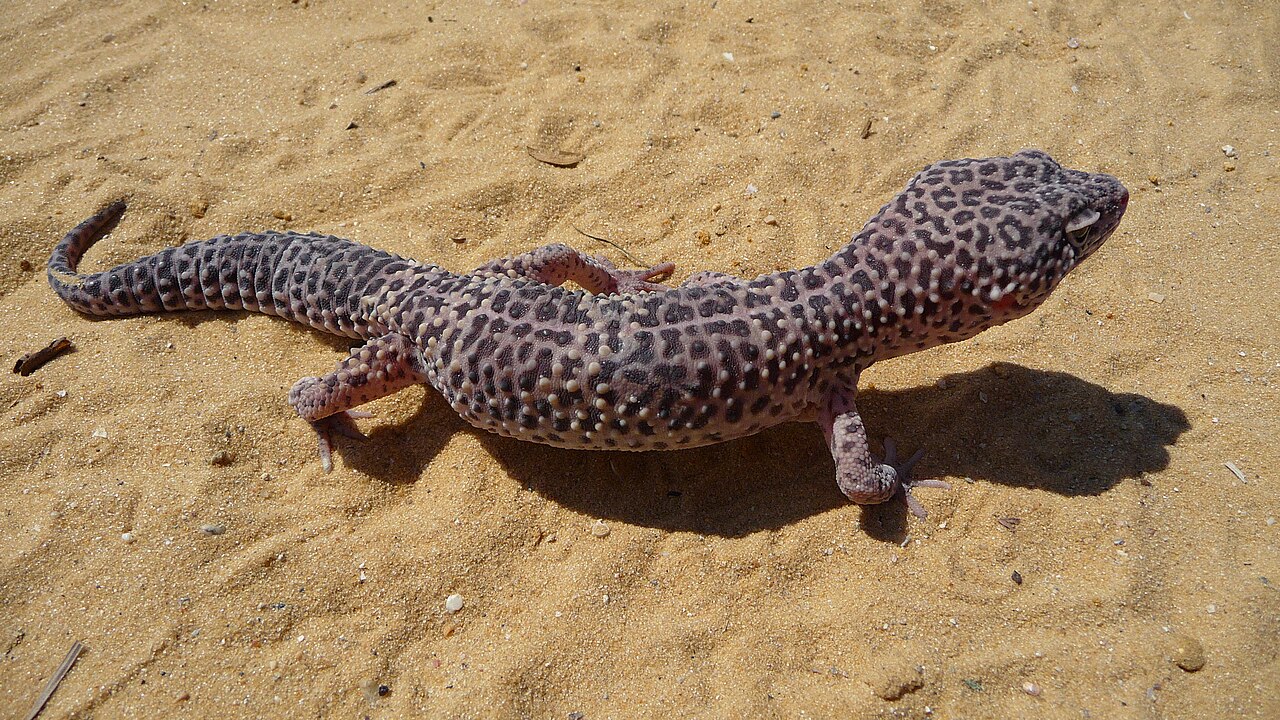
Photo: George Chernilevsky, public domain
Lizard
Beginner
Eublepharis macularius
Lifespan
10-20+ years
Adult size
18-28 cm, males larger
Temperament
Docile and slow-moving, tolerates gentle handling
Temperature
18–32°C
Humidity
30–50%
Vivarium
90 x 45 x 45 cm (adult); RSPCA minimum 60 x 30 x 40 cm
Wikipedia →
Native to dry grassland, scrub and rocky semi-desert in Afghanistan, Pakistan, north-west India, western Nepal and parts of Iran, where it shelters in crevices by day and hunts insects at dawn and dusk. A stocky ground-dwelling gecko with movable eyelids, no sticky toe pads and a fat-storing tail, yellow with black spots in the wild form but now bred in a huge range of morphs. Keepers like its calm nature, modest size and simple insect diet, which make it the classic first lizard. It can drop its tail if grabbed, so never hold it by the tail.
Care information is provided for educational purposes only and does not replace professional veterinary advice.
🔥 Heating
Heat one end from above with a halogen or basking lamp on a dimming thermostat (or a heat mat on a thermostat), with slate in the basking area, giving a basking surface of about 32-35 °C and a warm hide floor of 30-32 °C. Keep the cool end at about 21-26 °C; heat can go off at night as long as the room stays above about 16-18 °C, otherwise use a heat mat or ceramic heater on a thermostat.
💡 Lighting
Run a 12-hour day and night cycle on a timer, with no coloured night bulbs. Low-level UVB is recommended: a low-output (shade-dweller) T5 tube over the warm end giving a UVI of about 0.5-1.0 at the basking spot and zero in the shade (Ferguson zone 1), with albino and other pale or red-eyed morphs kept at the low end. Replace T5 tubes every 12 months or as the maker advises.
🪨 Substrate
A packed, diggable mix of roughly half organic topsoil and half washed play sand (some keepers add a little clay), at least 10 cm deep; paper towel or stone tiles suit juveniles and quarantine. Avoid calci-sand, beech chips, walnut shell and other loose non-natural substrates, which raise the risk of impaction.
🍽 Feeding
Gut-loaded live insects such as crickets, locusts, dubia roaches, black soldier fly larvae and calciworms, no bigger than the gecko's head, with waxworms and superworms only as fatty treats. Feed juveniles daily and adults every 2-5 days depending on body condition, dusting insects with calcium and adding a multivitamin about weekly for young geckos and every other week for adults.
💧 Water
Keep a shallow dish of fresh water at the cool end at all times and change it daily. The enclosure should stay dry, but add a humid hide with damp substrate or moss (about 70-80% inside), re-moistened every few days, to help shedding.
🏠 Enrichment
Provide at least three hides (warm, cool and humid) plus rocks, slate and low, sturdy branches to climb on. A deep, diggable substrate allows natural burrowing, and flat stone under the lamp gives the belly heat this species uses.
🩺 Health Considerations
Common problems are metabolic bone disease (twitching, swollen limbs, soft jaw) from too little calcium or UVB, impaction (usually a sign of low temperatures, dehydration or poor diet rather than substrate alone), stuck shed on toes and tail tips, and intestinal parasites. Adult females can produce infertile eggs without a male and may become egg-bound without a moist laying box, and the neurological Enigma syndrome affects the Enigma morph. Weigh regularly, as weight loss and a thinning tail are early warning signs.
🤲 Handling
Usually calm and easy to handle once settled: scoop it up from below with all four feet supported and keep sessions to about 10-15 minutes. Never grab or hold the tail, which can be dropped and regrows shorter and blunter. Non-venomous; bites are rare and harmless.
⚖️ Legal Restrictions
No licence needed in the UK. It is not on the Dangerous Wild Animals Act 1976 schedule, not CITES-listed and not on the GB invasive species list.
📋 Additional Notes
Males have a V-shaped row of pre-anal pores and hemipenal bulges, while females have faint or no pores. Sex is set by incubation temperature: cool (about 26-29 °C) or very warm (34-35 °C) eggs give females and about 31-33 °C gives mostly males. Popular morphs include Tremper, Bell and Rainwater albinos, mack snow, blizzard, tangerine and Enigma; keep singly, and never house males together.