
← Species Repository
Goliath Birdeater
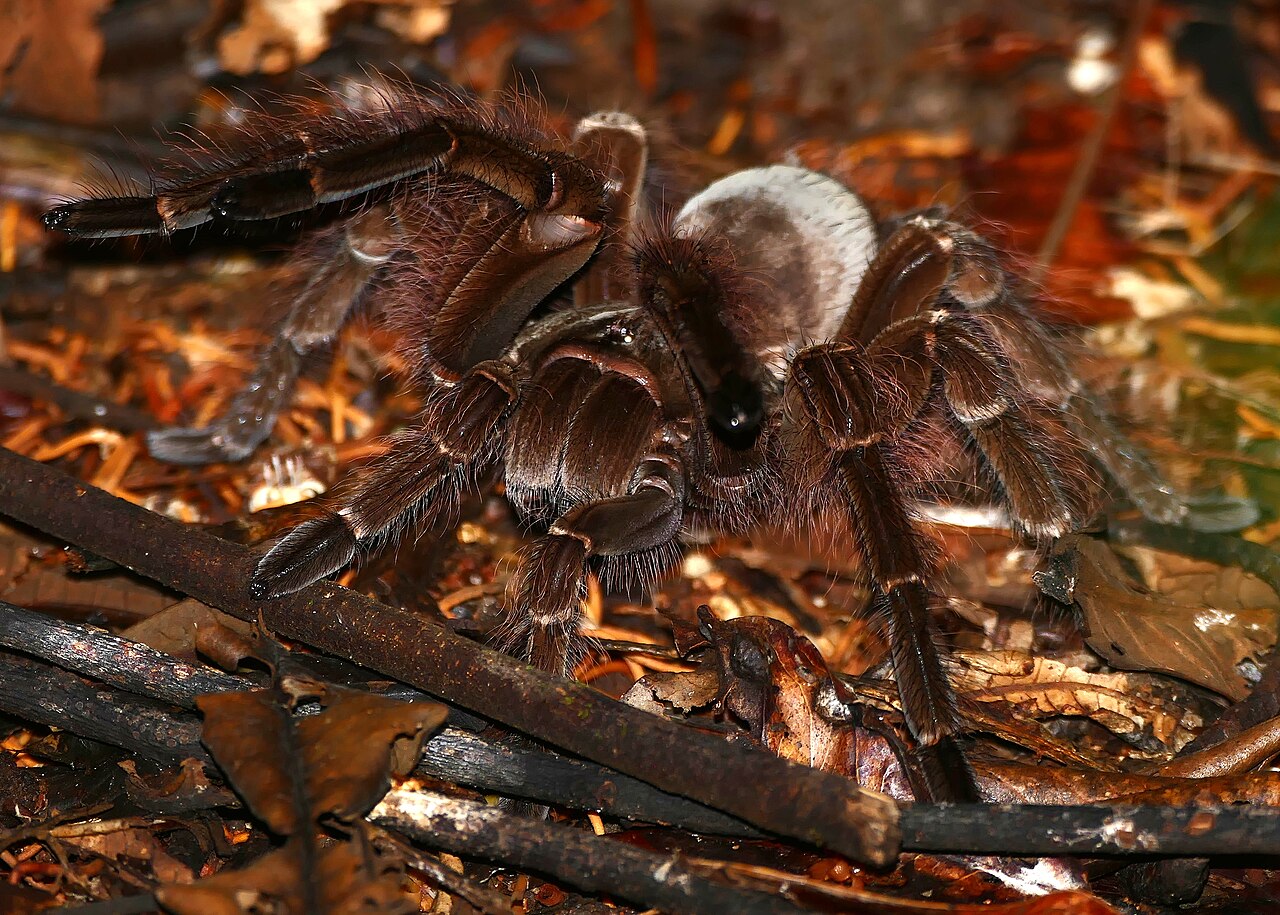
Photo: Bernard DUPONT from France, CC BY-SA 2.0
Spider
Advanced
Theraphosa blondi
Lifespan
F 15-25 years, M 3-6 years
Adult size
DLS up to 30 cm
Temperament
Nervous, stridulates and flicks hairs
Temperature
20–28°C
Humidity
65–90%
Vivarium
60 x 45 x 40 cm (terrestrial adult)
Wikipedia →
The world's heaviest spider, from rainforest in northern South America (Venezuela, the Guianas and northern Brazil), where it lives in deep burrows in damp, often marshy ground. Adults are brown with a leg span of up to about 30 cm, and keepers prize it for its sheer size and huge appetite. It needs constantly moist substrate, makes a hissing sound by stridulating when disturbed and has some of the most irritating urticating hairs of any tarantula.
Care information is provided for educational purposes only and does not replace professional veterinary advice.
🔥 Heating
Room temperature of about 20-26°C is usually enough in a UK home, but keep it below about 28°C, because heat combined with dryness quickly dehydrates it. If supplementary heat is needed, use a heat mat on the side of the enclosure on a thermostat, never underneath. No basking spot is needed.
💡 Lighting
No UVB or special lighting is needed. A normal room day and night cycle is enough, and keep the enclosure out of direct sunlight, which can overheat it quickly.
🪨 Substrate
Deep, moisture-holding substrate such as coco fibre mixed with topsoil and some vermiculite or sphagnum moss, about 15-20 cm deep. Keep the lower layers constantly moist but not swampy, let the surface dry a little, and use side (cross) ventilation so humidity stays up without stagnating.
🍽 Feeding
Feed slings small crickets or roaches every 2-4 days, juveniles every 7-10 days and adults several large crickets or one or two large roaches every 1-3 weeks. It refuses food in premoult and should not be fed for 5-10 days after a moult. Remove uneaten prey and leftover food boluses promptly, and avoid live mice, which are unnecessary and can injure it.
💧 Water
Provide a large, heavy water dish that is always full, and clean and refill it often because it frequently fouls or tips it. Overflow the dish or pour water down the side to keep the substrate damp rather than relying on misting.
🏠 Enrichment
Provide a large cork bark hide or half log with a burrow start beneath it, plus some leaf litter. Keep the enclosure low and wide so this heavy spider cannot fall far from the sides or lid.
🩺 Health Considerations
Dehydration is the classic killer, sometimes with a delayed death after a warm, dry spell, so never let the substrate dry out or the water dish run empty. Falls can rupture the abdomen and waterlogged, unventilated set-ups grow mould, while bald patches on the abdomen come from hair flicking and are replaced at the next moult.
🤲 Handling
Hands-off is strongly recommended. It flicks clouds of very irritating urticating hairs that cause intense itching, rashes and eye or breathing irritation, so wear eye protection and gloves for maintenance and wash your hands afterwards. The venom is considered mild (likened to a wasp sting), but its 2-4 cm fangs can cause a deep, painful puncture wound.
⚖️ Legal Restrictions
No licence needed in the UK. Tarantulas are not on the Dangerous Wild Animals Act 1976 schedule (as modified in 2007), and this species is not CITES-listed, not in the Wildlife Trade Regulations annexes and not on the UK invasive species lists.
📋 Additional Notes
Mature males lack the tibial spurs (hooks) found on most male tarantulas, so sex from a moulted skin or by the male's palpal bulbs and longer legs. Theraphosa stirmi (burgundy goliath) and T. apophysis (pinkfoot goliath) look very similar and are often sold as, or mixed up with, T. blondi, so buy from a breeder who can confirm the species. Growth is fast, females mature in about 3-6 years, and old names include Mygale blondii and Theraphosa leblondi.