
← Species Repository
Chilean Rose Tarantula
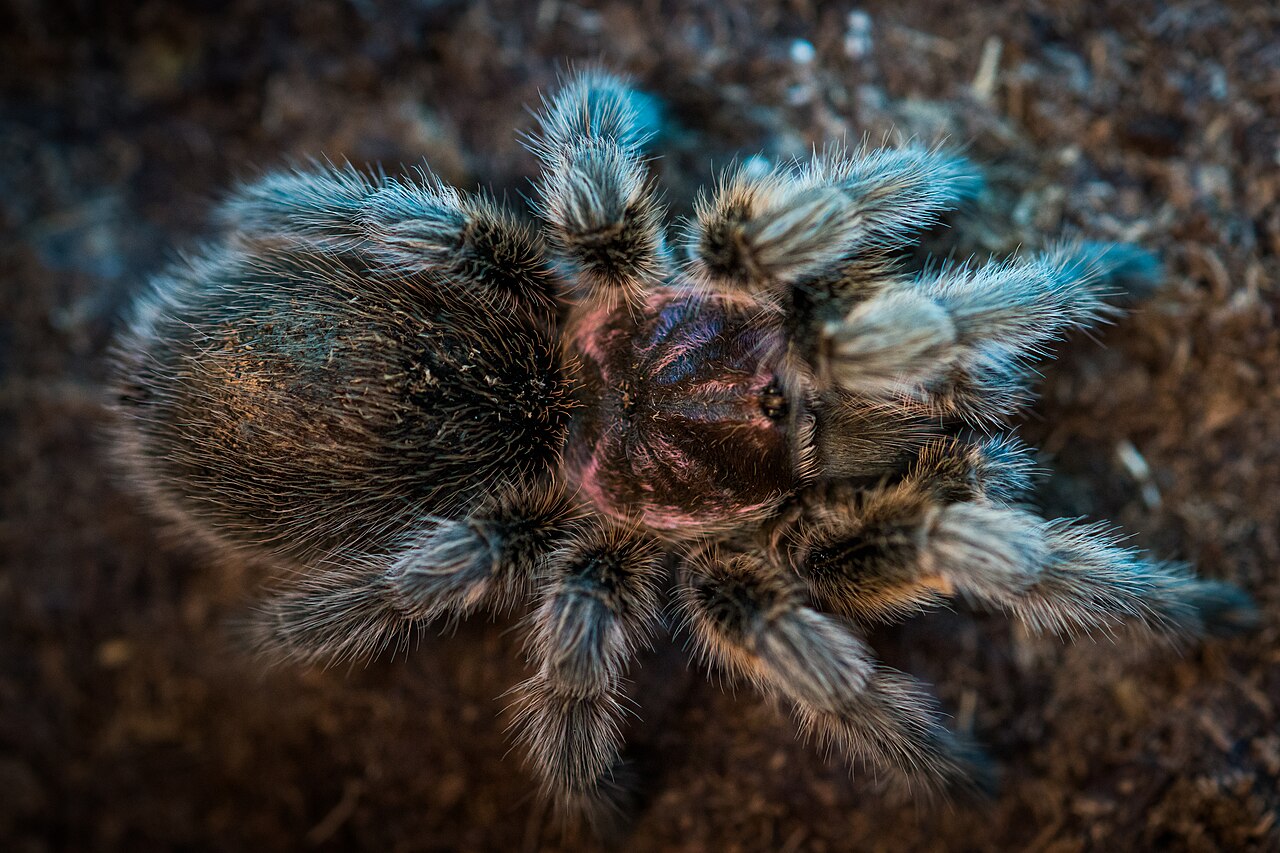
Photo: Fucesa, CC BY-SA 4.0
Spider
Beginner
Grammostola rosea
Lifespan
F 15-25 years, M 4-7 years
Adult size
DLS 12-15 cm
Temperament
Usually docile, can be moody or skittish
Temperature
16–27°C
Humidity
40–65%
Vivarium
45 x 30 x 30 cm (terrestrial adult)
Wikipedia →
Native to the dry scrub and high desert of northern Chile, Bolivia and Argentina, where it lives in burrows from sea level to about 1,500 m. A medium-sized grey-brown to pinkish-red terrestrial tarantula, it has long been the classic beginner species because it is hardy and happy at room temperature. It is famous for fasting for months and can be unpredictable, and like other New World tarantulas it can flick irritating urticating hairs.
Care information is provided for educational purposes only and does not replace professional veterinary advice.
🔥 Heating
Room temperature is usually enough in a UK home, as this species is happy at about 20-24°C and copes with cooler nights better than most. If the room regularly drops below about 16°C, fit a small heat mat to one side of the enclosure (never underneath) on a thermostat so it can move away from the warmth. No basking spot or heat lamp is needed.
💡 Lighting
No UVB or special lighting is needed. Keep it in a room with a normal day and night cycle and out of direct sunlight, which can overheat the enclosure quickly.
🪨 Substrate
Dry coco fibre or a coco fibre and topsoil mix about 8-10 cm deep, kept dry because this species comes from arid habitat and damp substrate stresses it. Add enough that the drop from the substrate surface to the lid is no more than about 1.5 times the leg span, as falls can be fatal.
🍽 Feeding
Feed slings small crickets or roach nymphs (pre-killed if tiny) about twice a week, juveniles every 7-10 days and adults a few large crickets, locusts or a roach every 2-3 weeks. Fasts of several months are common and usually harmless if the abdomen is plump and water is available, and refusing food before a moult is normal. Remove uneaten prey within 24 hours and wait about a week after a moult before feeding again.
💧 Water
Keep a shallow water dish filled at all times from about 2.5 cm leg span, as this is its main moisture source and no misting is needed. Smaller slings can have a few drops of water on one corner of the substrate once a week instead.
🏠 Enrichment
A cork bark hide with a short starter burrow dug underneath is enough, as it often uses an existing hollow or scrape rather than digging deep. Keep decor low and free of sharp edges.
🩺 Health Considerations
Long fasts are normal, but a shrinking abdomen or a hunched, curled-leg posture can mean dehydration, so check the water dish. Damp, stagnant substrate invites mould and mites, and bad moults and falls are the other common problems, while jerky uncoordinated movement (DKS) needs specialist advice.
🤲 Handling
Hands-off is recommended, as its temper can change without warning and it can be defensive for several days after a moult. It flicks urticating hairs that irritate skin and can injure eyes, so use tongs and a catch cup, wash your hands after maintenance, never rub your eyes and wear eye protection when rehousing. The bite is painful but the venom is not medically significant to people, though allergic reactions are possible.
⚖️ Legal Restrictions
No Dangerous Wild Animals Act licence is needed (no tarantulas are on the 2007 schedule) and it is not a UK invasive species. It has been in Annex B of the UK Wildlife Trade Regulations since 6 March 2026 (CITES Appendix II, international effect from 5 June 2027), so keep proof of captive-bred origin, and animals sold as G. porteri are covered too. No Article 10 certificate is needed to keep or sell it in the UK, but import or export across the UK border needs CITES permits.
📋 Additional Notes
Grammostola porteri was made a junior synonym of G. rosea in 2022 (Aguilera, Montenegro and Casanueva, accepted by the World Spider Catalog), so animals sold as G. porteri and the normal (NCF) and red (RCF) colour forms are now treated as one species with identical care. Sex is best confirmed from a moult (females have a spermatheca) or the ventral epigastric furrow, and mature males develop palpal bulbs and tibial hooks and rarely live much beyond a year after maturing. Growth is notoriously slow, so slings take many years to reach adult size.