
← Species Repository
Deathstalker
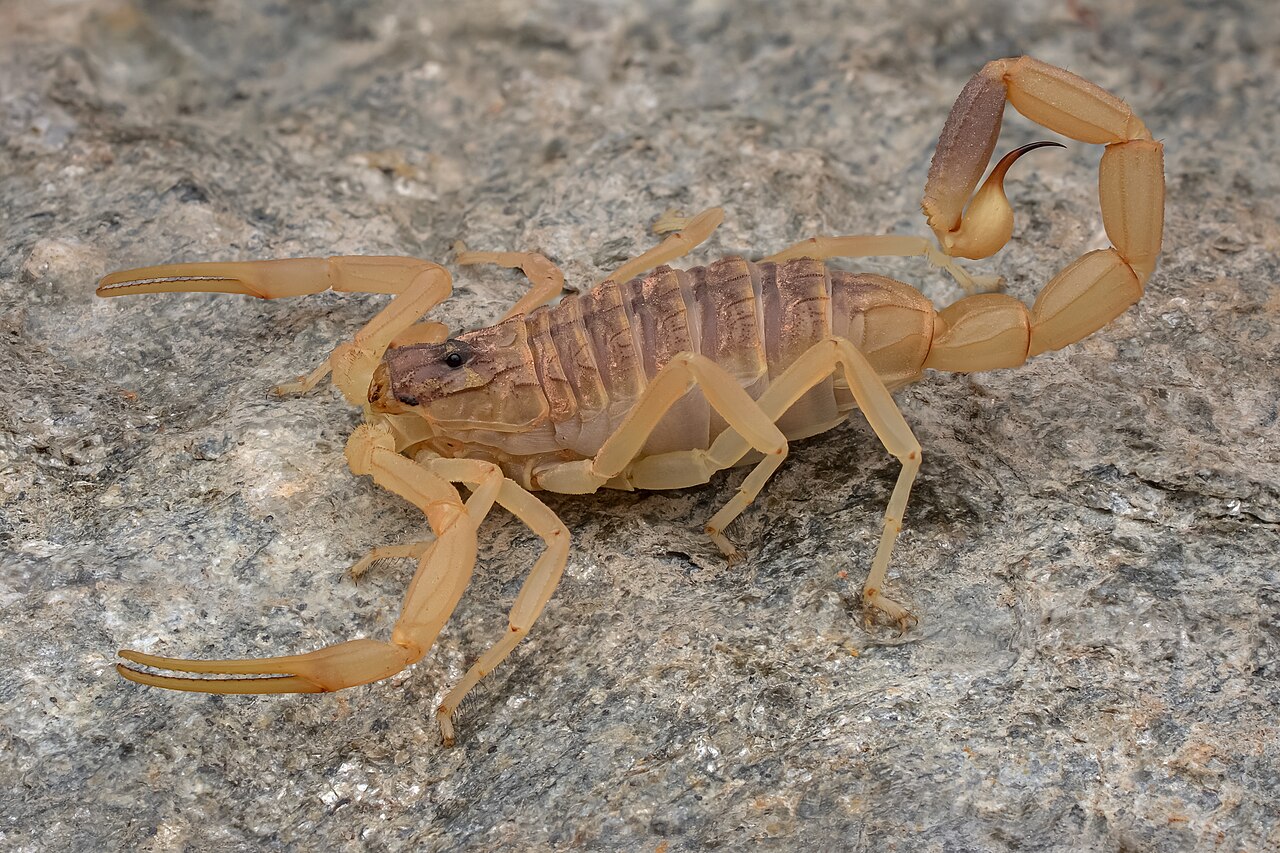
Photo: RichardMcJimsey, CC BY-SA 4.0
Scorpion
Advanced
Leiurus quinquestriatus
Lifespan
Est. 4-7 years
Adult size
Body 7-10 cm
Temperament
Nervous, fast and quick to sting
Temperature
20–32°C
Humidity
25–45%
Vivarium
30 x 20 x 20 cm (lockable, escape-proof)
Wikipedia →
A slender, straw-yellow buthid from the deserts and dry scrub of North Africa and the Middle East, sheltering under stones and in small burrows. Adults are 7-10 cm long with thin claws and a slim tail. It is one of the most dangerous scorpions in the world: its venom is very potent (LD50 0.16-0.50 mg/kg) and can kill, especially children, older people and people with heart conditions. It should be kept only by experienced, licensed keepers.
Care information is provided for educational purposes only and does not replace professional veterinary advice.
🔥 Heating
Provide a warm side of 27-32°C and a cool side of 21-24°C, using a heat mat on one side wall run on a thermostat.
💡 Lighting
No UVB needed; it is nocturnal, and normal room daylight gives the day/night cycle.
🪨 Substrate
A deep sand-based mix (sand with a little coco fibre or clay), at least 8-10 cm deep, kept dry.
🍽 Feeding
Adults appropriately sized crickets or roaches every 1-2 weeks; juveniles once or twice a week. Use long tongs and remove leftovers.
💧 Water
Provide a very shallow water dish or occasionally mist one small area lightly; keep the rest of the enclosure dry to prevent mycosis.
🏠 Enrichment
Cork bark and flat stones as hides on the sand.
🩺 Health Considerations
Excess humidity causes fungal infection (mycosis). Escape is the main safety risk, so use a locking lid and secondary containment.
🤲 Handling
Never handle it; use long tongs and only open the enclosure once you have located the scorpion. Its venom is potentially lethal and causes severe pain and heart and breathing problems, so any sting is a medical emergency: call 999 and tell them the species.
⚖️ Legal Restrictions
DWA licence needed: the Dangerous Wild Animals Act 1976 schedule lists 'Family Buthidae: All species' (England and Wales as substituted by SI 2007/2465, Scotland by SSI 2008/302), and the Dangerous Wild Animals (Northern Ireland) Order 2004 lists all Buthidae too. UK sellers ask for your council-issued licence and ID before sale. It is not CITES-listed and not on the GB invasive species list.
📋 Additional Notes
Hobby animals are often misidentified: Leiurus hebraeus of the Middle East was split from L. quinquestriatus in 2014, and other Leiurus species are also sold as deathstalkers. Keep it in a locked room or secondary container and have an escape plan. It glows under UV, which helps you find it if it gets out.