
← Species Repository
Kenyan Sand Boa
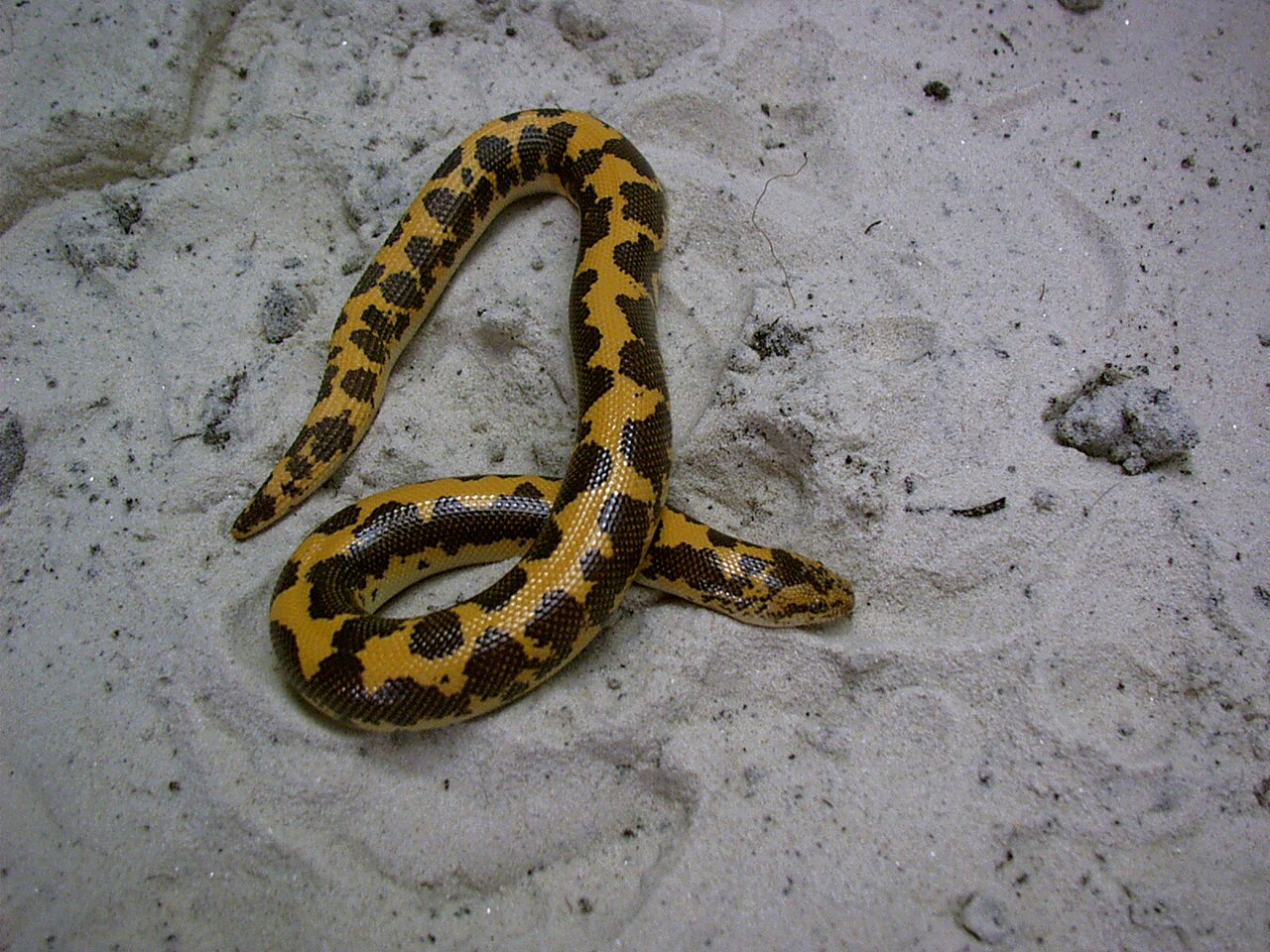
Photo: Viki at German Wikipedia, CC BY-SA 3.0
Snake
Beginner
Eryx colubrinus
Lifespan
15-30 years
Adult size
F 60-90 cm, M 38-50 cm
Temperament
Docile and slow; may nip when startled
Temperature
21–32°C
Humidity
30–50%
Vivarium
60 x 30 x 30 cm (male); 90 x 45 x 45 cm (female)
Wikipedia →
Found in north and east Africa, from Egypt and Niger to Kenya and northern Tanzania, in semi-desert and dry scrub with loose sandy soil. A small, thick-bodied boa with tiny eyes and a short tail, usually orange or yellow with dark brown blotches. It spends most of its time buried and ambushes prey from the sand. Its small size, calm nature and simple needs make it a popular beginner snake, and females give birth to live young.
Care information is provided for educational purposes only and does not replace professional veterinary advice.
🔥 Heating
Heat one end with a halogen lamp or a heat mat under part of the floor, on a thermostat, giving a basking surface of about 34-35 °C and a cool end of 26-28 °C. Heating can go off at night if the vivarium stays above about 21 °C.
💡 Lighting
A 12-hour day and night cycle. It is nocturnal and spends most of its time buried, but low-output UVB (UVI about 2-3 at the basking spot) is beneficial.
🪨 Substrate
Sand or a sandy soil (for example 60% topsoil and 40% play sand), at least 8-10 cm deep so it can bury itself fully. Avoid gravel, corncob and cedar.
🍽 Feeding
Frozen-thawed mice about as wide as the snake's widest point. Juveniles every 1-2 weeks and adults every 2-4 weeks, with smaller prey for the much smaller males. Feed with tongs or in a dish to avoid swallowing sand; adult males may fast for months in the breeding season.
💧 Water
A small, shallow, heavy bowl kept no more than half full, cleaned weekly. Keep the vivarium dry, with a hide of lightly damp moss or substrate at the cool end, especially before a shed.
🏠 Enrichment
Deep sand to burrow in matters most; add a couple of tight hides, cork flats and a few sturdy branches or drought-tolerant plants. Rocks and heavy décor must sit on the vivarium floor, not on top of the sand, so they cannot collapse onto a burrowing snake.
🩺 Health Considerations
Generally hardy. Problems include respiratory infections in damp conditions, stuck sheds, obesity, sand impaction from feeding on loose substrate, and crush injuries from unsecured rocks.
🤲 Handling
Docile and easy to handle, but it may strike at movement above the sand, mistaking a hand for prey. Touch it first with a hook or paper roll, lift from below the mid-body and avoid approaching the head. Non-venomous; a bite is like a cat scratch.
⚖️ Legal Restrictions
No Dangerous Wild Animals licence needed in the UK. As a boa it is CITES Appendix II (UK Annex B): keep proof of captive-bred origin, but no certificate is needed for captive-bred pets.
📋 Additional Notes
Females are far larger than males, which have longer, thicker tails. Morphs include albino, anerythristic, snow, paradox, striped, tiger and patternless. CITES and some books use the name Gongylophis colubrinus.