
← Species Repository
Bold Jumping Spider
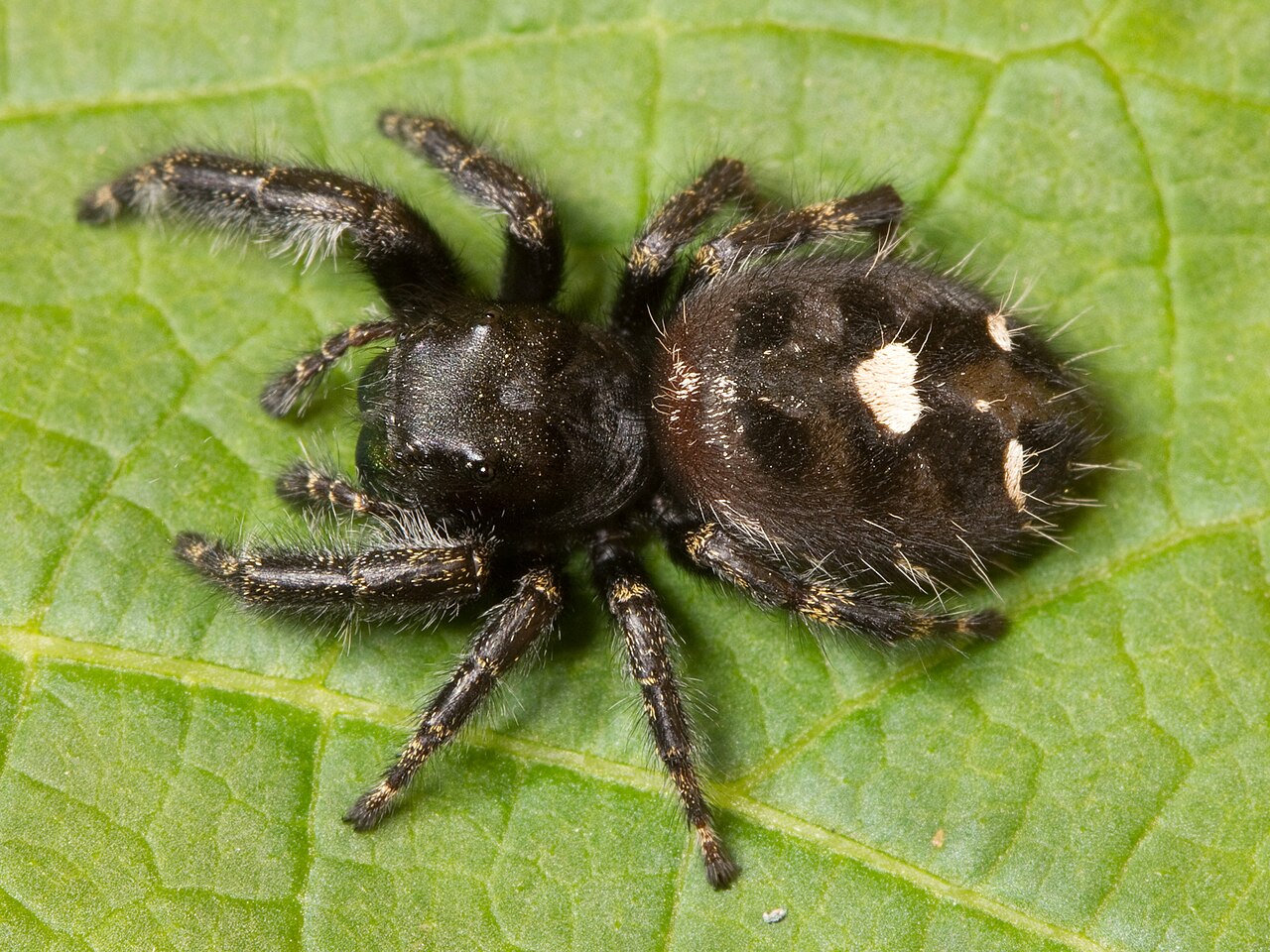
Photo: Ryan Kaldari, CC0
Spider
Beginner
Phidippus audax
Lifespan
F 1-2 years, M about 1 year
Adult size
Body F 8-15 mm, M 6-13 mm
Temperament
Bold and inquisitive, rarely bites
Temperature
18–27°C
Humidity
45–70%
Vivarium
20 x 20 x 30 cm (arboreal, taller than wide)
Wikipedia →
Widespread across the USA, southern Canada and northern Mexico in grassland, open woodland, gardens and buildings. A stocky black jumping spider with a bold white (orange in juveniles) triangular spot on the abdomen, white-banded legs and iridescent green chelicerae. Hardy, confident and easy to feed, it is one of the most commonly kept jumping spiders and is sold alongside the regal jumper. Bites are rare and only mildly painful.
Care information is provided for educational purposes only and does not replace professional veterinary advice.
🔥 Heating
Room temperature of about 20-26 °C suits it, so no extra heat is needed in most homes. It copes with cooler rooms better than tropical jumpers; keep it out of direct sun and away from radiators.
💡 Lighting
Diurnal and sight-hunting, so it is most active and feeds best with 8-12 hours of bright room light or a small LED light. No UVB is needed.
🪨 Substrate
2-5 cm of coco fibre, sphagnum moss or a soil mix, kept mostly dry with one lightly damp corner.
🍽 Feeding
Spiderlings: fruit flies every 2-3 days; juveniles: small crickets, flies or roach nymphs every 3-5 days. Adults: one or two prey items no larger than the abdomen once or twice a week, cutting back if the abdomen looks swollen. Remove uneaten prey, which can injure a moulting spider.
💧 Water
Mist one side of the enclosure lightly every day or two so it can drink droplets, with enough ventilation for it to dry out in between.
🏠 Enrichment
Sticks, cork bark, leaves and plants for climbing, with anchor points near the top for its silk retreat. Keep one spider per enclosure.
🩺 Health Considerations
Watch for dehydration, mould in over-wet enclosures and moulting problems if the spider is disturbed in its retreat. Wild-caught adults may be old or carry parasites, so captive-bred spiderlings are preferable.
🤲 Handling
Usually tolerates gentle hand-walking; handle low over a soft surface because falls cause injury. Bites are rare, mildly painful and not medically significant, typically causing local redness and swelling for a day or two.
⚖️ Legal Restrictions
No licence needed in the UK. It is not on the Dangerous Wild Animals Act 1976 schedule (which lists only Phoneutria, Atrax, Loxosceles and Latrodectus spiders), is not CITES-listed and is not a GB invasive species of special concern. As a non-native animal it must never be released (Wildlife and Countryside Act 1981, section 14).
📋 Additional Notes
Sexing: males are smaller, with more striking iridescent chelicerae, fringed front legs and tufts of hair over the eyes; females are larger and heavier. Spiderlings have orange markings that turn white as they mature, and size and colour vary by population (orange-spotted forms are sold). It takes about 9 months from egg to maturity; it can be told from Phidippus regius by the paired black patches on the abdomen.