
← Species Repository
Veiled Chameleon
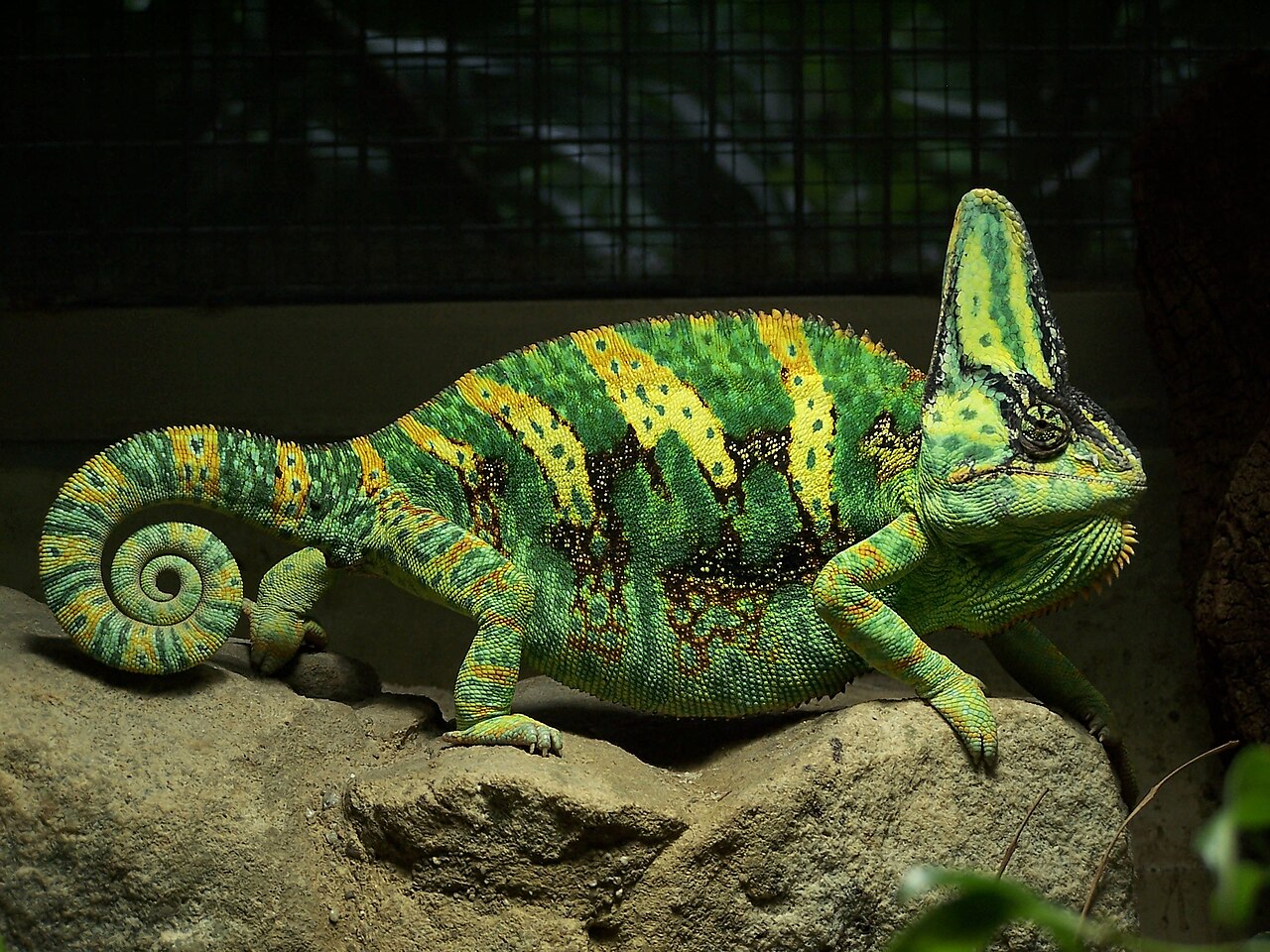
Photo: Kupos, CC BY-SA 3.0
Lizard
Intermediate
Chamaeleo calyptratus
Lifespan
M 5-8 years, F 4-6 years
Adult size
M 43-61 cm, F up to 35 cm
Temperament
Solitary and easily stressed; hands-off
Temperature
16–30°C
Humidity
40–80%
Vivarium
60 x 60 x 120 cm (adult, mesh-sided); tall arboreal set-up
Wikipedia →
Native to the mountains, plateaus and valleys of Yemen and south-western Saudi Arabia, where it lives in trees and bushes. A large chameleon with a tall helmet-like casque, independently moving eyes, a projectile tongue and green colours banded with yellow, blue and brown that change with mood. Keepers like its striking looks and the fact that it is the hardiest of the commonly kept chameleons. It is still high-maintenance, needing a tall, well-ventilated enclosure, daily misting and careful supplementation, so it is not a first reptile.
Care information is provided for educational purposes only and does not replace professional veterinary advice.
🔥 Heating
Provide a basking branch near the top under a halogen or incandescent bulb on a thermostat or dimmer, giving a basking temperature of about 29-35 °C (adult males at the upper end) with cooler, shaded air of about 22-27 °C lower down. Turn heat off at night: a drop to about 16-20 °C is healthy, and night heat is only needed if the room falls lower than that.
💡 Lighting
UVB is essential: a T5 HO tube over the mesh roof (a 6% tube per ReptiFiles, or the 10-12% tube the RVC suggests, positioned by measurement) giving a UVI of about 3 at the basking branch (Ferguson zone 3), plus bright daylight lighting. Run lights 12 hours a day on a timer and replace tubes as the maker advises.
🪨 Substrate
A bare floor, paper towel or a bioactive soil layer with live plants all work; avoid wood chips and small loose particles that could be swallowed with insects. Females need a laying container of damp sand and soil deep enough to dig a full tunnel (at least 10 cm, deeper is better).
🍽 Feeding
Feed gut-loaded locusts, crickets, roaches, silkworms and black soldier fly larvae, with mealworms, waxworms and morio worms only as treats. Juveniles eat daily as much as they will take, adults about 4-5 insects every other day, and adult females should be fed less to limit egg production. Dust insects with calcium at most feeds and use a vitamin D3 or multivitamin supplement about twice a month.
💧 Water
Chameleons drink droplets from leaves rather than from bowls, so mist the enclosure heavily morning and evening and/or run a dripper or fogger. Let it dry out between mistings, aiming for about 40-50% humidity by day and higher (80-100%) at night or just after misting.
🏠 Enrichment
Fill the enclosure with branches and vines at different heights and dense live or artificial foliage, so it can move between basking and shaded areas and stay hidden. Keep it singly and out of sight of other chameleons, which cause stress.
🩺 Health Considerations
The most common problems are dehydration (sunken eyes, lethargy), metabolic bone disease from poor UVB or calcium, and egg-binding in females, which produce clutches even without a male. Respiratory infections follow constantly damp, stagnant conditions; any chameleon that is lethargic, keeps its eyes closed or stops eating needs a reptile vet promptly.
🤲 Handling
Best treated as a display animal: frequent handling causes stress, and many will hiss, gape and bite. If it must be moved, let it walk onto your hand rather than grabbing it. Non-venomous, but bites can be painful.
⚖️ Legal Restrictions
No Dangerous Wild Animals Act licence is needed and it is not on the GB invasive species list. Like most chameleons it is on CITES Appendix II (Annex B of the UK wildlife trade regulations), so no Article 10 certificate is needed to keep or sell captive-bred animals, but keep proof of legal origin such as a breeder's receipt.
📋 Additional Notes
Also called the Yemen chameleon. Males have a small spur on the back of each hind foot from hatching and grow a much taller casque, while females are smaller and stockier. Females lay clutches of roughly 30-90 eggs several times a year whether or not they have mated, so a laying bin is essential; a second subspecies, C. c. calcarifer, has a shorter casque.