
← Species Repository
Bearded Dragon
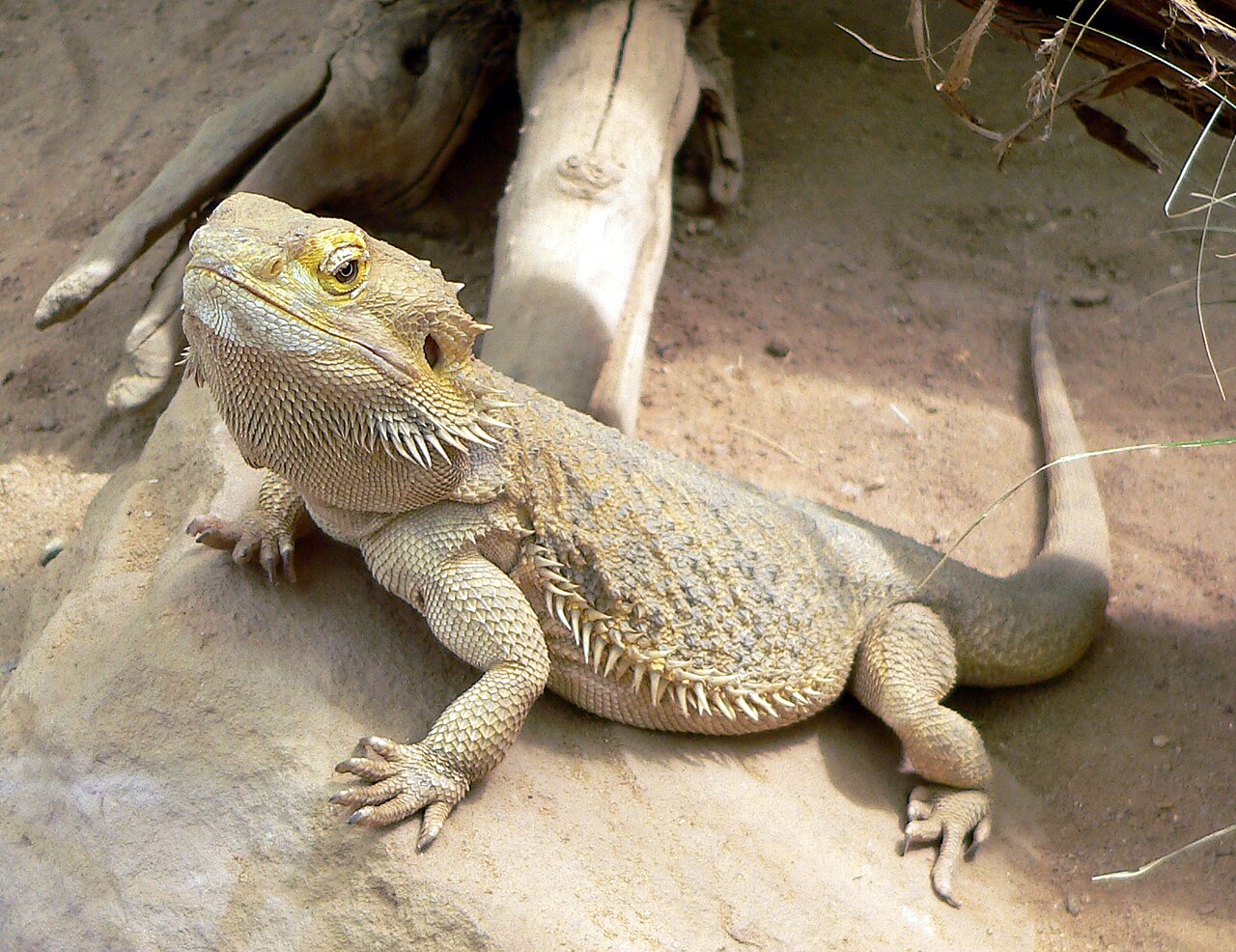
Photo: Frank C. Müller, CC BY-SA 2.5
Lizard
Beginner
Pogona vitticeps
Lifespan
10-15 years (up to 20)
Adult size
45-60 cm
Temperament
Calm and tolerant, usually enjoys handling
Temperature
18–35°C
Humidity
30–50%
Vivarium
120 x 60 x 60 cm minimum; 180 x 60 x 60 cm preferred
Wikipedia →
Native to the semi-arid woodland, scrub and rocky desert of inland eastern and central Australia. A heavy-bodied lizard with a spiny throat pouch (the beard) that darkens and puffs up when it is threatened or excited, bred in many colour and scale morphs from sandy wild types to red, orange, pale hypo and smooth-scaled lines. Keepers like its bold, curious and handleable nature, which makes it one of the most popular pet lizards. It needs a large vivarium, a very hot basking spot and strong UVB, so set-up costs are higher than for a gecko.
Care information is provided for educational purposes only and does not replace professional veterinary advice.
🔥 Heating
Heat one end from above with guarded halogen or incandescent flood lamps on a dimming thermostat, aiming for 38-42 °C at the basking zone and a basking surface (stone) of about 40-45 °C for adults, with the dragon's back at least 25-30 cm from the lamp. Keep the cool end at about 22-27 °C and let it fall to about 18-22 °C at night, adding a ceramic heater on a thermostat only if the room gets colder.
💡 Lighting
Strong UVB is essential: a high-output 10-14% T5 desert tube about half the vivarium length, fitted inside at the hot end, giving a UVI of about 3-5 at the basking spot and falling to zero in the shade (Ferguson zone 3, edging into 4). Hypo, translucent and silkback morphs should not exceed UVI 3, and lights should run 12 hours on and 12 off on a timer with tubes replaced about every 12 months or as the maker advises.
🪨 Substrate
For healthy adults a packed play-sand and topsoil mix (with or without clay) about 10 cm deep allows digging; rough slate or stone tiles are fine if a dig box is provided. Avoid calci-sand, wood or bark chips, walnut shell and corn cob, and keep hatchlings on paper or tiles until they are feeding well.
🍽 Feeding
Omnivorous: hatchlings eat mostly insects (about 60-80% of the diet) once or twice a day with finely chopped greens, and the balance shifts with age so adults get mainly greens with insects such as locusts, crickets, dubia roaches and black soldier fly larvae only a few times a week. Offer safe greens such as rocket, watercress, chicory, dandelion and plantain (avoid spinach, and limit cabbage and kale), with mealworms, superworms and waxworms as occasional treats only. Gut-load insects, dust them with calcium and use a multivitamin about once a week for adults.
💧 Water
Keep a large, shallow water dish at the cool end at all times and change it daily, although many dragons drink little from bowls and get moisture from greens. Keep the vivarium dry; a shallow lukewarm bath of about five minutes helps loosen stuck shed.
🏠 Enrichment
Provide a hide at each end, sturdy rocks and branches for climbing and basking at different heights, and a dig box of sand and soil at the cool end. Supervised time outdoors on warm, sunny days in a secure pen with shade gives natural UV and stimulation.
🩺 Health Considerations
The main problems are metabolic bone disease (twitching, swollen legs, soft or deformed jaw, limbs and spine) from too little UVB or calcium, and impaction, usually caused by low temperatures, dehydration, oversized insects or swallowed loose substrate such as calci-sand. Females often produce eggs without a male and can become egg-bound (or develop follicular stasis) without a suitable dig box, and frequent laying drains calcium. Other issues include intestinal parasites, mouth rot, respiratory infections, atadenovirus and yellow fungus disease; weigh regularly, as sudden weight loss often means illness.
🤲 Handling
Usually tolerant and easy to handle: scoop it up from beneath with all four legs supported and keep sessions to about 10-15 minutes so it does not cool down. Leave it alone if it blackens or puffs its beard, gapes or backs away. Non-venomous and bites are uncommon; wash hands afterwards, as all reptiles can carry Salmonella.
⚖️ Legal Restrictions
No licence needed in the UK. It is not on the Dangerous Wild Animals Act 1976 schedule, not CITES-listed and not on the GB invasive species list; Australia has banned wildlife exports since the 1960s, so all UK stock is captive bred.
📋 Additional Notes
Males have hemipenal bulges, larger femoral pores, a wider cloaca, a broader head and a darker, larger beard. Morphs include hypo, translucent, leatherback, silkback (almost scaleless, with higher water loss and lower UVB needs) and patternless lines, plus red, orange and white colour lines. House singly, as adults fight and pairs breed constantly; brumation (sleeping more and eating less in winter) is normal if weight holds steady.