
← Species Repository
Indian Stick Insect
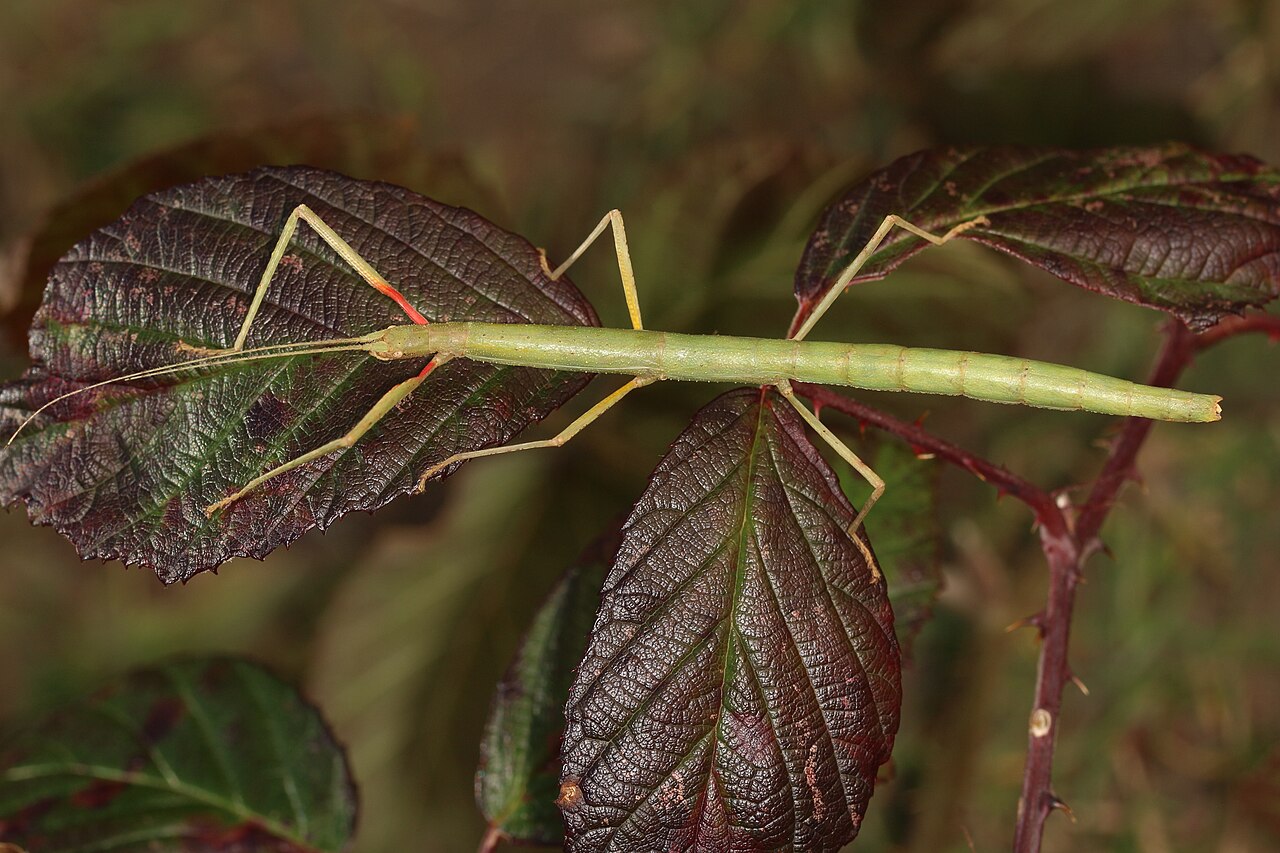
Photo: Holger Krisp, CC BY 4.0
Other Inverts
Beginner
Carausius morosus
Lifespan
About 1-1.5 years in total
Adult size
F 80-100 mm (males very rare)
Temperament
Docile, tolerates handling well
Temperature
17–25°C
Humidity
50–75%
Vivarium
30 x 30 x 45 cm (tall, for a small group)
Wikipedia →
From southern India (culture stock originates in Tamil Nadu), it is the classic laboratory stick insect and a long-time UK school and family pet. Females are 80-100 mm long, green to dark brown, with red patches at the base of the front legs. Almost all captive stock is female and reproduces without mating, so it breeds very easily. It is harmless and very easy to keep on bramble or privet.
Care information is provided for educational purposes only and does not replace professional veterinary advice.
🔥 Heating
Room temperature (about 17-25 °C) is ideal and supplementary heating is not usually needed. Keep the cage cool in summer and out of direct sun.
💡 Lighting
No UVB needed; normal room light giving a day/night cycle is enough, as it feeds at night.
🪨 Substrate
Paper towel or 2-3 cm of coco fibre; paper makes it easy to collect or remove the eggs, which are dropped on the floor.
🍽 Feeding
Fresh bramble, privet, ivy, hawthorn, pyracantha, rose, raspberry, oak or hazel at all ages, with stems in a narrow water pot plugged so nymphs cannot drown. Replace before the leaves dry out and avoid foliage that may have been sprayed with pesticide.
💧 Water
Lightly mist the leaves every other day (or each evening) so the insects can drink droplets.
🏠 Enrichment
The food plants are the main furniture; give plenty of height and twigs for climbing and moulting, with at least two mesh-ventilated sides.
🩺 Health Considerations
Failed moults from too little height or very low humidity are the main problem, so never disturb an insect hanging to moult. Old, dried or sprayed food plants are the other common cause of losses.
🤲 Handling
Tolerates gentle handling well: put a hand under the front legs and let it step on, rather than pulling it off a surface. Harmless, with no bite or sting; startled insects may go rigid and drop.
⚖️ Legal Restrictions
No licence needed in the UK, and it is not on the GB list of invasive species of special concern. It is non-native (accidental populations have been recorded in Britain), so never release insects or throw viable eggs outdoors; that is an offence under section 14 of the Wildlife and Countryside Act 1981.
📋 Additional Notes
Formerly Dixippus morosus. Males are very rare (about 1 in 1,000) and smaller, at about 55 mm. Eggs hatch in 2-3 months at room temperature with no special care, nymphs mature in 4-5 months and adults live 10-11 months, so numbers build fast; freeze unwanted eggs and frass for at least a day before disposal.