
← Species Repository
Carolina Wolf Spider
Spider
Intermediate
Hogna carolinensis
Lifespan
F 2-4 years, M 1-2 years
Adult size
Body F 22-35 mm, M 18-20 mm
Temperament
Fast and nervous, bites if cornered
Temperature
20–28°C
Humidity
40–65%
Vivarium
30 x 20 x 20 cm (terrestrial, floor space)
Wikipedia →
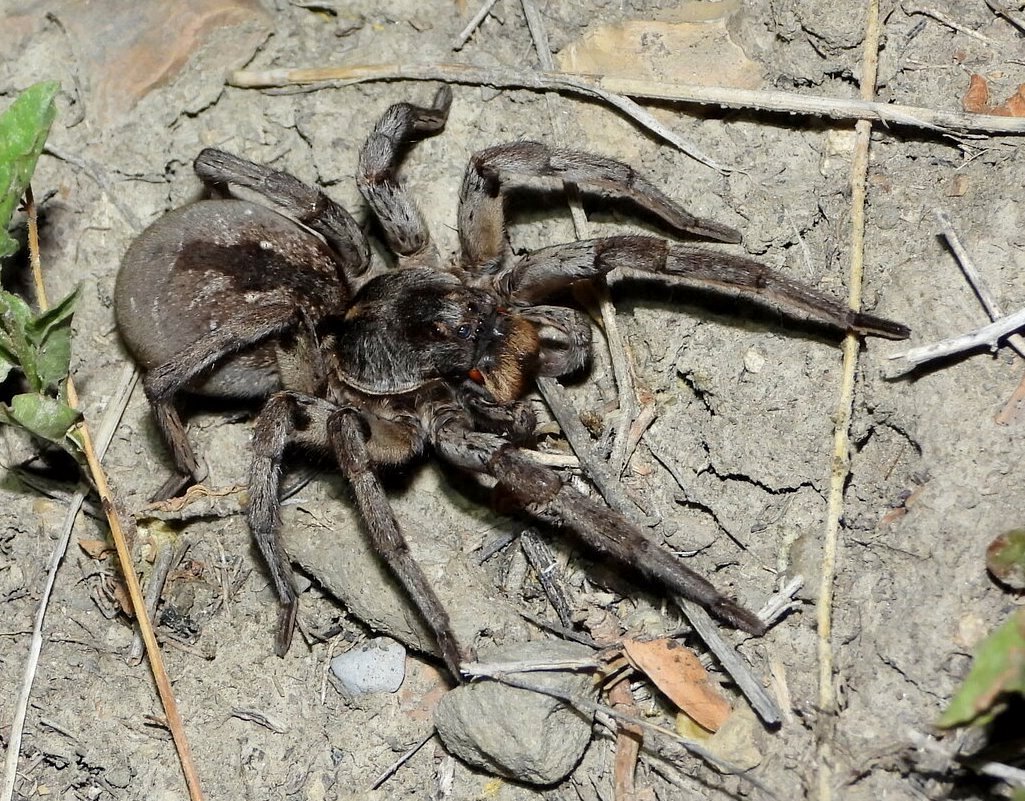
The largest wolf spider in North America, found from the eastern USA to the desert Southwest on open, flat ground, where it digs or takes over burrows up to 30 cm deep. Mottled light and dark brown above with an almost black underside; females reach 35 mm in body length. It is a fast, active ground hunter that is cheap and hardy, and females carry their egg sac and then their spiderlings on their back. The bite can cause pain and swelling but is not dangerous.
Care information is provided for educational purposes only and does not replace professional veterinary advice.
🔥 Heating
Room temperature of about 20-27 °C is fine. If the room is cold, fit a heat mat to one side wall or under a third of the floor on a thermostat, leaving a cool end.
💡 Lighting
No UVB needed; normal room light gives the day/night cycle.
🪨 Substrate
8-10 cm of a sand and coco fibre or topsoil mix, mostly dry with one slightly damp corner, deep enough for burrowing and for females to lay eggs.
🍽 Feeding
Spiderlings: fruit flies or pinhead crickets twice a week. Juveniles and adults: crickets or roaches smaller than the spider's body every 3-7 days; it is an eager, aggressive feeder.
💧 Water
Always provide a shallow water dish, which is important for wolf spiders, and lightly mist the damp corner once or twice a week.
🏠 Enrichment
Floor space matters more than height: give a cork bark hide or tube, leaf litter and a starter burrow. A secure lid is essential, as many try constantly to escape.
🩺 Health Considerations
Many specimens are wild-caught and may be old or carry parasites, so quarantine new arrivals for a couple of weeks. Avoid damp, poorly ventilated set-ups, which encourage fungal problems in dry-adapted wolf spiders.
🤲 Handling
Hands-off recommended: it is fast, easily stressed and may bite if cornered or restrained. Bites cause local pain, redness and swelling but are not medically significant; use a catch cup to move it.
⚖️ Legal Restrictions
No licence needed in the UK. Wolf spiders are not on the Dangerous Wild Animals Act 1976 schedule (which lists only Phoneutria, Atrax, Loxosceles and Latrodectus spiders), and this species is not CITES-listed or a GB invasive species of special concern. As a non-native animal it must never be released (Wildlife and Countryside Act 1981, section 14).
📋 Additional Notes
Sexing: males are smaller (18-20 mm) with orange on the sides of the abdomen and enlarged pedipalps, and die in the summer they first breed; females can survive several breeding seasons. Formerly Lycosa carolinensis. UK dealers more often stock European and island wolf spiders such as Hogna radiata and Hogna maderiana, which need very similar care.