
← Species Repository
Costa Rican Zebra Tarantula
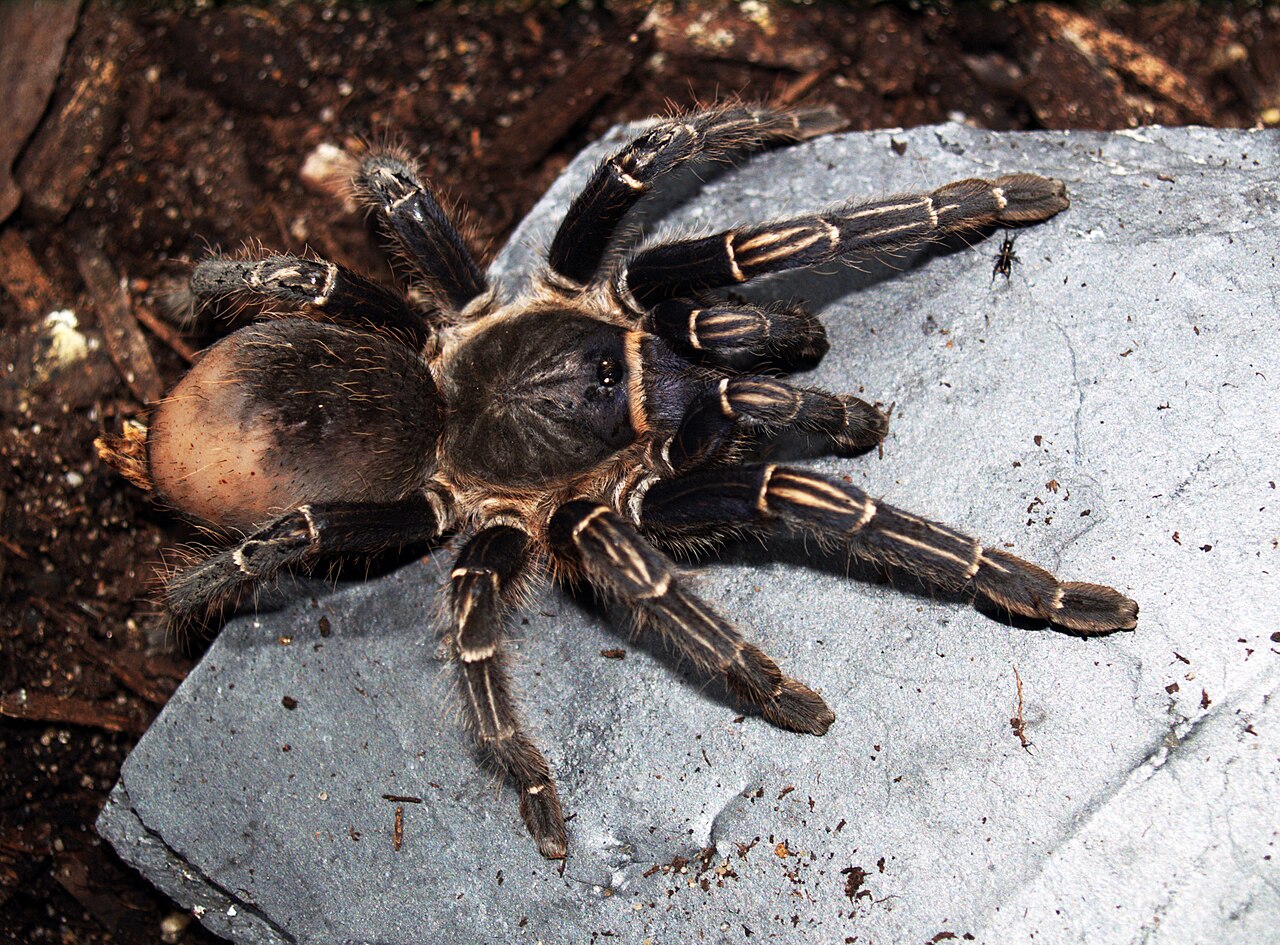
Spider
Beginner
Aphonopelma seemanni
Lifespan
F up to 20 years, M 3-5 years
Adult size
DLS 10-13 cm
Temperament
Skittish burrower, bolts rather than bites
Temperature
18–28°C
Humidity
55–75%
Vivarium
40 x 30 x 30 cm (burrowing terrestrial adult)
Wikipedia →
A burrowing terrestrial tarantula from semi-arid scrubland in western Costa Rica, Nicaragua and Honduras, where it digs deep burrows to escape heat and dryness. It is usually black with bold white stripes at the leg joints, and a brown form also exists. Keepers like its calm, low-maintenance nature, but it is skittish and fast, often stays out of sight in its burrow, and can flick urticating hairs.
Care information is provided for educational purposes only and does not replace professional veterinary advice.
🔥 Heating
Room temperature of about 20-26°C is usually enough in a UK home. If extra heat is needed, use a heat mat on the side of the enclosure (not underneath) on a thermostat. No basking spot is needed.
💡 Lighting
Tarantulas need no UVB or special lighting, and a normal room day and night cycle is fine. Keep the enclosure out of direct sunlight to prevent overheating.
🪨 Substrate
At least 10-15 cm of firmly packed coco fibre or a coco fibre and topsoil mix, so it can dig a proper burrow. Keep the lower layers slightly damp and let the surface dry between waterings.
🍽 Feeding
Feed slings small or pre-killed prey twice a week, juveniles every 10-14 days and adults a few large crickets or a roach every 2-4 weeks. It may fast for long periods, especially in premoult, so remove uneaten prey within 24 hours.
💧 Water
Provide a water dish at all times and overflow it or pour a little water into one corner every week or two to keep the deeper substrate slightly moist. Adults need no misting.
🏠 Enrichment
Offer a half cork bark round with a dug-out burrow start beneath it and plenty of substrate to dig. Without a burrow some individuals climb the walls, which risks falls.
🩺 Health Considerations
Falls are a risk if it climbs because it has no burrow, and stuck moults or dehydration can follow if the enclosure is kept bone dry without a water dish. Wild-caught adults are of unknown age.
🤲 Handling
Best kept hands-off, as it is skittish and very fast, and a bolt from the hand can end in a serious fall. It rarely flicks urticating hairs, but they can irritate skin and eyes, so use tongs, keep your face away and wash your hands after maintenance. Its bite is not medically significant but would be painful.
⚖️ Legal Restrictions
No licence needed in the UK. It is not listed under CITES or in the UK Wildlife Trade Regulations annexes (Aphonopelma pallidum is the only listed member of the genus), no tarantula is on the Dangerous Wild Animals Act 1976 schedule (as amended in 2007), and it is not on any UK invasive species list.
📋 Additional Notes
Sex by examining moults, as mature males are leggier, with palpal bulbs and tibial hooks. Growth is slow, and the species is often collected from the wild for the pet trade, so ask whether an animal is captive-bred, as wild-caught adults are of unknown age. Older synonyms are Eurypelma seemanni and Rhechostica seemanni.