
← Species Repository
Gooty Sapphire Ornamental Tarantula
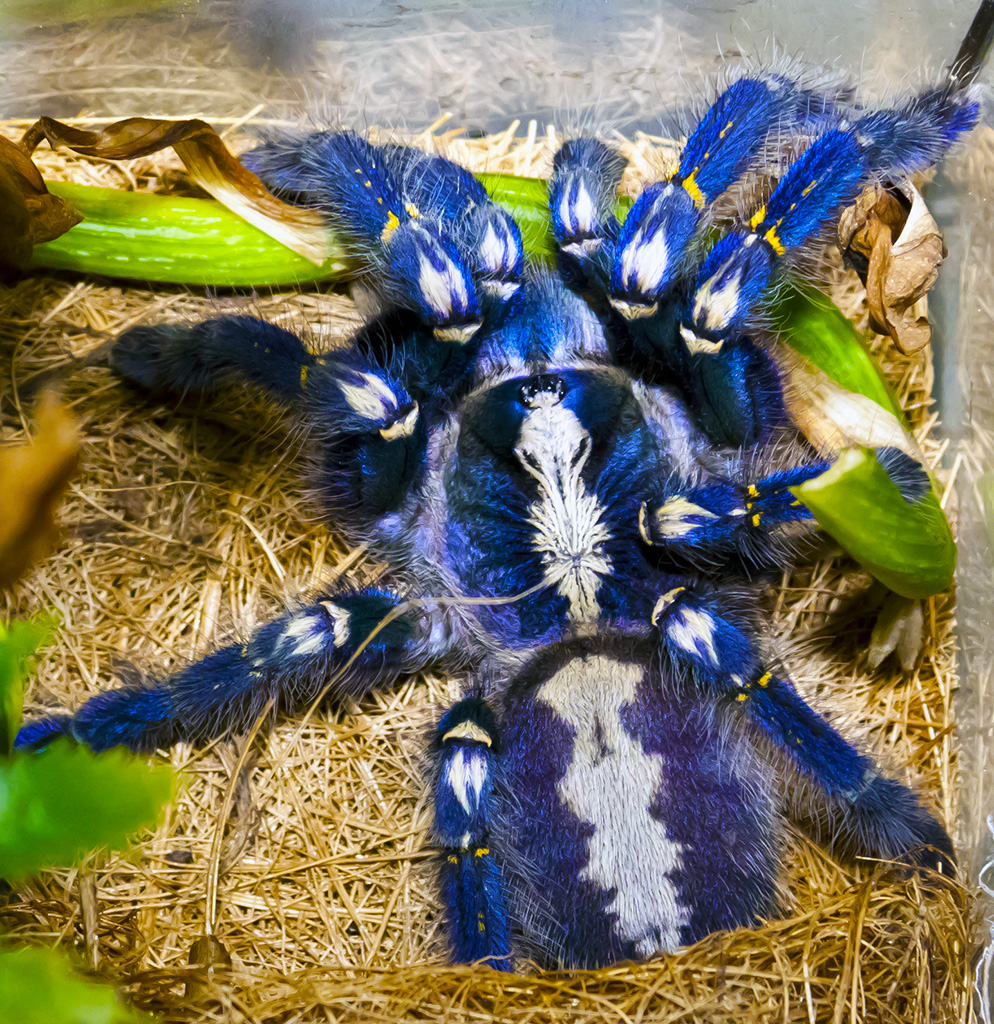
Photo: MLursus, CC BY-SA 2.0
Spider
Advanced
Poecilotheria metallica
Lifespan
F 11-15 years, M 3-4 years
Adult size
DLS 15-20 cm
Temperament
Skittish, extremely fast, potent venom
Temperature
20–28°C
Humidity
60–80%
Vivarium
30 x 30 x 45 cm (arboreal adult, cross-ventilated)
Wikipedia →
An arboreal Old World tarantula known in the wild only from a small, heavily degraded forest area in Andhra Pradesh, southern India, where it lives in tree hollows, and the IUCN lists it as Critically Endangered. Adults are a striking metallic blue with the intricate geometric patterning typical of the genus, which makes it one of the most sought-after tarantulas in the hobby. It is extremely fast and its potent venom can cause severe pain and long-lasting muscle cramps, so it is a display animal for experienced keepers only.
Care information is provided for educational purposes only and does not replace professional veterinary advice.
🔥 Heating
Normal UK room temperature of about 21-26°C is usually enough. If the room regularly drops below about 20°C, fit a heat mat to the side of the enclosure (not underneath) on a thermostat. No basking spot or heat lamp is needed.
💡 Lighting
Tarantulas need no UVB or special lighting, and a normal room day and night cycle is fine. Keep the enclosure out of direct sunlight, which can overheat it quickly, and in a fairly dim spot, as this species is light-shy.
🪨 Substrate
About 5-10 cm of coco fibre or a coco fibre and topsoil mix, kept slightly moist lower down but never waterlogged. Good cross-ventilation matters more than substrate depth for this tree-dweller.
🍽 Feeding
Feed slings pinhead crickets or small roach nymphs two or three times a week, juveniles every 7-10 days and adults a few large crickets or a roach every 1-3 weeks according to abdomen size. Expect refusals in premoult, wait about a week after an adult moult before feeding, and remove uneaten live prey within 24 hours.
💧 Water
Always provide a water dish, and adults do well with one on the floor and a smaller one higher up. Lightly mist or dribble water onto the walls or substrate once or twice a week and let the surface dry between waterings to avoid stagnant damp.
🏠 Enrichment
Provide a tall cork bark tube or slab fixed upright or at an angle as the main retreat, plus extra cork, branches and artificial plants to climb on and anchor silk. It webs around its retreat, hides behind the bark by day and is mostly active at night.
🩺 Health Considerations
Dehydration and failed moults are the main risks if it is kept too dry (slings are especially vulnerable), while stagnant, overly wet enclosures with poor airflow lead to mould and mites. Escapes during maintenance are a real danger because of its speed, so check lids and plan every opening.
🤲 Handling
Strictly hands-off. It has no urticating hairs, but it is extremely fast and its venom is medically significant: Poecilotheria bites can cause severe pain followed by delayed, long-lasting muscle cramps that persist for days (Fuchs et al. 2014), so seek medical advice after any bite. Use long tongs for maintenance and a catch cup for rehousing, working inside a larger container in case it bolts.
⚖️ Legal Restrictions
No Dangerous Wild Animals Act licence is needed, as no tarantula is on the 1976 Act schedule as amended in 2007, and it is not on any UK invasive species list. All Poecilotheria are CITES Appendix II (since 26 November 2019) and Annex B under the UK Wildlife Trade Regulations, so no Article 10 certificate is needed to keep or sell it in the UK, but keep proof of legal captive-bred acquisition, and moving it across the UK border needs CITES permits. It is Critically Endangered in the wild, so buy captive-bred animals only.
📋 Additional Notes
Sex by examining moults, as mature males are slimmer, leggier and less blue, carry palpal bulbs and, like all Poecilotheria, lack tibial hooks. Slings start out lavender-grey and gain blue with each moult, and growth is fast, with maturity in roughly 1.5-3 years. It has been bred in captivity for well over a decade, so captive-bred slings are the norm in the hobby.