
← Species Repository
Tanzanian Red-clawed Scorpion
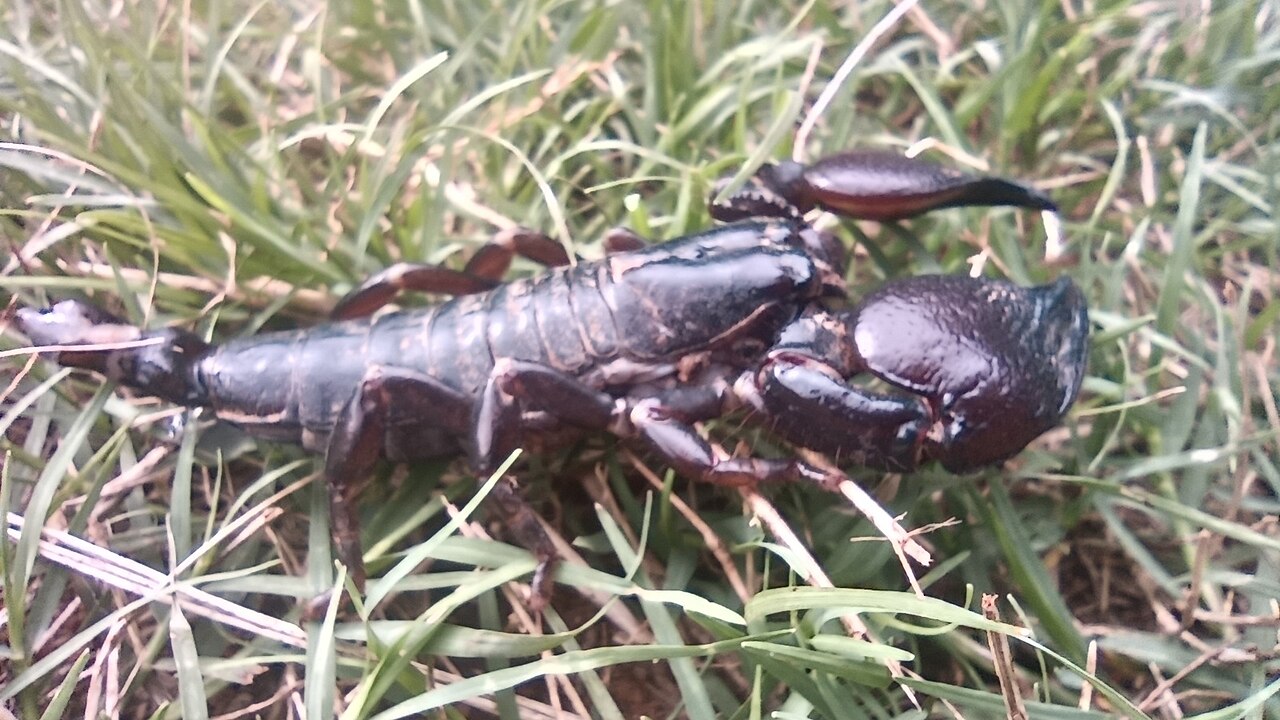
Photo: Martin Tlustos, CC0
Scorpion
Intermediate
Pandinoides cavimanus
Lifespan
5-8 years
Adult size
Body 9-12 cm
Temperament
Nervous, defensive, quick to sting
Temperature
21–29°C
Humidity
65–80%
Vivarium
40 x 25 x 30 cm (one adult)
A dark brown to black scorpion with reddish claws from East Africa, mainly Tanzania, where it lives under rocks and logs and in shallow burrows. Adults reach about 9-12 cm, smaller than the emperor scorpion it is often compared with. It is cheap and widely available, but more defensive and quicker to sting than an emperor. The sting is mild, roughly like a bee sting, and not medically significant for healthy people.
Care information is provided for educational purposes only and does not replace professional veterinary advice.
🔥 Heating
Keep it at 24-28°C with a slight drop at night, using a heat mat on one side wall run on a thermostat. Never put the mat underneath, as it burrows and can overheat.
💡 Lighting
No UVB needed. It is nocturnal, so normal room daylight is enough, and a red light is optional for viewing.
🪨 Substrate
A damp mix of coco fibre, topsoil and a little sand, 10-15 cm deep and packed in layers so burrows hold. Keep it moist but not soggy.
🍽 Feeding
Juveniles roughly weekly; adults 2-3 crickets or roaches every 7-10 days, each no longer than its claws. Remove leftovers within 24 hours.
💧 Water
Sink a shallow water dish level with the substrate, and lightly mist every other day or moisten the substrate to keep humidity up.
🏠 Enrichment
Provide more than one hide, such as cork bark or a half log pressed into the substrate, with leaf litter on top. It will dig under whatever cover it is given.
🩺 Health Considerations
Mycosis develops in wet, poorly ventilated set-ups, and mites and long fasts are common in wild-caught imports. Failed moults usually follow a dried-out enclosure, and a wrinkled abdomen means dehydration.
🤲 Handling
Not recommended: it takes up a threat posture and stings or pinches readily. The venom is mild and not medically significant for healthy people, but allergic reactions are possible.
⚖️ Legal Restrictions
No licence needed in the UK. It is in the Scorpionidae, not the Buthidae, so it is not covered by the Dangerous Wild Animals Act 1976 schedule (which lists scorpions only as 'Family Buthidae: All species' and Hemiscorpius lepturus); it is not one of the CITES-listed Pandinus species and not on the GB invasive species list.
📋 Additional Notes
Long sold as Pandinus cavimanus; Prendini (2016) and the Catalogue of Life place it in Pandinoides. Red-claws are also sold as Pandinus or Pandipalpus viatoris, a similar but separate species, and shop labels are unreliable. Most are wild-caught and the trade harvest may be harming wild populations, so buy captive-bred if you can and house singly, as they can be cannibalistic.