
← Species Repository
California Kingsnake
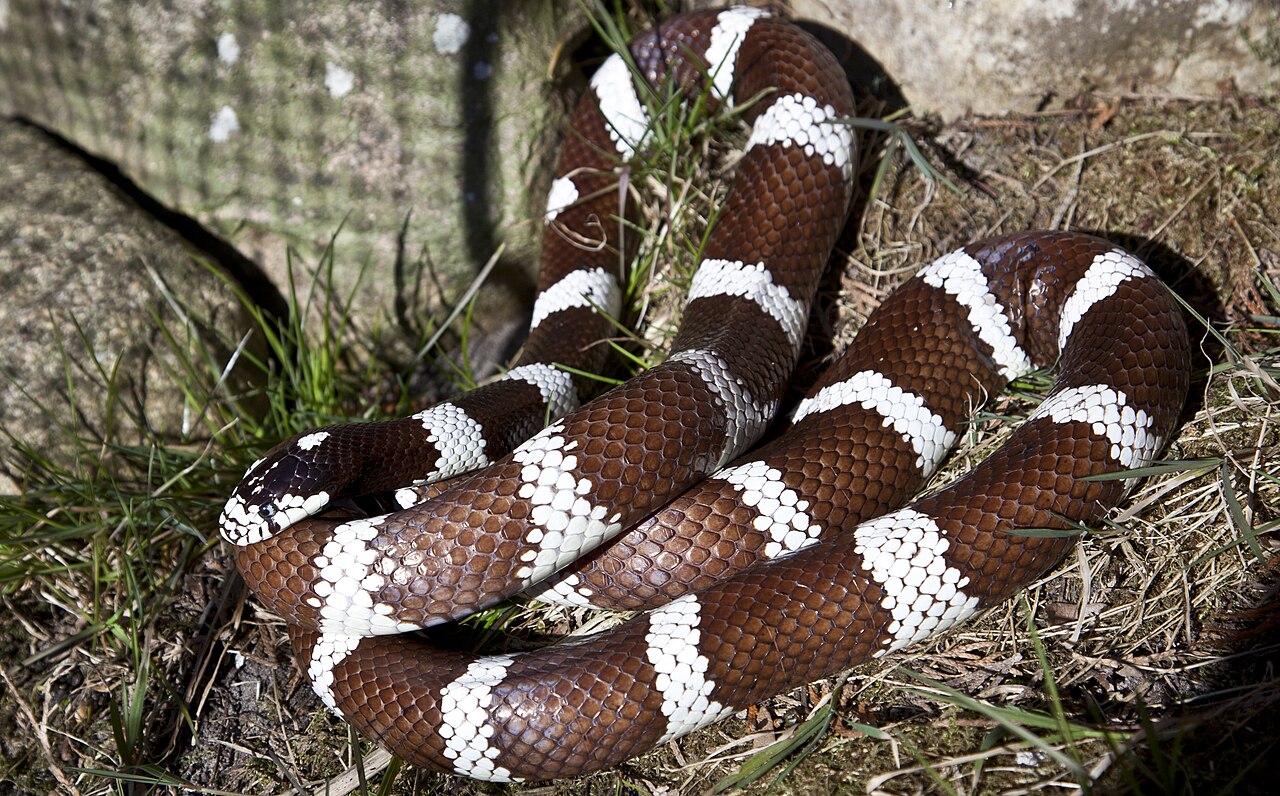
Snake
Beginner
Lampropeltis californiae
Lifespan
15-25 years
Adult size
90-120 cm
Temperament
Bold and active; youngsters may musk and bite
Temperature
20–30°C
Humidity
40–60%
Vivarium
120 x 60 x 60 cm (adult)
Wikipedia →
Native to the western United States and north-western Mexico, in habitats from desert and grassland to chaparral, marsh and suburbs. Usually banded in black or brown with white or yellow, though some populations and many captive lines are striped. Keepers like its hardiness, strong feeding response and huge colour variety. It eats other snakes, including rattlesnakes, so it must always be housed alone.
Care information is provided for educational purposes only and does not replace professional veterinary advice.
🔥 Heating
Heat one end with halogen lamps on a dimming thermostat (or a heat mat on a thermostat), giving a basking surface of 29-32 °C and a cool end of 21-26 °C. Heating can go off at night if the room stays above about 20 °C. Never put the vivarium in direct sunlight, which can overheat it fatally.
💡 Lighting
About 12 hours of light a day. UVB is recommended but not essential: a 5-6% T5 tube over about half the vivarium, giving a UVI of 2-3 at the basking spot.
🪨 Substrate
A soil-based mix, aspen, cypress mulch or coconut coir, about 10 cm deep to allow burrowing. Avoid cedar, other aromatic woods and cat litter.
🍽 Feeding
Frozen-thawed rodents no wider than 1.5 times the snake's widest point (about 10% of its weight). Hatchlings every 5-7 days, juveniles every 7-10 days and adults every 10-14 days, with occasional variety such as quail or chicks. Reduce meals if it gets fat.
💧 Water
A sturdy bowl big enough to soak in, always available and scrubbed weekly. Keep the vivarium fairly dry, with a humid hide of damp moss at the cool end for sheds.
🏠 Enrichment
At least two snug hides, cork bark, branches, ledges and plants for cover, plus deep substrate for burrowing.
🩺 Health Considerations
Very hardy. Watch for obesity, stuck sheds, mites, respiratory infections in damp or cold vivaria, and burns from unguarded heat sources. Kingsnakes are cannibalistic, so never house two together.
🤲 Handling
Usually becomes calm with regular, gentle handling, though youngsters often musk, rattle their tails or bite. Handle hand over hand, keep your hands away from its face, and wait until a meal has digested. Non-venomous.
⚖️ Legal Restrictions
No Dangerous Wild Animals licence needed anywhere in the UK and not CITES-listed. It is not on the Great Britain invasive species list, but Northern Ireland follows the EU list, where Lampropeltis getula (applied to californiae) is listed: breeding, sale and import are banned there, though existing pets can generally be kept for life, so check with DAERA.
📋 Additional Notes
Formerly Lampropeltis getula californiae, and it hybridises readily with other kingsnakes. Males have longer, thicker tails; probe to confirm sex. Common morphs include albino, banana, striped, aberrant, lavender and high-white forms.