
← Species Repository
Golden Blue-leg Baboon
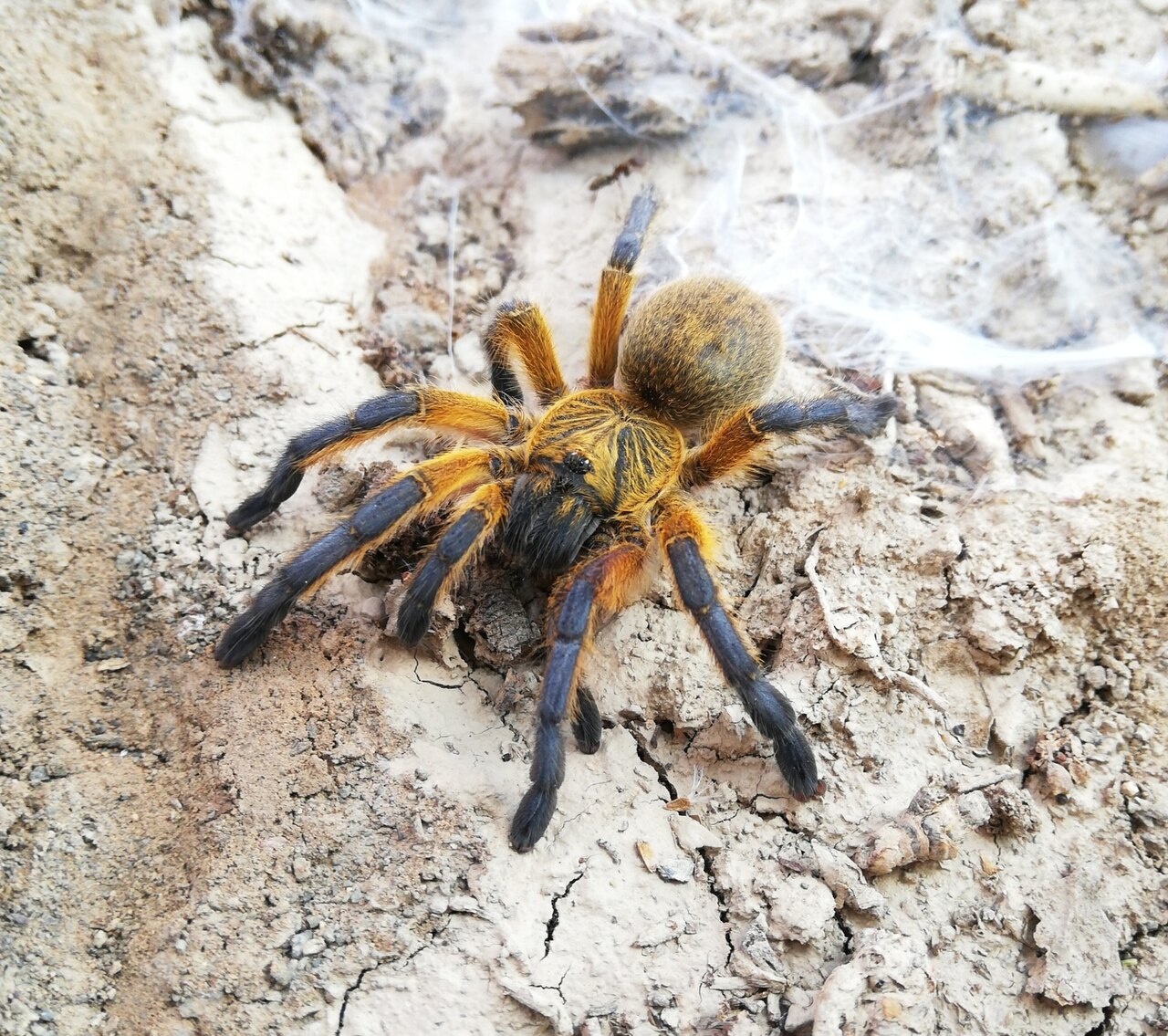
Photo: Christiaan Viljoen, CC BY 4.0
Spider
Advanced
Harpactira pulchripes
Lifespan
F 10-12 years, M 2-3 years
Adult size
DLS 12-14 cm
Temperament
Fast and skittish rather than defensive
Temperature
18–28°C
Humidity
40–65%
Vivarium
30 x 30 x 30 cm (fossorial adult)
Wikipedia →
An Old World baboon spider from a small area of South Africa's Eastern Cape around Makhanda (Grahamstown), where it digs silk-lined burrows. It has metallic blue legs that turn orange-gold near the body and a golden carapace and abdomen with black markings, and adult females often sit out on their webbing, which makes it a striking display animal. It is very fast, has no urticating hairs and carries potent venom, so it is a hands-off species for experienced keepers.
Care information is provided for educational purposes only and does not replace professional veterinary advice.
🔥 Heating
Room temperature of about 20-26°C is ideal, and as it comes from a mild climate it needs no extra heat in most UK homes. If supplementary heat is needed, use a heat mat on the side of the enclosure on a thermostat, never underneath. No basking spot is needed.
💡 Lighting
No UVB or special lighting is needed. A normal room day and night cycle is enough, and keep the enclosure out of direct sunlight, which can overheat it quickly.
🪨 Substrate
Coco fibre, topsoil or a mix firm enough to hold a burrow, about 15 cm deep for adults. Keep the surface dry and the lower layers only lightly moist, as it does poorly in wet conditions.
🍽 Feeding
Feed slings small crickets, roach nymphs or pre-killed prey once or twice a week, juveniles weekly and adults a few large crickets or a roach every 2-3 weeks. It refuses food in premoult and may seal its burrow, so wait about a week after a moult and remove uneaten prey within 24 hours.
💧 Water
Provide a water dish at all times and occasionally overflow it to dampen one corner. Lightly misting the webbing of juveniles now and then is enough, and do not keep it humid.
🏠 Enrichment
Give a cork bark hide with a burrow start beneath it, plus cork pieces, dry leaves or artificial plants as anchors for its heavy webbing. Always house it alone.
🩺 Health Considerations
Too much moisture and stagnant air are the most common problems, so keep it dry and well ventilated. Slings and juveniles often seal their burrows before a moult, so leave them alone rather than digging them out or flooding the burrow.
🤲 Handling
Do not handle. It is extremely fast, especially as a sling, and has no urticating hairs but potent venom: bites are reported to cause severe pain and, as with related Old World species, may cause muscle cramps or other systemic effects, although little data exists. Use tongs and a catch cup for maintenance and rehousing.
⚖️ Legal Restrictions
No licence needed in the UK. Tarantulas are not on the Dangerous Wild Animals Act 1976 schedule (as modified in 2007), and this species is not CITES-listed, not in the Wildlife Trade Regulations annexes and not on the UK invasive species lists.
📋 Additional Notes
Males stay smaller (about 10 cm DLS), are leggier and duller, and mature in roughly 1.5-3 years, while females take 3-4 years, so sex reliably from a moulted skin. Juveniles start to show blue legs at about 4-5 cm. It breeds readily in captivity, which has made it far cheaper and easier to find than when it first entered the hobby.