
← Species Repository
Brazilian Red and White Tarantula
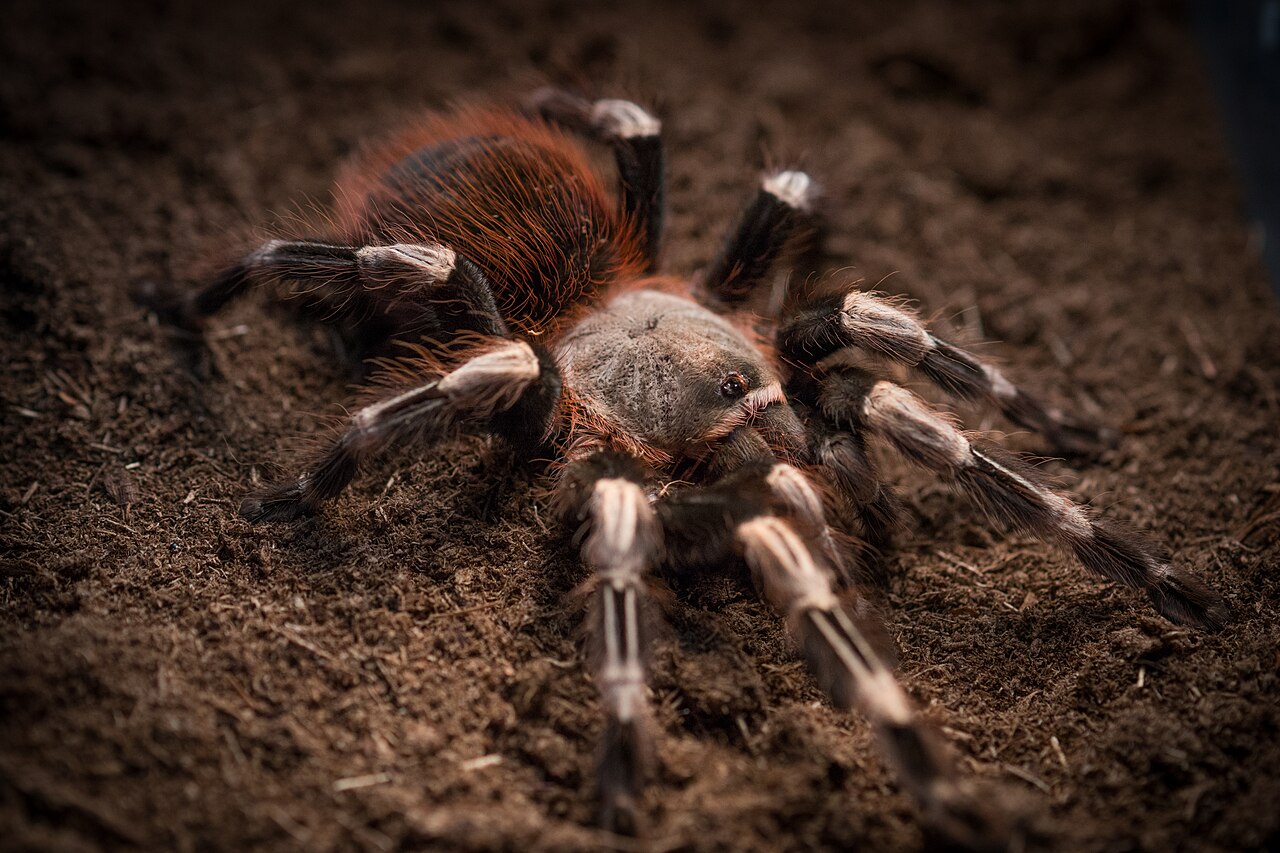
Photo: Fucesa, CC BY-SA 4.0
Spider
Intermediate
Nhandu chromatus
Lifespan
F 10-15 years, M 3-4 years
Adult size
DLS 15-17 cm
Temperament
Skittish and fast, kicks hairs readily
Temperature
20–28°C
Humidity
55–75%
Vivarium
45 x 30 x 30 cm (terrestrial adult)
Wikipedia →
A large, heavy-bodied terrestrial tarantula from Brazil that digs its own burrow or takes over an existing one. It has bold white stripes on dark legs, a beige to grey carapace and reddish hairs on the abdomen, and keepers like its colours and bold feeding response. It is fast and skittish and readily kicks very irritating urticating hairs, so it suits keepers with some experience.
Care information is provided for educational purposes only and does not replace professional veterinary advice.
🔥 Heating
Room temperature of about 20-26°C is usually enough in a UK home. If the room drops below about 20°C, use a heat mat on the side of the enclosure (not underneath) on a thermostat, with no basking spot, and avoid long spells near 30°C.
💡 Lighting
Tarantulas need no UVB or special lighting, and a normal room day and night cycle is fine. Keep the enclosure out of direct sunlight to prevent overheating.
🪨 Substrate
10-15 cm of firmly packed coco fibre or a coco fibre and topsoil mix, kept slightly damp lower down with the surface mostly dry. Deep substrate lets it dig and cushions a heavy adult if it falls.
🍽 Feeding
Feed slings twice a week, juveniles every 7-10 days and adults several large crickets, locusts or a roach every 1-3 weeks according to abdomen size, as it is usually a greedy feeder. Expect refusals in premoult, wait about a week after an adult moult, and remove uneaten prey within 24 hours.
💧 Water
Provide a water dish at all times and overflow it now and then to keep one corner of the substrate damp. Slings need lightly moist substrate rather than misting.
🏠 Enrichment
Provide a half cork bark round as a hide, ideally with a dug-out burrow start beneath it, and deep substrate for digging. Keep climbing decor minimal and use a secure, well-ventilated lid, as it bolts quickly.
🩺 Health Considerations
Watch for dehydration and stuck moults if it is kept too dry, and mould or mites if the substrate is kept wet with poor ventilation. Falls are a risk for such a heavy-bodied spider, so keep the climbing height low.
🤲 Handling
Not recommended. It kicks urticating hairs that are among the most irritating of any New World species, causing itchy rashes and painful eye irritation, so keep your face away, consider eye protection, use tongs and wash your hands after maintenance. Its bite is not medically significant but would be painful, and its speed makes escapes likely if it is handled.
⚖️ Legal Restrictions
No licence needed in the UK. It is not listed under CITES or in the UK Wildlife Trade Regulations annexes, no tarantula is on the Dangerous Wild Animals Act 1976 schedule (as amended in 2007), and it is not on any UK invasive species list.
📋 Additional Notes
Sex by examining moults, as mature males are leggier and duller, with palpal bulbs and tibial hooks. It was moved to Vitalius chromatus in 2023 and returned to Nhandu chromatus in 2026, so dealers may use either name, and older literature misidentified it as Vitalius cristatus. Growth is fairly quick for a large terrestrial, with males maturing in about 2-3 years and females in 3-4 years.