
← Species Repository
Brazilian Black Tarantula
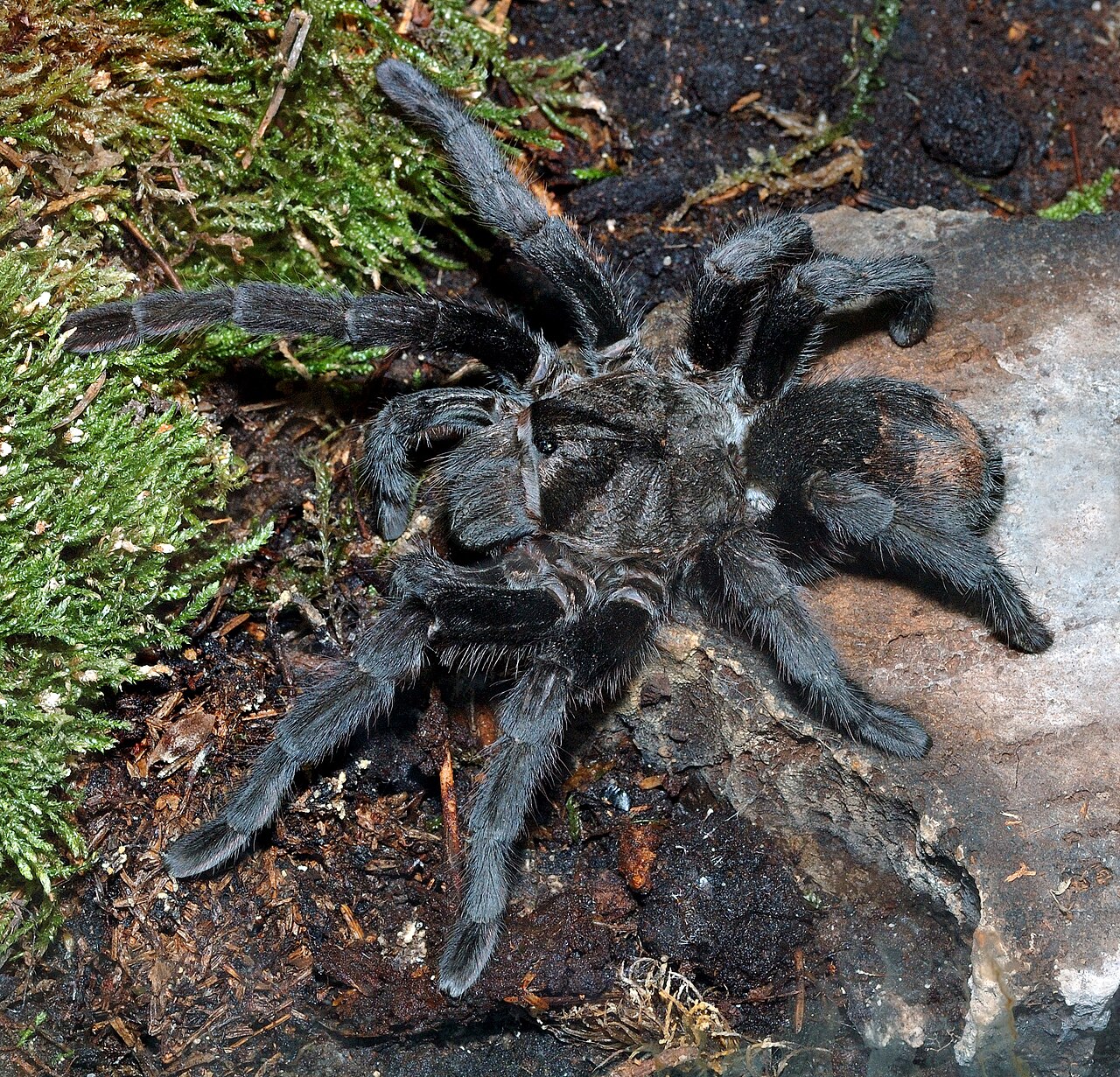
Photo: André Karwath, CC BY-SA 2.5
Spider
Beginner
Grammostola pulchra
Lifespan
F 20-30 years, M 4-8 years
Adult size
DLS 15-18 cm
Temperament
Very calm, rarely flicks hairs
Temperature
18–27°C
Humidity
50–70%
Vivarium
50 x 35 x 30 cm (terrestrial adult)
Wikipedia →
Native to southern Brazil near the Uruguayan border, where it lives in open grassland and forest edges and uses natural crevices or abandoned burrows. A large, heavy-bodied tarantula that is almost entirely velvety jet black, it is prized for its calm nature and very long life. It is slow-growing and pricier than most beginner species, and it has urticating hairs though it rarely flicks them.
Care information is provided for educational purposes only and does not replace professional veterinary advice.
🔥 Heating
Room temperature of about 20-24°C is enough in most UK homes, so heating is not normally needed. If the room regularly falls below 18°C, fit a small heat mat to one side of the enclosure (never underneath) on a thermostat so the spider can move away from the warmth. No basking spot or heat lamp is needed.
💡 Lighting
No UVB or special lighting is needed. Keep it in a room with a normal day and night cycle and out of direct sunlight, which can overheat the enclosure quickly.
🪨 Substrate
Coco fibre or a coco fibre and topsoil mix 12-15 cm deep, kept mostly dry with the lower layers moistened now and then. It is heavy-bodied, so keep the drop from the substrate surface to the lid within about 1.5 times the leg span.
🍽 Feeding
Feed slings small crickets or roach nymphs about twice a week, juveniles every 7-10 days and adults 4-5 large crickets or one large roach every 2-3 weeks. It has a strong feeding response but may fast for long spells, especially before a moult, so remove uneaten prey within 24 hours and wait 1-2 weeks after an adult moult before feeding.
💧 Water
Keep a shallow water dish filled from about 2.5 cm leg span and overflow it into one corner once or twice a month. Smaller slings can have a few drops of water on a slightly damp corner of the substrate weekly instead.
🏠 Enrichment
A cork bark hide with a starter burrow is enough, as adults are opportunistic burrowers and often sit out in the open. Juveniles burrow readily when given the depth.
🩺 Health Considerations
Very hardy. The main risks are falls (it is heavy), dehydration if the water dish runs dry, bad moults, and mould or mites on damp, stagnant substrate, while jerky uncoordinated movement (DKS) needs specialist advice.
🤲 Handling
Hands-off is still recommended, although it is one of the calmest tarantulas, because a fall can be fatal and any individual can turn defensive after a moult. It has urticating hairs that irritate skin and eyes, so use tongs and a catch cup, wash your hands after maintenance and never rub your eyes. The bite is painful but the venom is not medically significant to people, though allergic reactions are possible.
⚖️ Legal Restrictions
No licence needed in the UK. It is not on the Dangerous Wild Animals Act schedule (no tarantulas are), is not listed by CITES or in the UK Wildlife Trade Regulations annexes, and is not a UK invasive species.
📋 Additional Notes
Many animals sold as Brazilian black are actually the near-identical Uruguayan black, Grammostola quirogai, so buy from breeders who can confirm the species, especially if you plan to breed. Growth is slow, with females taking several years (reportedly up to about 8) to mature. Sex from a moult or the ventral epigastric furrow, and mature males develop palpal bulbs and tibial hooks.