
← Species Repository
Children's Python
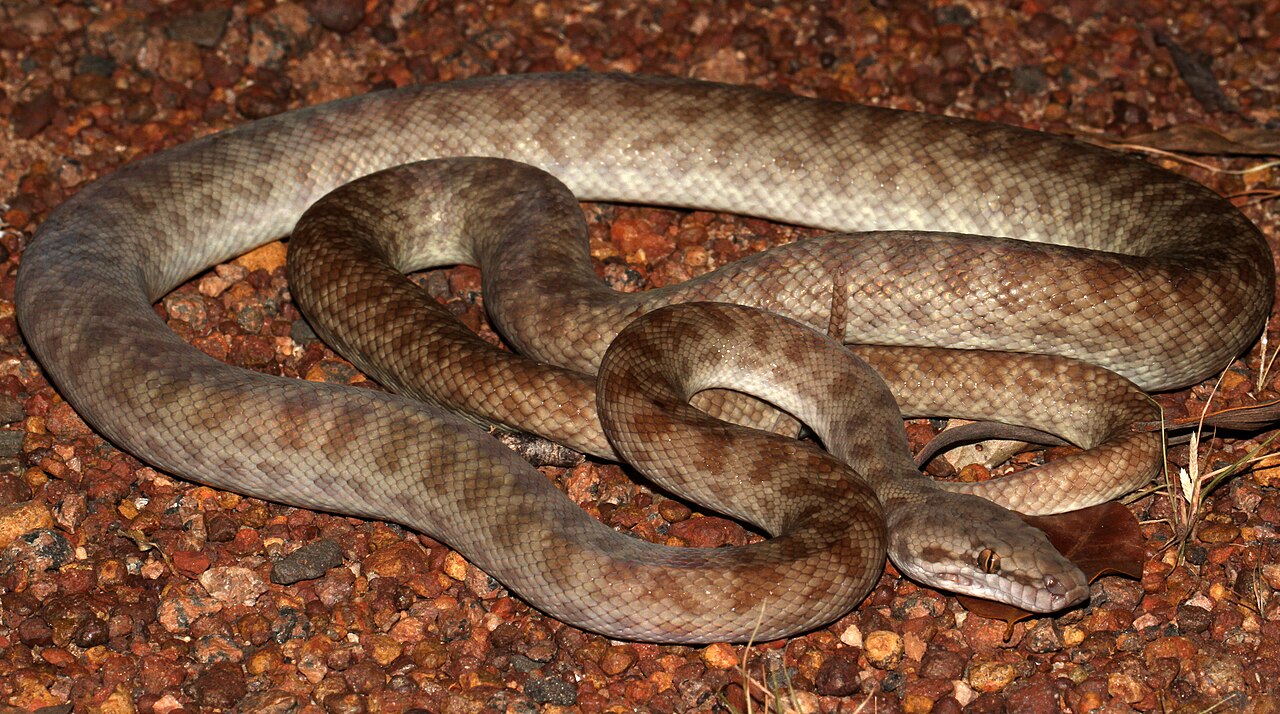
Photo: Matt from Melbourne, Australia, CC BY 2.0
Snake
Beginner
Antaresia childreni
Lifespan
20-30 years
Adult size
75-100 cm (some to 150 cm)
Temperament
Docile but often shy; juveniles may nip
Temperature
20–32°C
Humidity
20–80%
Vivarium
90 x 45 x 45 cm (adult)
Wikipedia →
Native to northern Australia, from the Kimberley across the Top End to northern Queensland, in rocky country, woodland and grassland, where it sometimes catches bats near caves. A small, slender python, reddish-brown with blotches that fade as it matures, and an iridescent sheen in sunlight. It is named after the museum curator John George Children, not because it suits children, though its small size and placid nature make it an excellent beginner python.
Care information is provided for educational purposes only and does not replace professional veterinary advice.
🔥 Heating
Use a halogen lamp on a thermostat at one end, giving a basking surface of 32-35 °C, warm-end air of about 29-31 °C and a cool end of 24-27 °C. Heating can go off at night, letting the vivarium fall to around 20 °C.
💡 Lighting
About 13 hours of light in summer and 11 in winter. Low-output UVB giving a UVI of 2-3 at the basking spot is recommended.
🪨 Substrate
Aspen, coconut husk or a sandy soil mix with leaf litter on top, about 5-10 cm deep, fully replaced every 3-4 months.
🍽 Feeding
Frozen-thawed mice about 10% of body weight and slightly wider than the snake. Juveniles every 5-7 days and adults every 10-14 days. Breeding males may fast for a few weeks.
💧 Water
A bowl of fresh water always available, changed often and scrubbed weekly. It tolerates 20-80% humidity; provide a humid hide with damp moss rather than misting heavily.
🏠 Enrichment
Several snug hides, cork, branches for climbing and plants for cover.
🩺 Health Considerations
Hardy; watch for stuck sheds, mites, respiratory infections (noisy breathing, mucus) and obesity. Unexplained weight loss, swellings or discoloured belly scales need a vet.
🤲 Handling
Generally calm but often shy, and more likely to bite when in shed. Let it settle and eat regularly first, lift from below, support the body and never lift by the tail. Non-venomous; bites are minor.
⚖️ Legal Restrictions
No Dangerous Wild Animals licence needed in the UK. It is CITES Appendix II (UK Annex B): keep proof of captive-bred origin; no certificate is needed for captive-bred pets.
📋 Additional Notes
Males have longer tails and larger spurs; probe to confirm sex. Morphs include albino, leucistic, ebony, melanistic, ghost and piebald. Stimson's python (Antaresia stimsoni) is kept separately in the hobby, though a 2020 study suggested it is a colour form of this species.