
← Species Repository
Socotra Island Blue Baboon
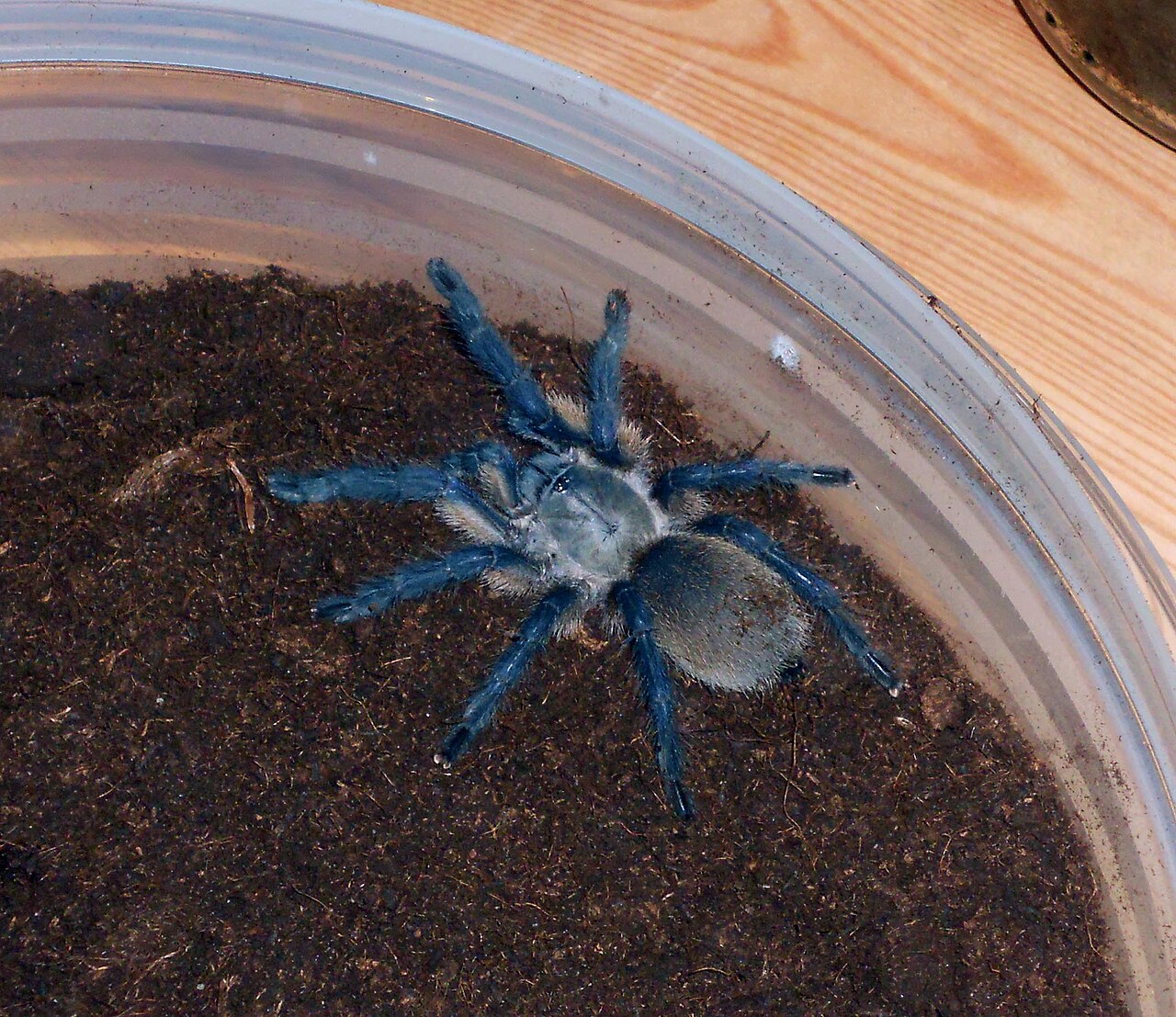
Photo: Marc BRETHES, CC BY-SA 3.0
Spider
Intermediate
Monocentropus balfouri
Lifespan
F 10-14 years, M 3-4 years
Adult size
DLS 12-15 cm
Temperament
Fairly calm for an Old World, but fast
Temperature
20–28°C
Humidity
40–65%
Vivarium
40 x 30 x 30 cm (single terrestrial adult, deep substrate)
Wikipedia →
An Old World tarantula found only on Socotra, an island belonging to Yemen, where it lives in a hot, fairly dry climate at up to about 850 m. Adults have blue legs and carapace with a cream to grey body, and keepers love its colour, heavy webbing and unusual tolerance of its own kind. It has no urticating hairs and relies on speed and a venomous bite, so it is best kept hands-off by keepers with some experience.
Care information is provided for educational purposes only and does not replace professional veterinary advice.
🔥 Heating
Room temperature of about 20-26°C is usually fine, and it copes well with warmth. If extra heat is needed, use a heat mat on the side of the enclosure (not underneath) on a thermostat, with no basking spot or heat lamp.
💡 Lighting
Tarantulas need no UVB or special lighting, and a normal room day and night cycle is fine. Keep the enclosure out of direct sunlight to prevent overheating.
🪨 Substrate
At least 10-15 cm of dry, firmly packed coco fibre and topsoil mix, as it digs and lines extensive tunnels with silk. Keep it mostly dry, with a slightly damp area for slings.
🍽 Feeding
Feed slings small or pre-killed prey once or twice a week, juveniles every 7-10 days and adults every 1-3 weeks according to abdomen size. It often refuses food in premoult, so remove uneaten prey within 24 hours and wait about a week after an adult moult before feeding.
💧 Water
Provide a shallow water dish at all times, and adults do not need misting. Slings dry out more easily, so keep part of their substrate slightly damp.
🏠 Enrichment
Give it cork bark, a burrow start, twigs and leaf litter as anchor points, because it webs heavily and builds silk tunnels. It is one of the few tarantulas sometimes kept communally, but only experienced keepers should try it (siblings from one sac introduced together, with several hides and feeding spots), and one per enclosure is the safest option.
🩺 Health Considerations
Dehydration is the main risk for slings and juveniles, while adults only suffer mould or mites if kept too damp and stuffy. In a communal set-up, check that every spider is feeding and moulting successfully and separate any that are outcompeted.
🤲 Handling
Hands-off is strongly recommended. It has no urticating hairs, but it is fast and will rear up in a threat pose and bite if provoked, and its venom is considered stronger than that of New World species, though few bites are documented. Treat any bite seriously, seek medical advice if symptoms are severe, and use tongs for maintenance and a catch cup for rehousing.
⚖️ Legal Restrictions
No licence needed in the UK. It is not listed under CITES or in the UK Wildlife Trade Regulations annexes, no tarantula is on the Dangerous Wild Animals Act 1976 schedule (as amended in 2007), and it is not on any UK invasive species list.
📋 Additional Notes
Sex from moults as it nears maturity, as mature males are slimmer and leggier with palpal bulbs. Slings are steel grey with dark legs and develop the cream body and blue legs as they grow, at a medium growth rate. Females show strong maternal care and can be especially defensive when guarding an egg sac.