
← Species Repository
Brazilian Rainbow Boa
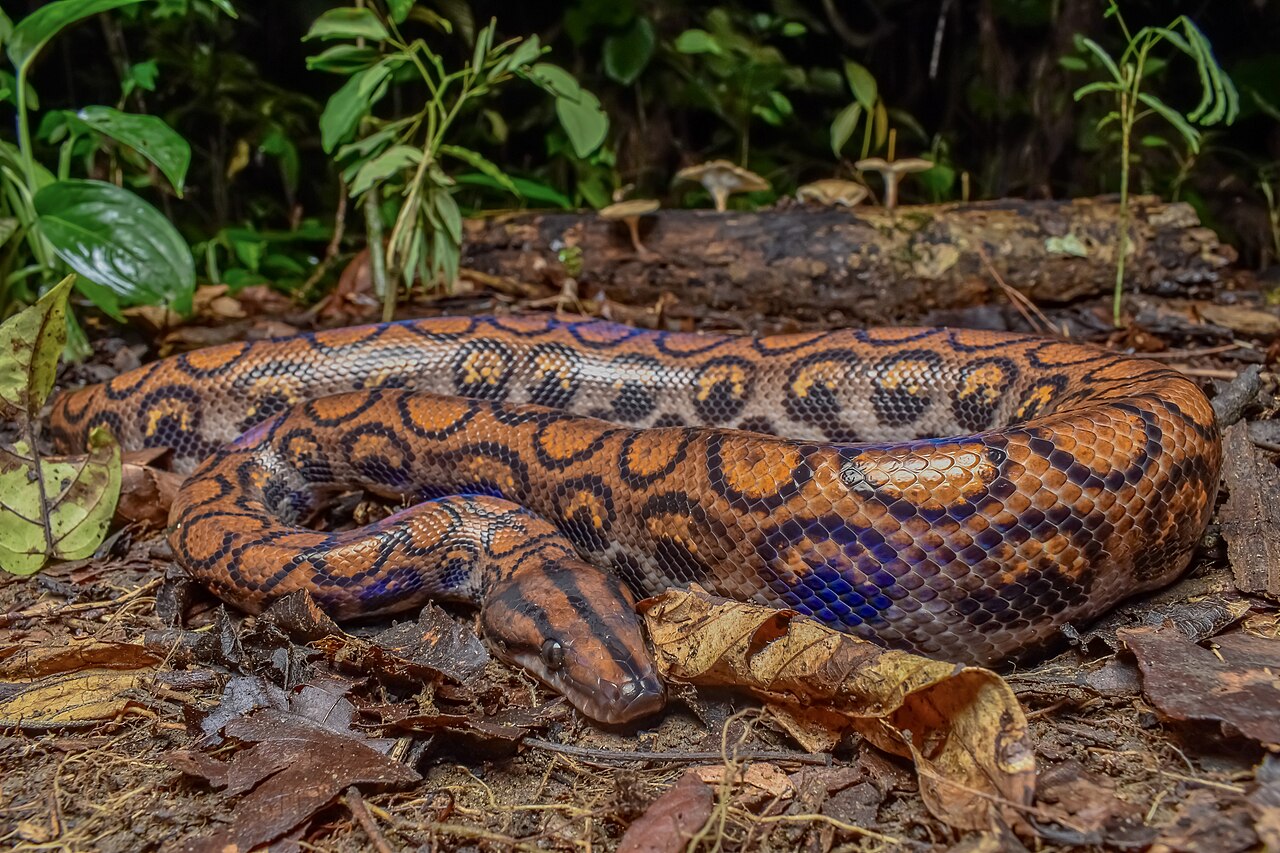
Photo: Edunavia1, CC BY-SA 4.0
Snake
Intermediate
Epicrates cenchria
Lifespan
20-30 years
Adult size
150-200 cm
Temperament
Docile adults; neonates nervous and nippy
Temperature
22–30°C
Humidity
70–90%
Vivarium
180 x 90 x 90 cm (adult); semi-arboreal
Wikipedia →
Native to South America east of the Andes, from the Amazon basin to northern Argentina, in humid forest and some savanna. A medium-sized boa, orange to reddish-brown with black rings, whose scales give an intense iridescent sheen in light. Keepers love its colour and calm adult temperament, but it needs consistently high humidity. Dehydration and overheating are the commonest causes of death in captivity.
Care information is provided for educational purposes only and does not replace professional veterinary advice.
🔥 Heating
Use guarded overhead heat or a radiant panel on a thermostat, giving a basking surface of 30-32 °C, daytime air of about 26-29 °C and nights of 22-24 °C. Avoid prolonged temperatures above 32 °C, which Brazilian rainbow boas tolerate poorly.
💡 Lighting
A 12-hour day and night cycle. Low-output UVB giving a UVI of 2-3 at the basking spot is recommended.
🪨 Substrate
A moisture-holding substrate such as a topsoil and coir mix, cypress mulch or coco coir, about 10 cm deep and damp but not wet, with leaf litter and sphagnum moss on top.
🍽 Feeding
Frozen-thawed rodents about 10% of the snake's weight and no wider than its widest point. Juveniles every 1-2 weeks and adults every 2-4 weeks. Both sexes may fast in the breeding season.
💧 Water
A large bowl or tub big enough to soak in, refreshed daily. Mist daily to keep humidity at about 70-90% (90-100% for neonates) without making the substrate waterlogged.
🏠 Enrichment
At least two hides, sturdy secured climbing branches, cork bark and dense foliage for cover, plus a humid hide with damp moss.
🩺 Health Considerations
Dehydration (wrinkled scales, incomplete sheds, regurgitation) and overheating are the main killers. Constantly wet, stagnant conditions cause blister disease and respiratory infections, and stuck sheds follow if humidity drops.
🤲 Handling
Juveniles are nervous and may bite, but most grow into docile adults that tolerate regular handling. Start with short sessions, support the body with both hands and never lift by the tail. Non-venomous.
⚖️ Legal Restrictions
No Dangerous Wild Animals licence needed in the UK. It is CITES Appendix II (UK Annex B): keep proof of captive-bred origin; no certificate is needed for captive-bred pets.
📋 Additional Notes
Gives birth to live young. Females are slightly larger with wider bodies; males have longer tails, and probing confirms sex. Morphs include hypomelanistic, anerythristic, albino and ghost; the Colombian rainbow boa (Epicrates maurus) is a different species.