
← Species Repository
Guatemalan Tiger Rump
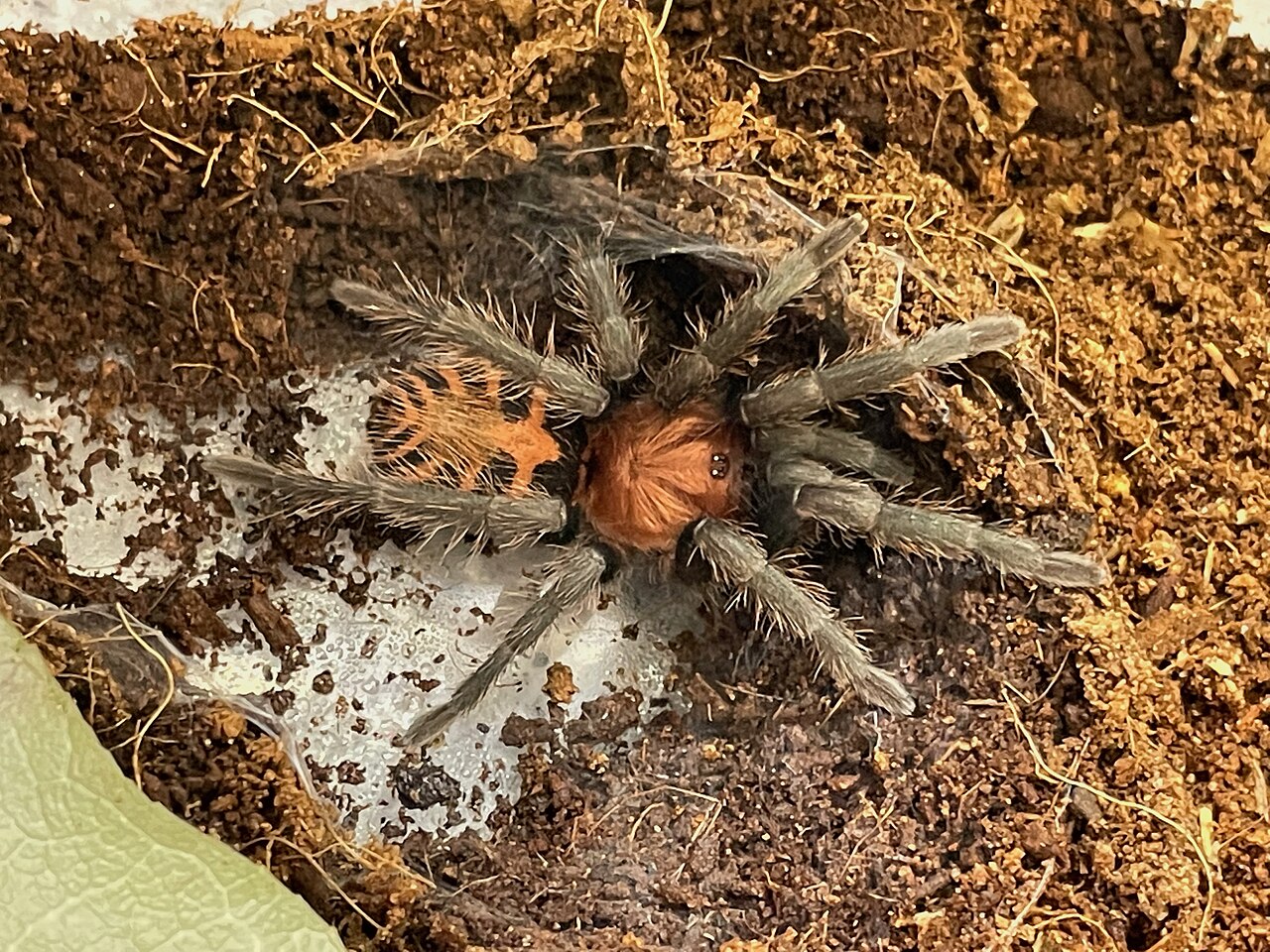
Photo: Fungus Guy, CC BY-SA 4.0
Spider
Beginner
Davus pentaloris
Lifespan
F 8-11 years, M 2-4 years
Adult size
DLS 9-12 cm
Temperament
Skittish and fast but docile
Temperature
18–27°C
Humidity
55–75%
Vivarium
30 x 30 x 25 cm (terrestrial adult)
Wikipedia →
A small terrestrial tarantula from southern Mexico and Central America (Guatemala, El Salvador and Honduras). It has a coppery to orange carapace, black legs and a black abdomen with coppery or orange stripes that vary in number and brightness. Keepers like it as a hardy, fast-growing dwarf that is often out on view, but it bolts quickly and will flick urticating hairs.
Care information is provided for educational purposes only and does not replace professional veterinary advice.
🔥 Heating
Room temperature of about 20-26°C suits it in most UK homes. If extra heat is needed, use a heat mat on the side of the enclosure on a thermostat, never underneath. No basking spot is needed.
💡 Lighting
No UVB or special lighting is needed. A normal room day and night cycle is enough, and keep the enclosure out of direct sunlight, which can overheat it quickly.
🪨 Substrate
Coco fibre or a topsoil mix about 8-12 cm deep for adults, as it likes to dig. Keep the lower layer slightly moist on one side but avoid soggy substrate, which it dislikes.
🍽 Feeding
Feed slings small crickets or roach nymphs twice a week, juveniles every 7-10 days and adults a few crickets or a roach every 1-3 weeks, adjusted so the abdomen is no wider than the carapace. It refuses food in premoult, so wait several days after a moult and remove uneaten prey within 24 hours.
💧 Water
Provide a shallow water dish and overflow it now and then to keep one corner damp. Misting is not needed.
🏠 Enrichment
Offer a cork bark hide with a burrow start beneath it, although some individuals dig more without a hide. Good ventilation matters more than extra decor.
🩺 Health Considerations
Overly damp, poorly ventilated substrate is the main problem, leading to mould and mites. Its speed makes escapes during rehousing the biggest risk, and slings can dry out if their substrate dries completely.
🤲 Handling
Hands-off is recommended because it is skittish and fast enough to bolt and fall. It flicks urticating hairs that irritate skin and eyes, so keep your face away and wash your hands after maintenance. Its venom is not considered medically significant, though a bite would be painful.
⚖️ Legal Restrictions
No licence needed in the UK. Tarantulas are not on the Dangerous Wild Animals Act 1976 schedule (as modified in 2007), and this species is not CITES-listed, not in the Wildlife Trade Regulations annexes and not on the UK invasive species lists.
📋 Additional Notes
Previously placed in Hapalopus and Pseudoschizopelma (as P. pentalore), and Davus mozinno is a synonym. A study by Candia-Ramirez and Francke (2021) found many diagnosable lineages within what is called D. pentaloris, so hobby stock may be of mixed or unknown origin, and it is sometimes mislabelled as the darker Costa Rican Davus fasciatus. Growth is fast (males mature in about 2-3 years, females 3-4), and sexing is easiest from a moulted skin.