
← Species Repository
Giant African Land Snail
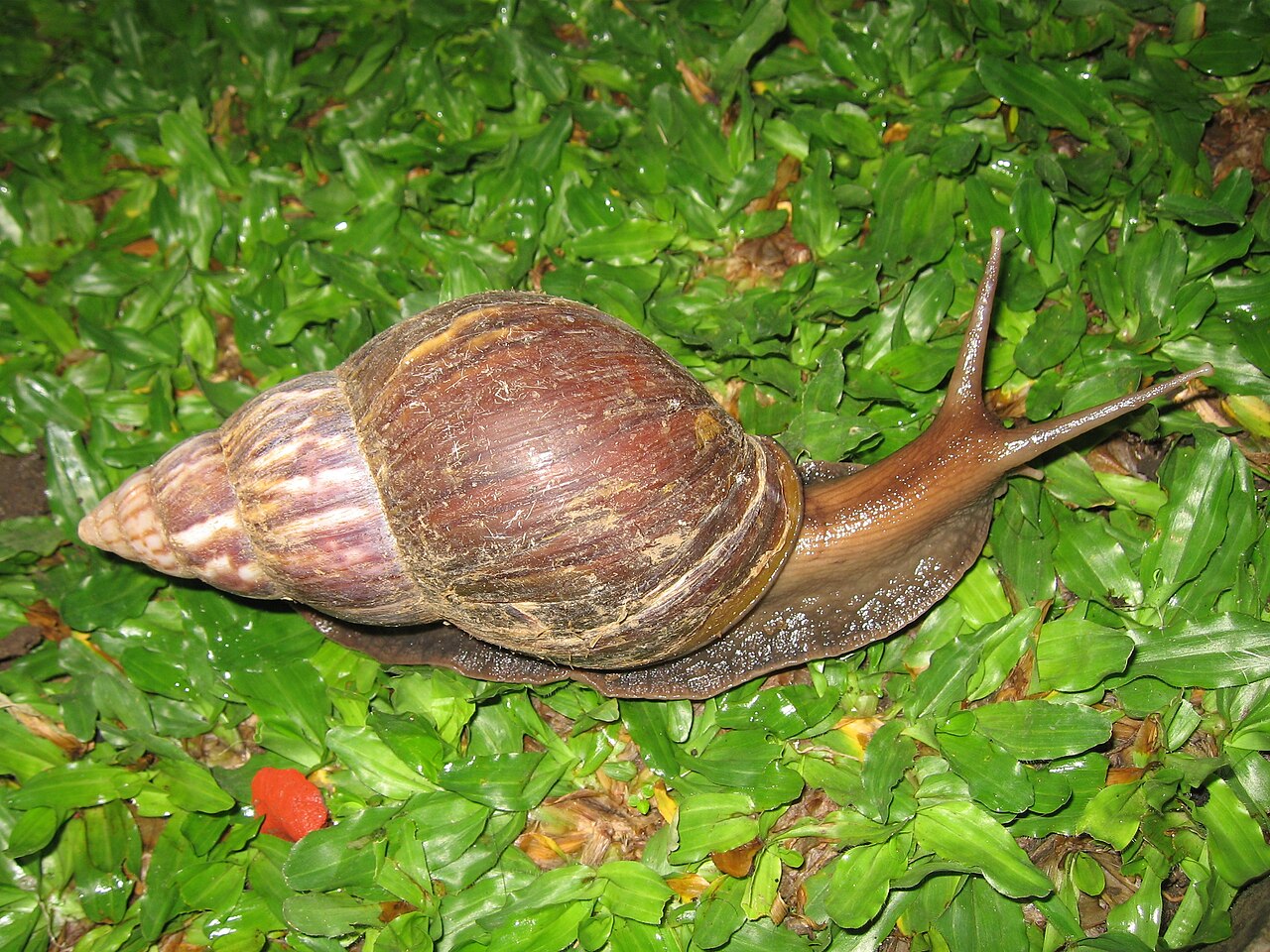
Photo: Alexander R. Jenner, CC BY-SA 3.0
Other Inverts
Beginner
Lissachatina fulica
Lifespan
5-6 years, up to 10
Adult size
Shell length 10-20 cm
Temperament
Placid, tolerates gentle handling
Temperature
18–28°C
Humidity
70–90%
Vivarium
60 x 45 x 40 cm (for two adults)
Wikipedia →
Native to East Africa and now an invasive pest across much of the tropics, it lives in damp vegetation and leaf litter and is mostly nocturnal. Adults carry a tall conical brown shell streaked with cream and darker bands, up to about 20 cm long, and several body and shell colour forms are sold in the UK. It is popular as a calm, quiet and inexpensive family pet. It is a hermaphrodite that lays clutches of around 200 eggs, and snails can carry Salmonella and parasites, so wash hands after handling.
Care information is provided for educational purposes only and does not replace professional veterinary advice.
🔥 Heating
Keep at about 21-25 °C and never below 18 °C or above 29 °C. In a cool room use a heat mat under or on the side of half the tank on a thermostat; if it is too cold, hot or dry the snail seals itself in and goes dormant.
💡 Lighting
No UVB or extra lighting needed if the room gets indirect daylight; it avoids bright light, so keep the tank out of direct sun.
🪨 Substrate
3-6 cm or more of peat-free compost or coco coir with no fertiliser or chemicals, kept damp but not soaking, so the snail can bury itself. Do not use garden soil.
🍽 Feeding
Daily washed vegetables and greens (lettuce, kale, cucumber, courgette, dandelion) with some fruit, plus protein such as fish flakes at least weekly. Always provide calcium such as cuttlefish bone and remove uneaten food within 24 hours.
💧 Water
Provide a very shallow water dish, since snails can drown in more than a few millimetres of water, and mist lightly with warm water every other day.
🏠 Enrichment
Cork bark, half-logs, leaf litter and sphagnum moss for hiding, with enough depth to burrow; use a secure, ventilated lid because snails climb out.
🩺 Health Considerations
Watch for dehydration (staying sealed in the shell), calcium deficiency, shell damage from falls and poisoning; sprays, detergents and garden chemicals near the tank can kill them. Clean the tank with hot water only, never disinfectant.
🤲 Handling
Can be handled gently: lift it by the shell when it is resting on the substrate, or let it crawl onto a damp hand or leaf, taking care with the fragile shells of young snails. Not venomous, but wash and disinfect hands afterwards because snails can carry Salmonella and rat lungworm (a very low risk with UK captive-bred snails).
⚖️ Legal Restrictions
No licence needed to keep it in the UK, and it is not on the GB list of invasive species of special concern. Releasing snails or their eggs into the wild is an offence under section 14 of the Wildlife and Countryside Act 1981, and importing live snails into the UK needs an import licence. It is a federally prohibited species in the USA.
📋 Additional Notes
Formerly Achatina fulica; the related tiger snail (Achatina achatina) and Archachatina marginata are kept the same way. Snails can lay eggs even when kept alone, so check the substrate regularly and freeze unwanted eggs for 48 hours before disposal. Lifespan is about 3-5 years in the wild and 5-6 years in captivity, occasionally up to 10.