
← Species Repository
Ghost Mantis
Other Inverts
Beginner
Phyllocrania paradoxa
Lifespan
7-12 months, F outlive M
Adult size
Body 4.5-5 cm, F larger
Temperament
Placid, tolerates group living
Temperature
18–30°C
Humidity
50–80%
Vivarium
20 x 20 x 30 cm (height at least 3x body length)
Wikipedia →
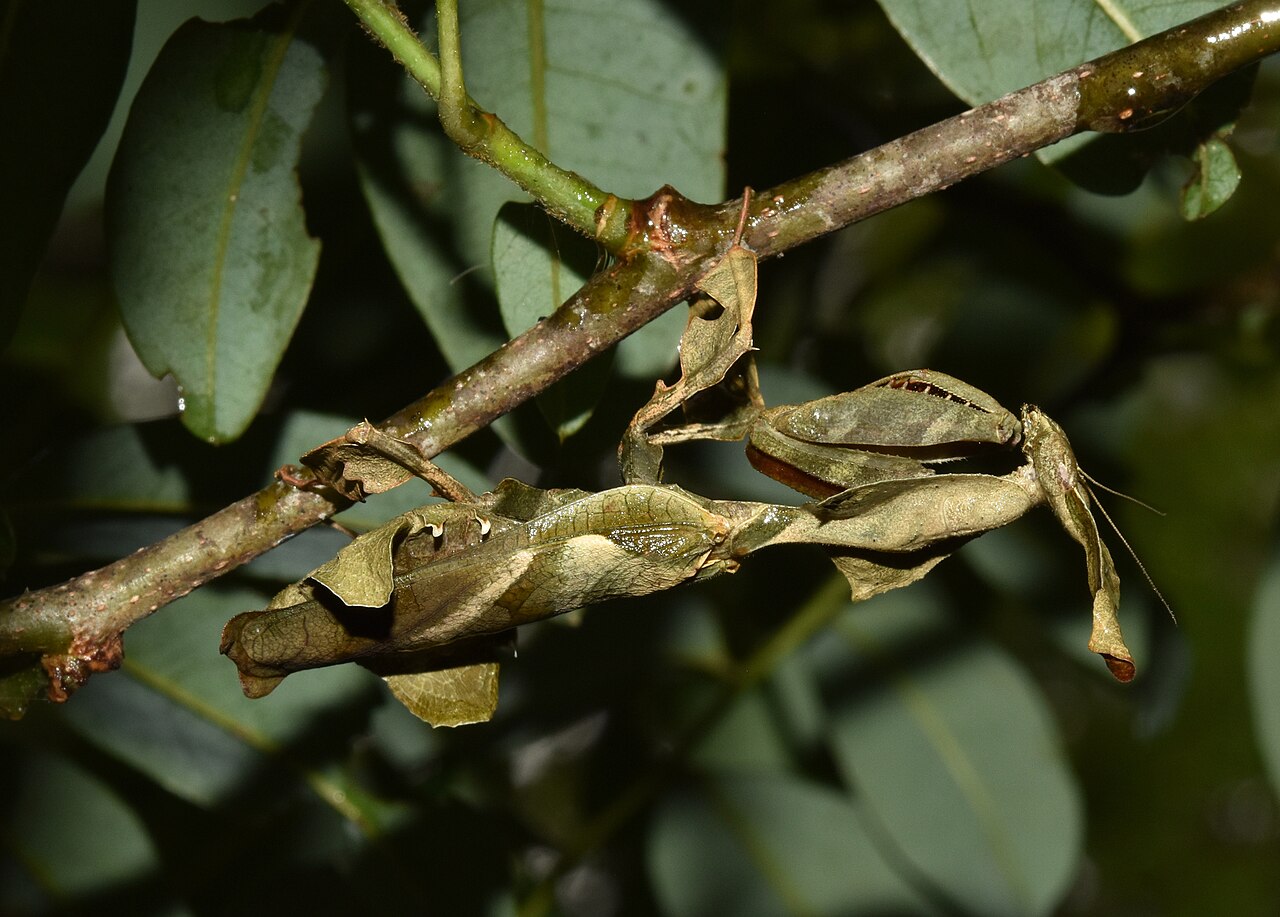
Widespread in dry bush and open woodland across sub-Saharan Africa and Madagascar. A small mantis of 4.5-5 cm that mimics a dead leaf, with a leafy crest on the head and colours from almost black through brown to green-grey. Its looks, calm nature and tolerance of group living make it a favourite with UK keepers. It is harmless to people.
Care information is provided for educational purposes only and does not replace professional veterinary advice.
🔥 Heating
About 24-27 °C by day is ideal (20-30 °C acceptable), with nights no lower than 18 °C. Use a heat mat on the side on a thermostat, or a low-wattage lamp above the mesh with a cooler area.
💡 Lighting
No UVB needed; about 12 hours of bright room light or an LED light.
🪨 Substrate
1-2 cm of coco fibre or paper towel, replaced regularly.
🍽 Feeding
Nymphs: fruit flies every other day. Adults: flies (houseflies, bluebottles) and small roaches or grasshoppers about the size of the head every 2-3 days; avoid large crickets.
💧 Water
Mist lightly once or twice a day for drinking water (more often in mesh enclosures), keeping good ventilation.
🏠 Enrichment
Twigs and artificial plants to perch on and space at the top to hang when moulting; a group can share a larger enclosure.
🩺 Health Considerations
Failed moults from humidity that is too low or too high, or from lack of height, are the main problem; do not disturb for about 3 days after a moult. Cannibalism can occur in groups if food runs short or sizes differ.
🤲 Handling
Can be handled gently but is happier left to perch, and handling or tongs can put it off feeding; males may play dead when disturbed. Harmless.
⚖️ Legal Restrictions
No licence needed in the UK; it is not CITES-listed or a GB invasive species of special concern. As a non-native animal it must never be released (Wildlife and Countryside Act 1981, section 14).
📋 Additional Notes
Sexing from about the fourth moult: females are larger and broader, with a smoother crest and wings ending at the abdomen tip; males are slimmer, with longer antennae, a jagged crest and wings beyond the abdomen. Communal housing works if animals are of similar size and well fed. Colour (dark brown, sand, reddish or green) can shift between moults with humidity and surroundings.