
← Species Repository
Mexican Red Rump Tarantula
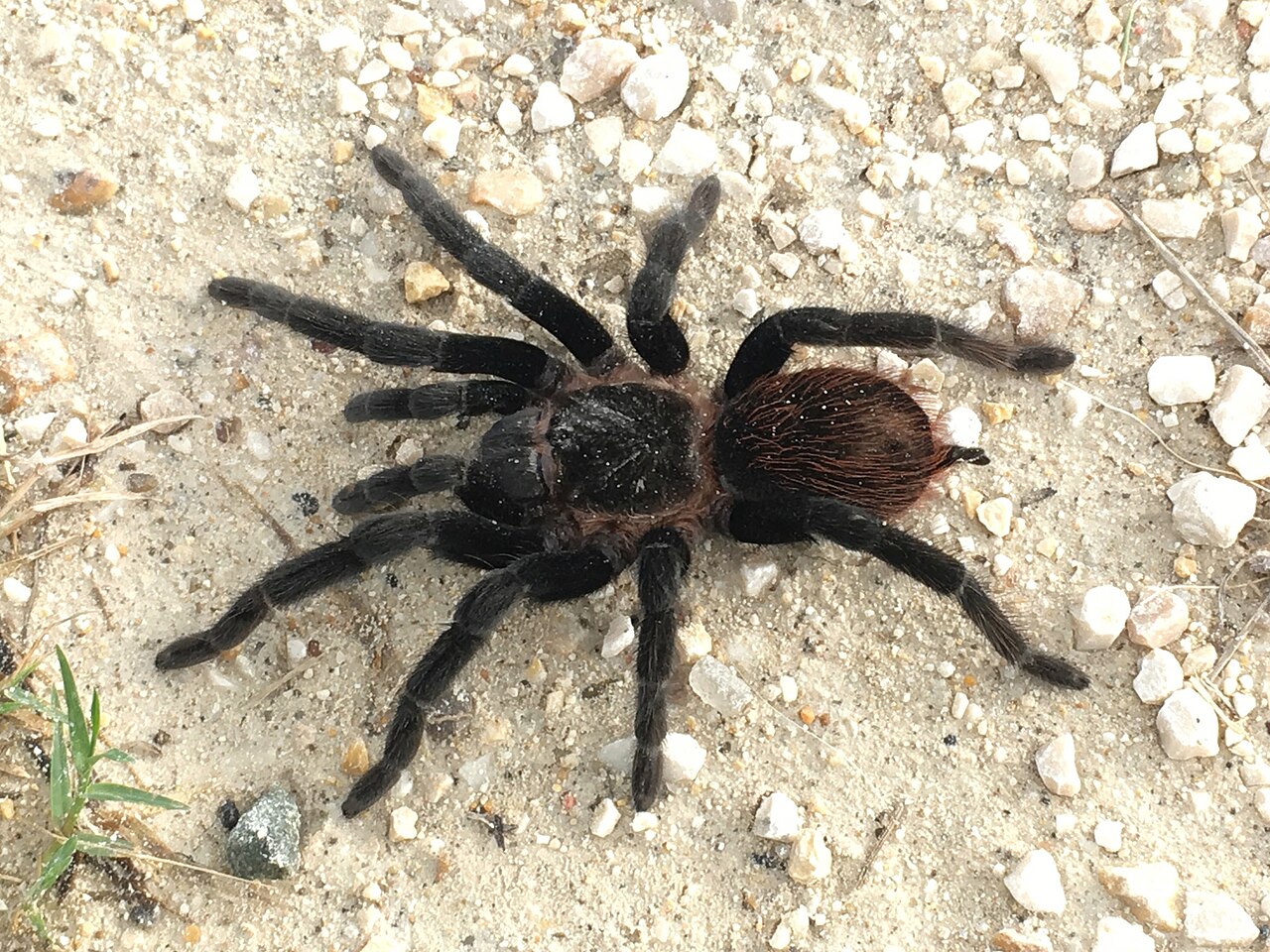
Spider
Beginner
Tliltocatl vagans
Lifespan
F 20-25 years, M 4-8 years
Adult size
DLS 13-16 cm
Temperament
Docile but skittish, kicks hairs readily
Temperature
18–28°C
Humidity
50–70%
Vivarium
45 x 30 x 30 cm (terrestrial adult, deep substrate)
Wikipedia →
A burrowing terrestrial tarantula from southern Mexico, including the Yucatan Peninsula, and Central America such as Belize and Guatemala, with an introduced population in Florida. It is velvety black with long red hairs on the abdomen. Keepers like its hardiness, long female lifespan and strong feeding response, though it can be skittish and quick to kick urticating hairs.
Care information is provided for educational purposes only and does not replace professional veterinary advice.
🔥 Heating
Room temperature of about 20-27°C suits it in most UK homes. If the room stays below 20°C for long, use a heat mat on one side of the enclosure (never underneath) controlled by a thermostat. No basking surface is needed.
💡 Lighting
No UVB or special lighting is needed. Keep the enclosure in a room with a normal day and night light cycle and out of direct sunlight.
🪨 Substrate
10-15 cm of coco fibre, topsoil or a mix, with the lower layers kept slightly moist and the surface dry. Deep substrate lets it burrow, tends to make it calmer and keeps the fall height to the lid small.
🍽 Feeding
Feed slings small crickets, roach nymphs or pre-killed prey twice a week, juveniles every 7-10 days and adults large crickets, roaches or locusts every 1-3 weeks. It has a strong feeding response but refuses food in premoult, so wait about a week after a moult and remove uneaten prey or leftover food boluses within 24 hours.
💧 Water
Provide a shallow water dish from juvenile size upwards and overflow it into one corner now and then to keep the lower substrate damp. Misting is not needed, and small sling pots dry out quickly, so check them often.
🏠 Enrichment
Provide a cork bark hide or half-log over a starter burrow in deep substrate. It will usually dig and extend its own burrow.
🩺 Health Considerations
Generally hardy. Slings are prone to dehydration in small pots, mesh lids can trap claws and cause leg injuries, and very damp substrate encourages mould and mites. Also watch for stuck moults, nematodes (white discharge around the mouthparts) and DKS (jerky, uncoordinated movement), for which no reliable treatment is known.
🤲 Handling
Hands-off is recommended. It readily kicks urticating hairs that cause itchy rashes on skin and painful irritation in the eyes, so wash your hands after maintenance, never rub your eyes and wear eye protection when rehousing, and even calm individuals can bolt suddenly. Its bite is painful but medically insignificant.
⚖️ Legal Restrictions
No Dangerous Wild Animals Act licence is needed and it is not on any UK invasive species list. Tliltocatl species, including T. vagans, are in CITES Appendix II and Annex B of the UK Wildlife Trade Regulations, so no Article 10 certificate is needed to keep or sell one in the UK, but keep proof of legal (captive-bred) acquisition. Moving animals into or out of the UK needs CITES permits.
📋 Additional Notes
Formerly Brachypelma vagans (and earlier Eurypelma vagans), moved to Tliltocatl by Mendoza and Francke (2020), and it remains CITES-listed under the new genus. Growth is medium to fast and males usually mature in about 4 years. Mature males are slimmer and leggier with palpal bulbs and tibial hooks, so sex juveniles from a moult.