
← Species Repository
Mexican Fireleg Tarantula
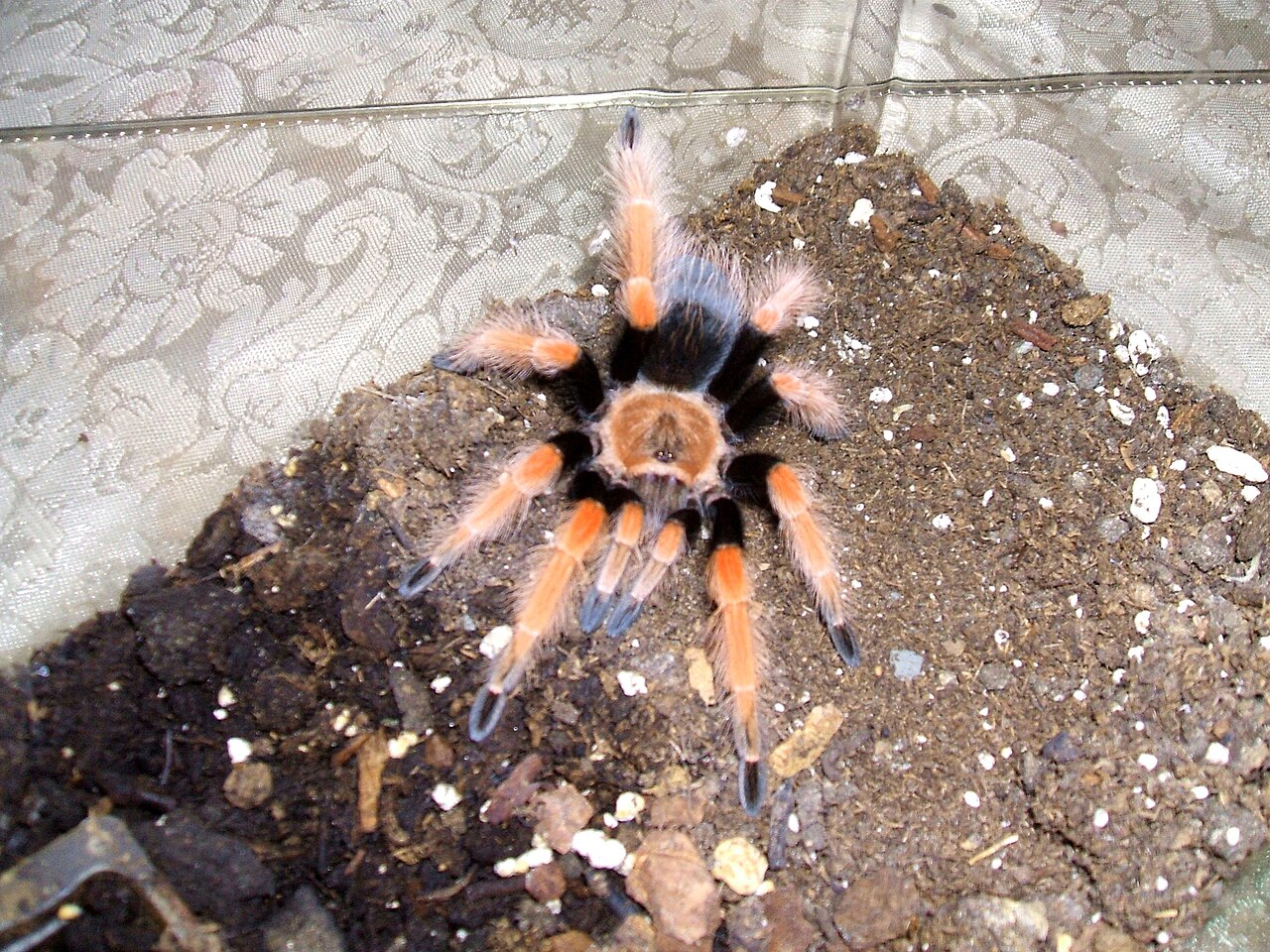
Photo: Morkelsker, public domain
Spider
Beginner
Brachypelma boehmei
Lifespan
F 20-25 years, M 5-8 years
Adult size
DLS 13-16 cm
Temperament
Nervous, quick to flick urticating hairs
Temperature
18–28°C
Humidity
40–65%
Vivarium
45 x 30 x 30 cm (terrestrial adult)
Wikipedia →
A terrestrial tarantula from dry scrubland on the Pacific side of Guerrero, Mexico, where it lives in burrows under rocks and fallen logs. It has an orange carapace, black thighs, bright orange-red lower legs and a black abdomen, and keepers like its colour, hardiness, long life and habit of sitting out on display. The IUCN lists it as Endangered in the wild, and it is one of the quickest Brachypelma to kick irritating urticating hairs.
Care information is provided for educational purposes only and does not replace professional veterinary advice.
🔥 Heating
Room temperature of about 20-24°C suits it in most UK homes, and short dips to 18°C at night are tolerated, but avoid sudden big swings. If extra heat is needed, use a heat mat on the side of the enclosure (not underneath) on a thermostat, with no basking spot or overhead heat.
💡 Lighting
Tarantulas need no UVB or special lighting, and a normal room day and night cycle is fine. Keep the enclosure out of direct sunlight to prevent overheating.
🪨 Substrate
10-12 cm of coco fibre or a coco fibre and topsoil mix, kept mostly dry with the lower layers or one corner slightly damp. Pack it down firmly so it can dig a scrape under its hide.
🍽 Feeding
Feed slings small or pre-killed prey twice a week, juveniles every 7-10 days and adults a few large crickets, locusts or a roach every 2-3 weeks depending on abdomen size. It may fast for weeks in premoult, so remove uneaten prey within 24 hours and wait 1-2 weeks after an adult moult before feeding.
💧 Water
Keep a shallow water dish full at all times and occasionally overflow it to dampen one corner of the substrate. No misting is needed.
🏠 Enrichment
Give it a half cork bark round or similar hide pressed into the substrate, which it may dig out beneath. Keep climbing decor to a minimum and the gap between substrate and lid small.
🩺 Health Considerations
Falls from height can rupture the abdomen of this heavy-bodied spider, so keep the climbing height low. Other problems are dehydration or a stuck moult if it is kept bone dry without water, mould or mites if the substrate stays wet, and an oversized abdomen from overfeeding.
🤲 Handling
Best kept hands-off. It flicks urticating hairs readily, which cause itchy skin rashes and can badly irritate the eyes, so keep your face away or wear eye protection when working in the enclosure, use tongs and wash your hands afterwards. Its venom is not medically significant, but a bite would still be painful.
⚖️ Legal Restrictions
No Dangerous Wild Animals Act licence is needed, as no tarantula is on the 1976 Act schedule as amended in 2007, and it is not on any UK invasive species list. All Brachypelma are CITES Appendix II (genus listed in 1994) and Annex B under the UK Wildlife Trade Regulations, so no Article 10 certificate is needed to keep or sell it in the UK, but keep proof of legal captive-bred acquisition. Import or export across the UK border needs CITES permits.
📋 Additional Notes
Sex by examining moults, as mature males are leggier, with palpal bulbs and tibial hooks, and usually live only about a year after their final moult. Growth is slow, with males maturing at roughly 4-8 years and females later, although the adult colours appear early. Captive breeding is now common, and the IUCN lists it as Endangered (2019) because of collection for the pet trade and habitat loss.