
← Species Repository
Florida Bark Scorpion
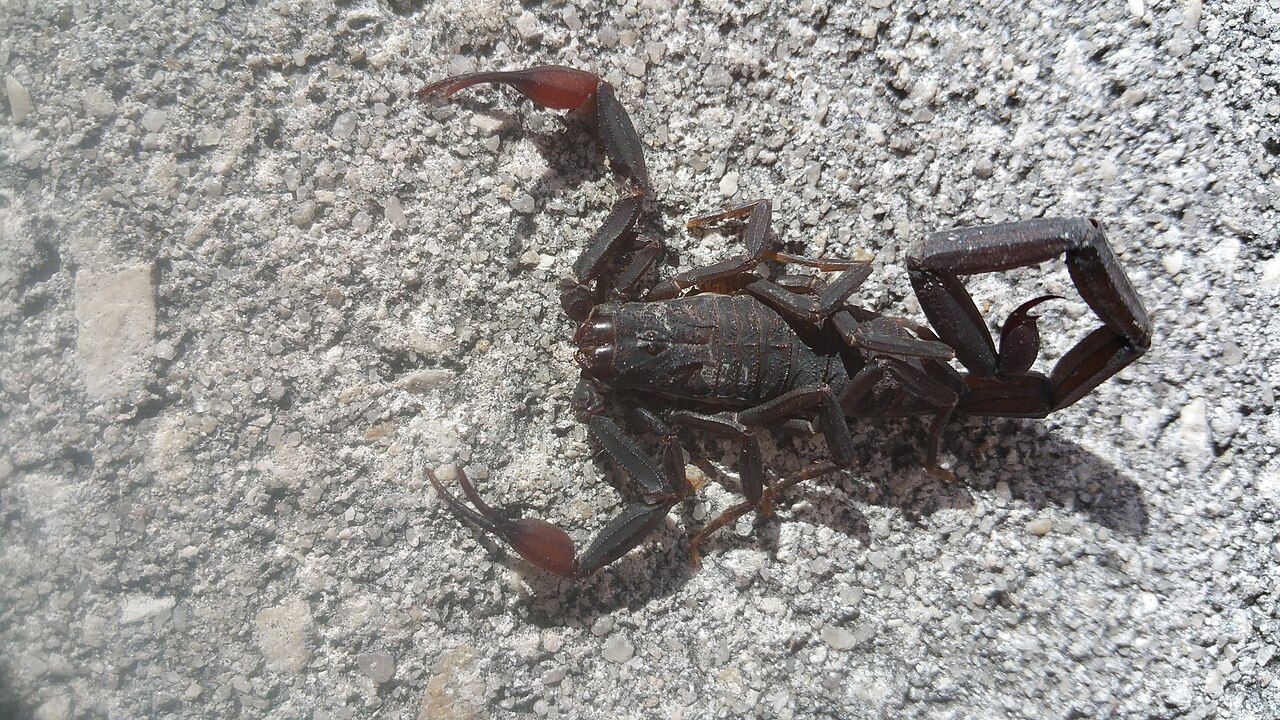
Scorpion
Advanced
Centruroides gracilis
Lifespan
F 3-4 years, M 2-3 years
Adult size
Body 6-10 cm, males to 15 cm
Temperament
Fast, nervous climber, stings readily
Temperature
21–30°C
Humidity
50–70%
Vivarium
30 x 20 x 30 cm (tall, escape-proof lid)
Wikipedia →
A slender bark scorpion native to Mexico and Central America and introduced to Florida, the Caribbean, parts of South America, West Africa and the Canary Islands, where it lives under bark and stones and in houses. It is brown, reddish or black with long, thin claws, and males have very long tails. It is cheap, hardy and can be kept in groups, which makes it popular in the US. It is a buthid with neurotoxic venom: stings are very painful and can cause systemic symptoms, so it is medically significant and only for experienced keepers.
Care information is provided for educational purposes only and does not replace professional veterinary advice.
🔥 Heating
Keep a warm room temperature of 24-28°C, up to about 30°C at the warm end, using a heat mat on one side wall run on a thermostat if needed.
💡 Lighting
No UVB needed; it is nocturnal, and normal room daylight gives the day/night cycle.
🪨 Substrate
5-8 cm of coco fibre or soil, kept mostly dry with one damp corner. The depth also cushions falls when it climbs.
🍽 Feeding
Scorplings 1-2 pinhead crickets a week; juveniles 1-2 small prey items a week; adults 2-3 medium crickets or roaches a week, with extra in a group. Remove leftovers within 24 hours.
💧 Water
Provide a shallow water dish, and lightly mist one area about once a week.
🏠 Enrichment
Plenty of vertical cork bark and branches, as it is semi-arboreal and hides under bark. Give many hides if you keep a group.
🩺 Health Considerations
Juveniles cannibalise each other, especially around moults, and overfeeding causes obesity. Escape is the main risk, as it climbs glass and squeezes through small gaps.
🤲 Handling
Never handle it; use long tongs and check where it is before opening the enclosure. Stings cause severe pain, redness and swelling and can cause systemic effects such as abnormal heart rhythm, so get medical help for any sting, especially in a child.
⚖️ Legal Restrictions
DWA licence needed: the Dangerous Wild Animals Act 1976 schedule lists 'Family Buthidae: All species' (England and Wales as substituted by SI 2007/2465, Scotland by SSI 2008/302), and the Dangerous Wild Animals (Northern Ireland) Order 2004 lists all Buthidae too. Get the licence from your local council before you acquire one. It is not CITES-listed and not on the GB invasive species list.
📋 Additional Notes
Colour forms (black with red hands, reddish, patterned) occur in the same population and even in the same litter. Adults can live together in a large set-up if well fed, but rear young separately; litters are large (26-91 young). It glows under UV, so a UV torch finds a loose scorpion quickly.