
← Species Repository
Corn Snake
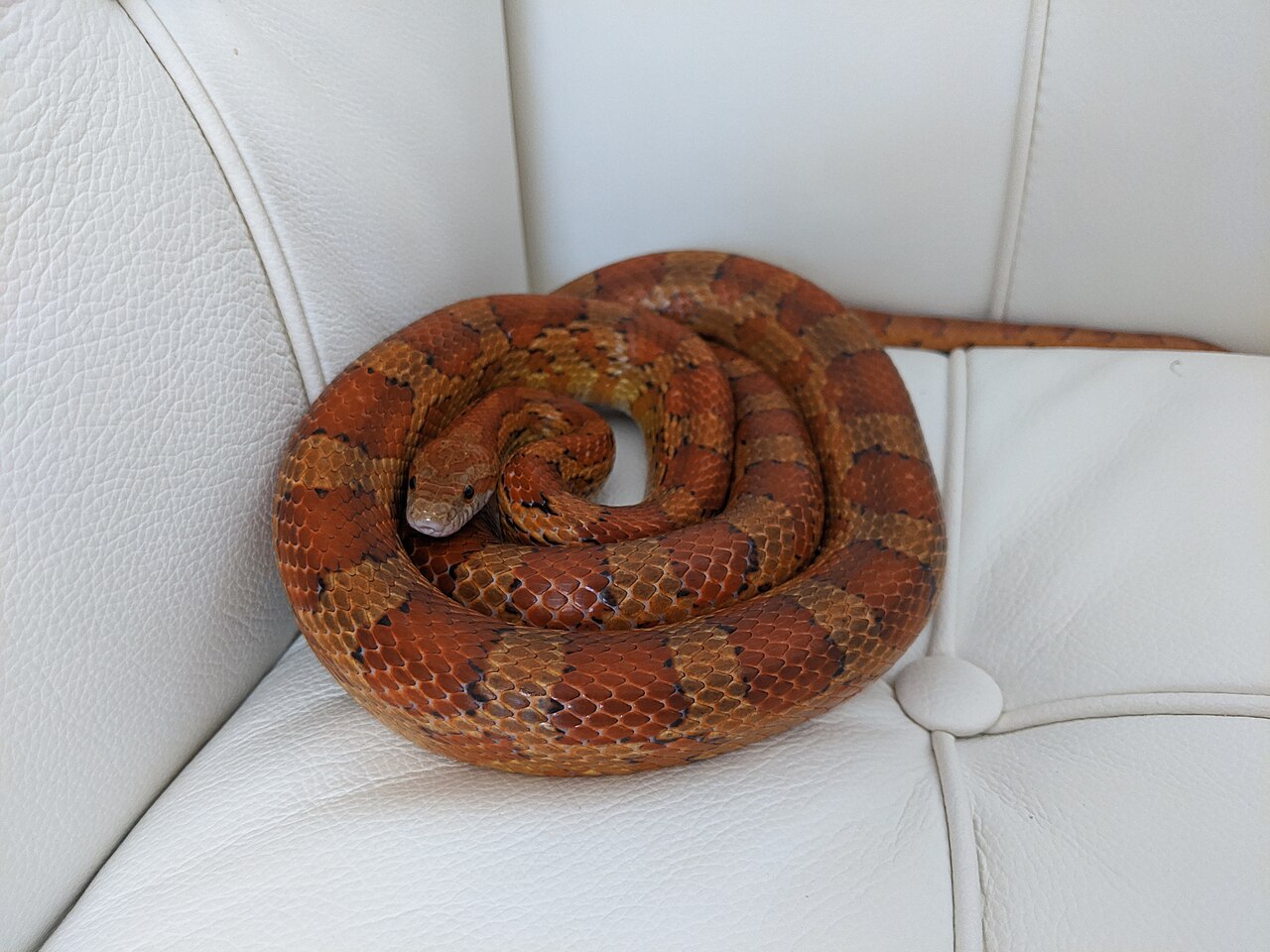
Photo: Ethan Porcaro, CC0
Snake
Beginner
Pantherophis guttatus
Lifespan
15-20 years (up to 30)
Adult size
90-150 cm
Temperament
Docile and active, tolerates handling well
Temperature
20–30°C
Humidity
40–70%
Vivarium
120 x 60 x 60 cm (adult); it climbs, so height is used
Wikipedia →
Native to the south-eastern and central United States, where it lives in overgrown fields, woodland edges, pine flatwoods and around farm buildings. A slender rat snake, orange to brown with black-edged red saddles in the wild form, now bred in a huge range of colour morphs. Keepers like its hardiness, reliable feeding and calm nature, which make it the classic first snake. It is an expert escape artist, so the vivarium must be fully secure.
Care information is provided for educational purposes only and does not replace professional veterinary advice.
🔥 Heating
Heat one end with an overhead halogen lamp on a dimming thermostat, or a heat mat on a thermostat, with a guard on any lamp. Aim for a basking surface of about 32 °C, a cool end of 21-24 °C, and let night temperatures fall to about 20 °C.
💡 Lighting
A 12-hour day and night cycle on a timer, with no night light. UVB is not essential but is recommended: a low-output T5 tube (about 5-6%) giving a UVI of 2-3 at the basking spot, replaced every 12 months.
🪨 Substrate
A loose, burrowable substrate such as a topsoil, coir and sand mix, coconut fibre or aspen, at least 7-8 cm deep. Avoid pine and cedar shavings and gravel.
🍽 Feeding
Frozen-thawed mice about 1-1.5 times the width of the snake's body. Hatchlings take pinkies every 5-7 days, juveniles fuzzies or hoppers every 7-10 days, and adults an adult mouse every 14-21 days. Overfed adults quickly become obese, so weigh monthly.
💧 Water
Keep a large, heavy water bowl in at all times and refresh it every few days or whenever soiled; ordinary tap water is fine. Heavy misting is not needed, but add a humid hide with damp moss when the snake is coming into shed.
🏠 Enrichment
At least two snug hides (warm and cool end) plus a humid hide, with climbing branches, cork bark and plants for cover. Corn snakes both climb and burrow, so use the height and a deep substrate.
🩺 Health Considerations
Common problems are stuck sheds from low humidity, snake mites, respiratory infections from cold or damp conditions, and obesity from overfeeding. Regurgitation can follow handling too soon after a meal.
🤲 Handling
Generally calm and easy to handle, although hatchlings can be flighty and may musk or nip. Let a new snake settle and eat a few meals first, avoid handling for 48 hours after feeding and while in shed, and support the body rather than gripping it. Non-venomous.
⚖️ Legal Restrictions
No licence needed in the UK. It is not on the Dangerous Wild Animals Act 1976 schedule, not CITES-listed and not on the GB invasive species list.
📋 Additional Notes
Males and females are similar in size; males have longer, thicker tails, and an experienced keeper can confirm sex by probing or popping. Hundreds of morphs exist, including amelanistic, anerythristic, snow, Okeetee, Palmetto, lavender and bloodred. Older books use the name Elaphe guttata.