
← Species Repository
Tanzanian Giant Tailless Whip Scorpion
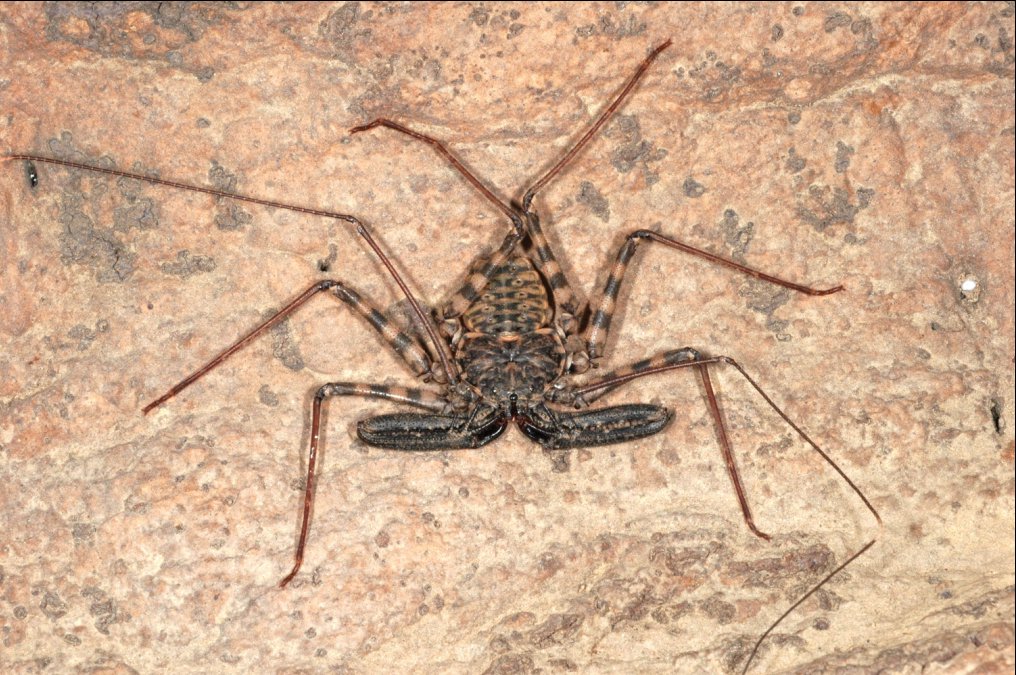
Photo: Acrocynus, CC BY-SA 3.0
Other Inverts
Intermediate
Damon diadema
Lifespan
5-10 years, F outlive M
Adult size
Body to 3 cm; span c. 20 cm
Temperament
Shy and very fast, non-venomous
Temperature
21–28°C
Humidity
65–80%
Vivarium
30 x 30 x 45 cm (tall; height above leg span)
Wikipedia →
From Kenya, Tanzania and central Africa, where it hides in caves, rock crevices and under fallen logs. Not a spider or a scorpion but an amblypygid: a flat-bodied arachnid with spiny, grasping pedipalps and very long whip-like front legs, giving a leg span of about 20 cm. Its alien look, sideways scuttle and lack of venom make it a popular display animal. It is fast and fragile rather than dangerous.
Care information is provided for educational purposes only and does not replace professional veterinary advice.
🔥 Heating
Keep at about 21-26 °C; normal room temperature is often enough. If needed, fit a heat mat to the side wall on a thermostat.
💡 Lighting
Nocturnal, so no UVB is needed, but a regular 12-hour day/night cycle from room light helps.
🪨 Substrate
5-8 cm of moist, lightly packed coco fibre or soil mix that holds humidity.
🍽 Feeding
Slings: small crickets or roach nymphs twice a week. Juveniles: every 7-10 days; adults: 2-3 crickets or a roach every 1-3 weeks, adjusted to body condition, removing uneaten prey after 24 hours.
💧 Water
Keep a shallow water dish and mist part of the enclosure a few times a week, with good ventilation to prevent mould.
🏠 Enrichment
Wide vertical cork bark slabs for hiding, climbing and moulting, plus a mesh lid it can hang from.
🩺 Health Considerations
Moulting is the critical time: it needs enough height to hang and pull free, and must not be disturbed or fed for 7-10 days afterwards. Low humidity or lack of space leads to fatal mismoults.
🤲 Handling
Hands-off recommended: it is fast and delicate, so move it by coaxing it onto bark or into a container. It has no venom and rarely bites, but the spiny pedipalps can give small thorn-like punctures.
⚖️ Legal Restrictions
No licence needed in the UK. Amblypygids are not on the Dangerous Wild Animals Act 1976 schedule, and this species is not CITES-listed or a GB invasive species of special concern. As a non-native animal it must never be released (Wildlife and Countryside Act 1981, section 14).
📋 Additional Notes
Also called the giant amblypygid or whip spider; many in the trade are wild-caught, and some sold as D. diadema are D. medius, which needs higher humidity, so confirm the species. Sexing: males have longer pedipalps than females, and females carry their eggs and then their young under the abdomen. Lifespan is usually given as 5-10 years, though some care sheets claim females reach 15-20 years.