
← Species Repository
Cobalt Blue Tarantula
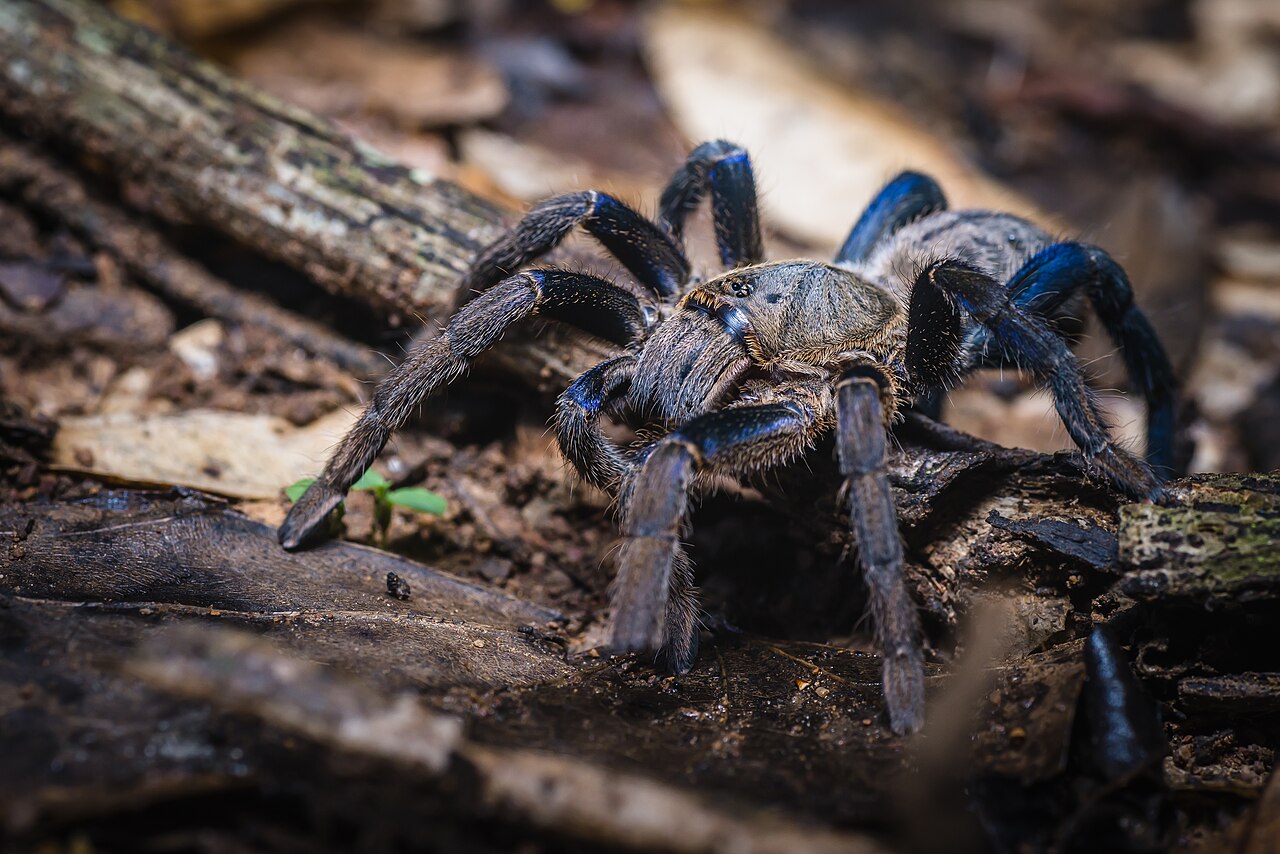
Photo: Rushenb (Thai National Parks), CC BY-SA 4.0
Spider
Advanced
Melopoeus lividus
Lifespan
F 15-18 years, M 3-6 years
Adult size
DLS 12-14 cm
Temperament
Very fast, defensive and reclusive
Temperature
20–28°C
Humidity
65–85%
Vivarium
30 x 30 x 30 cm (fossorial adult)
Wikipedia →
An Old World burrowing tarantula from tropical forest in Myanmar and neighbouring Thailand, where it spends almost all its time in deep burrows of its own making. In the right light its legs and body shine a metallic cobalt blue, which makes it one of the most sought-after colour species. It is very fast and defensive with potent venom and no urticating hairs, and it is rarely seen, so it suits experienced keepers who want a hands-off display animal.
Care information is provided for educational purposes only and does not replace professional veterinary advice.
🔥 Heating
Room temperature of about 20-26°C suits it in most UK homes. If extra heat is needed, fit a heat mat to the side of the enclosure on a thermostat, never underneath, because it burrows down and cannot escape heat from below. No basking spot is needed.
💡 Lighting
No UVB or special lighting is needed, and it avoids bright light. A normal room day and night cycle is enough, and keep the enclosure out of direct sunlight, which can overheat it quickly.
🪨 Substrate
An obligate burrower that needs deep, moisture-holding substrate such as coco fibre or topsoil, optionally with some vermiculite, at least 15-20 cm deep (half to three quarters of the enclosure height). Keep the lower layers damp but never waterlogged and let the surface dry slightly between waterings to prevent mould.
🍽 Feeding
Feed slings small crickets or roach nymphs twice a week, juveniles every 7-10 days and adults one or two large crickets or a roach every 2-3 weeks. It ambushes prey at the burrow entrance, refuses food in premoult and should not be fed for about a week after moulting, so remove uneaten prey within 24 hours.
💧 Water
Provide a shallow water dish, although it may rarely be seen using it. Keep the substrate moist by pouring water into one corner or down the side every week or so rather than relying on misting.
🏠 Enrichment
Press a burrow start into the substrate under a piece of cork bark so it can dig in straight away. It lines its burrow and entrance with silk, so depth matters far more than decor, and it will seldom be on show.
🩺 Health Considerations
Dehydration is the main risk if the deep substrate dries out, while waterlogged, stagnant substrate brings mould and mites, so balance moisture with cross ventilation. Burrowing tarantulas often seal themselves in for weeks before a moult, so do not dig them out.
🤲 Handling
Do not handle. It is extremely fast and quick to strike, and its potent venom can cause severe pain, swelling, muscle cramps and stiffness, though it is not known to be life-threatening. It has no urticating hairs, so use long tongs and a catch cup for maintenance and rehousing, and seek medical advice after any bite.
⚖️ Legal Restrictions
No licence needed in the UK. Tarantulas are not on the Dangerous Wild Animals Act 1976 schedule (as modified in 2007), and this species is not CITES-listed, not in the Wildlife Trade Regulations annexes and not on the UK invasive species lists.
📋 Additional Notes
The World Spider Catalog moved it from Cyriopagopus to Melopoeus in March 2026 (Smith, Daniel and Vignaud 2026). It was previously Cyriopagopus lividus (Smith and Jacobi 2015) and originally Haplopelma lividum Smith, 1996, names many UK sellers still use. Sex it from a moulted skin (females show spermathecae) or by the enlarged palpal bulbs of mature males, as females grow larger and live years longer, and growth is medium to fast.