
← Species Repository
Crested Gecko
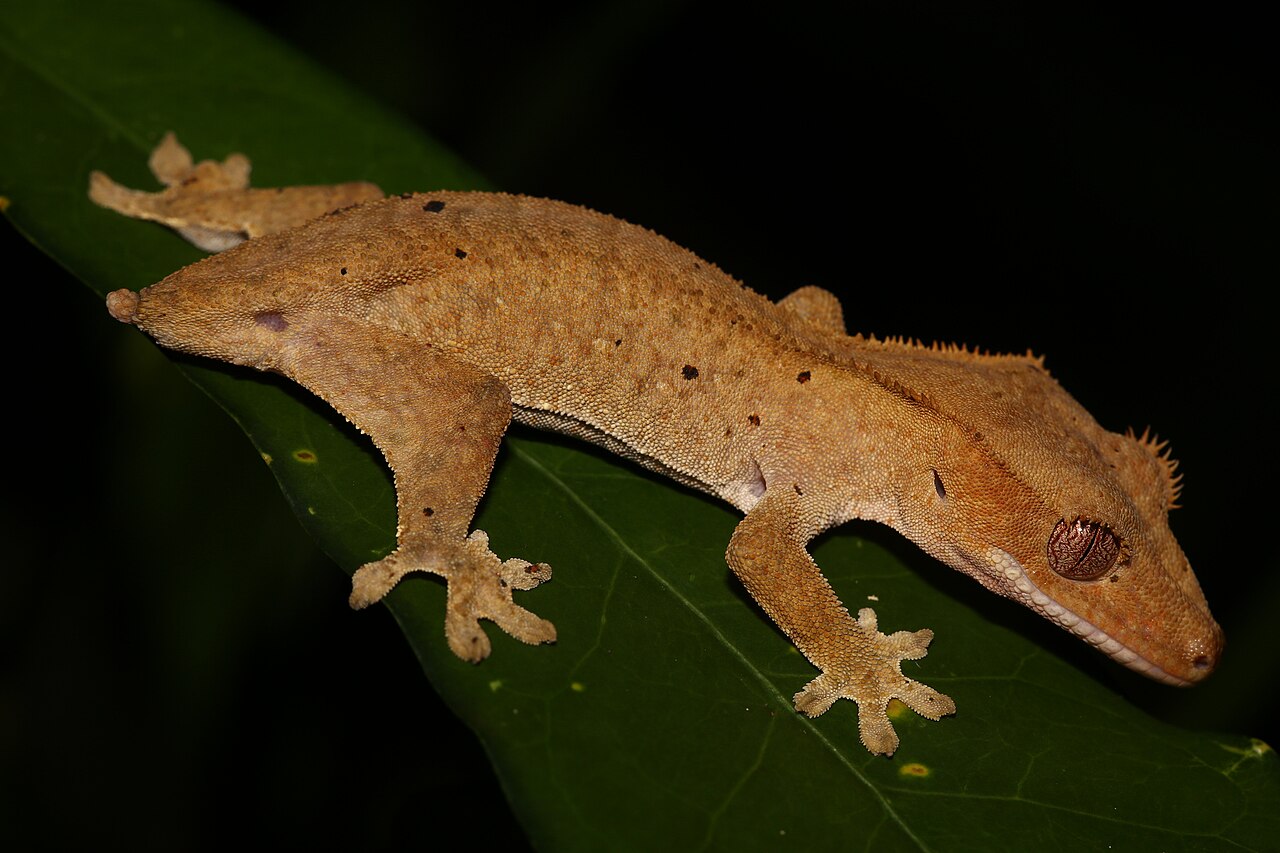
Photo: Lennart Hudel, CC BY 4.0
Lizard
Beginner
Correlophus ciliatus
Lifespan
15-20 years
Adult size
20-25 cm including tail
Temperament
Docile but jumpy, best handled briefly
Temperature
18–28°C
Humidity
40–80%
Vivarium
45 x 45 x 60 cm (adult); arboreal, so height matters most
Wikipedia →
Endemic to the South Province of New Caledonia (southern Grande Terre and the Isle of Pines), where it lives in humid forest and was thought extinct until it was rediscovered in 1994. A tree-dwelling gecko with fringed crests running from above the eyes down the back, sticky toe pads and a prehensile tail, bred in many colours and patterns such as flame, harlequin, dalmatian and pinstripe. Keepers like that it needs no high heat, thrives on a powdered complete diet and is calm and easy to care for. A dropped tail never grows back, so it must never be grabbed by the tail.
Care information is provided for educational purposes only and does not replace professional veterinary advice.
🔥 Heating
Usually kept close to room temperature with a gentle gradient: about 22-26 °C by day with a basking branch of 26-28 °C under a low-wattage bulb on a dimming thermostat, falling to about 18-22 °C at night. Overheating is the bigger danger, as sustained temperatures above about 28-29 °C cause heat stress and can be fatal.
💡 Lighting
Run a 12-hour day and night cycle on a timer, with no coloured night lights. Low-level UVB is beneficial: a 6-7% shade-dweller tube giving a UVI of about 0.7-2.0 at the highest perch, with plenty of shaded foliage (Ferguson zone 1), replaced as the maker advises.
🪨 Substrate
A moisture-holding natural substrate such as coco coir or a topsoil and coir mix, 5-10 cm deep and topped with leaf litter or moss, ideally over a drainage layer; a bioactive set-up with live plants works well. Use paper towel for hatchlings under about 13 g and in quarantine, and avoid bark chips, pine or cedar and reptile carpet.
🍽 Feeding
Feed a complete crested gecko diet powder mixed with water to a smooth paste: juveniles daily and adults every 2-3 days, removing the leftovers after a day. Offer gut-loaded, calcium-dusted insects such as small roaches or crickets once or twice a week for juveniles and up to once a week for adults; fruit is an occasional treat only, avoiding citrus and banana.
💧 Water
Mist once or twice daily (heavier in the evening) so the gecko can drink droplets, letting humidity fall back to about 50% between mistings to prevent mould. Also keep a shallow dish of fresh water, changed daily.
🏠 Enrichment
Fill the height with branches, cork tubes, vines and live or artificial plants for climbing and cover, with sheltered spots at both high and low levels. Horizontal perches near the top give resting and basking spots, and plenty of climbing space also helps prevent floppy tail syndrome.
🩺 Health Considerations
Watch for metabolic bone disease (kinks in the spine or tail, soft jaw) from poor diet or missing supplements, floppy tail syndrome, stuck shed on toes and tail tips when humidity is low, loss of toe-pad grip, impaction and parasites. Overheating can be fatal, and a dropped tail does not regrow.
🤲 Handling
Generally docile but jumpy, especially when young: let it walk onto your hand, handle it low over a soft surface and keep sessions to about 10 minutes. Never grasp the tail, which drops easily and never regrows. Non-venomous, and bites are weak.
⚖️ Legal Restrictions
No licence needed in the UK. It is not on the Dangerous Wild Animals Act 1976 schedule, not CITES-listed and not on the GB invasive species list.
📋 Additional Notes
Many older books and shops still use the synonym Rhacodactylus ciliatus; the species was moved back to Correlophus after genetic study. Mature males show a clear hemipenal bulge and pre-anal pores that females lack. There are many colour and pattern morphs (flame, harlequin, dalmatian, pinstripe and others), and the IUCN lists the species as Vulnerable in the wild; keep males apart, and house females together only with plenty of space.