
← Species Repository
Green Tree Python
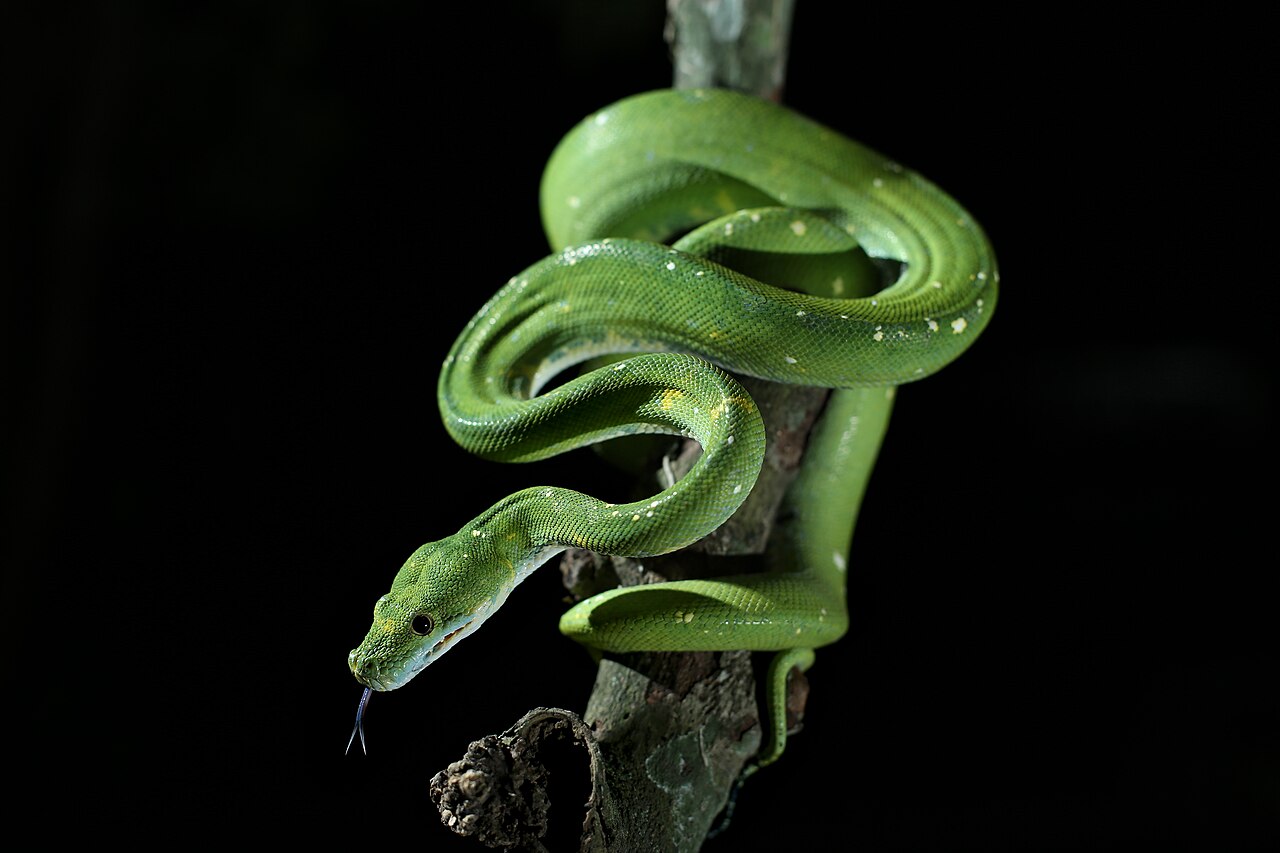
Photo: Iqbal Nizar Arafat, CC BY-SA 4.0
Snake
Advanced
Morelia viridis
Lifespan
15-20 years
Adult size
120-180 cm
Temperament
Nervous and defensive; best as a display animal
Temperature
21–31°C
Humidity
40–70%
Vivarium
90 x 60 x 60 cm (arboreal, adult)
Wikipedia →
Native to New Guinea, nearby Indonesian islands and Australia's Cape York Peninsula, where it lives in rainforest trees. A slender python that coils over a branch; adults are bright green, often with white or blue markings, while hatchlings are yellow or red before changing colour at about a year old. It is prized for its colours but considered an advanced species because of its exacting heat, humidity and hydration needs and often defensive temperament.
Care information is provided for educational purposes only and does not replace professional veterinary advice.
🔥 Heating
Use a guarded overhead lamp or radiant panel on a thermostat above one perch, giving about 30-31 °C at the basking perch and 26-27 °C at the cooler perches. Nights should not drop below about 21 °C.
💡 Lighting
A 12-hour day and night cycle, with bright daytime light. Low-output UVB giving a UVI of 2-3 at the basking perch is recommended.
🪨 Substrate
A moisture-holding topsoil and coir mix or coconut husk, about 5-10 cm deep, with leaf litter; it should hold humidity without staying wet.
🍽 Feeding
Frozen-thawed mice, then small rats, offered with tongs at perch height. Hatchlings every 5-7 days, juveniles every 1-2 weeks and adults every 2-4 weeks, keeping adult meals small (about 5-10% of body weight) as they are sedentary and gain weight easily.
💧 Water
Mist every evening (and in the morning if needed), letting the enclosure dry to about 40% between mistings; many drink droplets from the décor. Also provide a water bowl the snake can reach from a low perch.
🏠 Enrichment
Several horizontal perches of different heights and thicknesses, securely fixed, including one low 'hunting' perch, with live or artificial plants for cover. Horizontal space is more useful than great height.
🩺 Health Considerations
Dehydration is common, especially in young snakes and in tall vivaria where the snake never comes down to drink, while constantly wet conditions cause skin and respiratory infections. Farm-raised and imported animals often carry parasites, and obesity is common in adults.
🤲 Handling
Best treated as a display animal: many are defensive and their long front teeth give painful bites. If handling, approach from below, let it uncoil from the perch by itself (never pull it off) and keep sessions short. Non-venomous.
⚖️ Legal Restrictions
No Dangerous Wild Animals licence needed in the UK. It is CITES Appendix II (UK Annex B): buy captive-bred animals with proof of origin, as illegal wild capture in Indonesia is a known problem.
📋 Additional Notes
A 2020 genetic study split the species: northern New Guinea populations are now often treated as Morelia azurea, while southern New Guinea and Australian animals remain M. viridis, and many captive animals are of mixed or unknown origin. Formerly Chondropython viridis. Females are slightly larger; probe to confirm sex.