
← Species Repository
Common Garter Snake
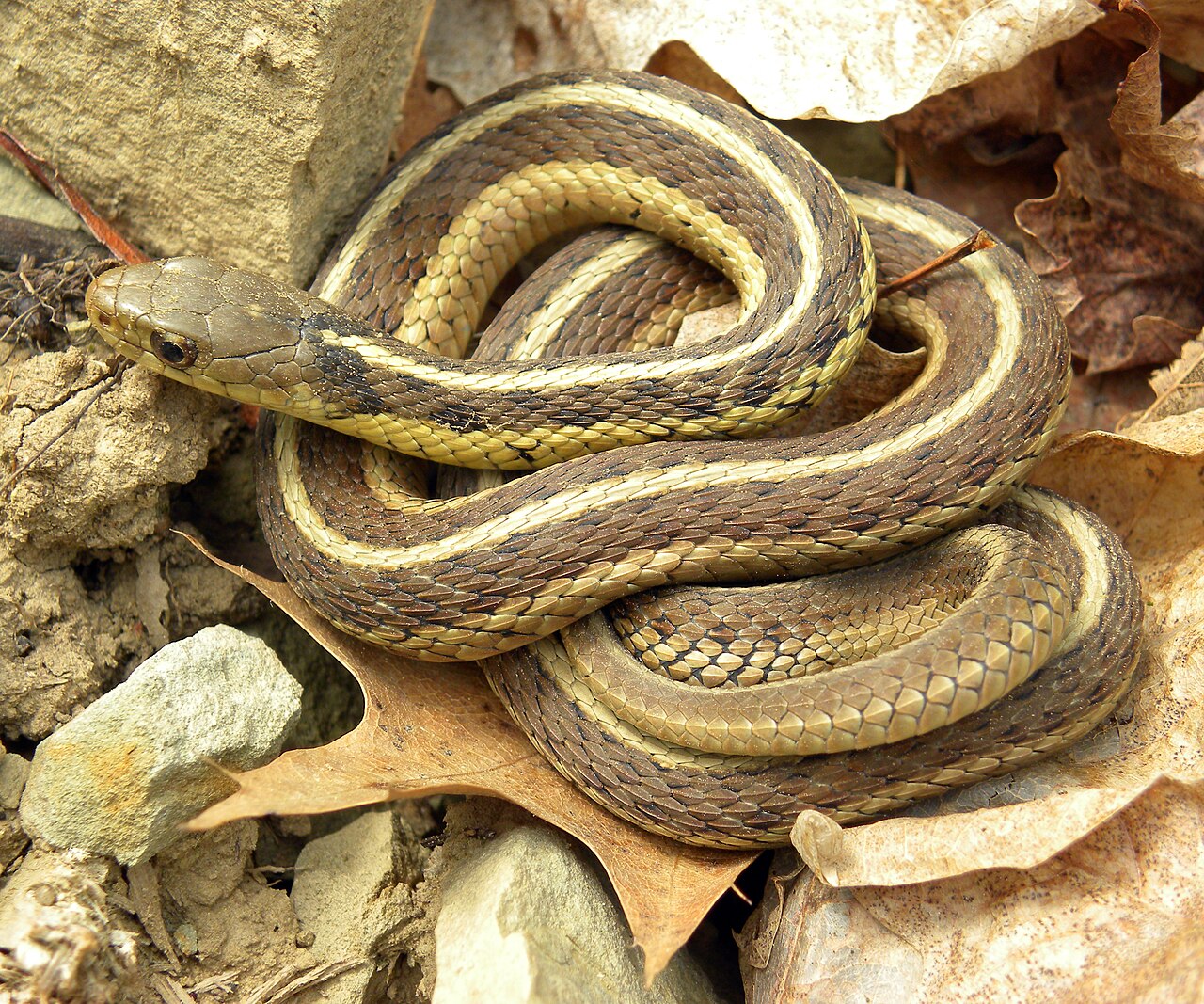
Photo: Mark A. Wilson, public domain
Snake
Beginner
Thamnophis sirtalis
Lifespan
10+ years in captivity
Adult size
50-100 cm (females larger)
Temperament
Active and alert; may musk at first, tames well
Temperature
18–30°C
Humidity
35–60%
Vivarium
120 x 60 x 60 cm (adult); larger for groups
Wikipedia →
The most widespread snake in North America, found from Canada to Florida in meadows, woodland, marshes and along streams, usually near water. A slim, fast snake with yellow, red or blue stripes on a dark body; popular forms include the red-sided and Florida blue garters. Keepers like that it is active by day, feeds eagerly and is easy to keep. Its saliva is mildly venomous to small prey and can occasionally cause slight itching or swelling in people.
Care information is provided for educational purposes only and does not replace professional veterinary advice.
🔥 Heating
Use an overhead halogen lamp on a thermostat at one end, giving a basking surface of 29-32 °C and a cool end of 23-27 °C. Turn heating off at night and allow 18-24 °C; air above 33 °C is dangerous.
💡 Lighting
About 14 hours of light in summer and 10 in winter. UVB is recommended for this day-active snake: a 5-6% T5 tube giving a UVI of 2-3 at the basking spot; without it, dust food with calcium and vitamin D3.
🪨 Substrate
A topsoil, coir and sand mix, aspen or coco husk, at least 5 cm deep and dry on the surface. Avoid sand on its own, cedar, pine and garden soil.
🍽 Feeding
Earthworms, suitable fish and frozen-thawed pinkies or small mice, dusted occasionally with a vitamin supplement. Newborns eat every other day, juveniles every 3-5 days and adults every 4-7 days. Most feeder fish (such as goldfish) contain thiaminase, and a fish-heavy diet can cause fatal vitamin B1 deficiency; garters do not eat insects.
💧 Water
A shallow water dish or small pool at the cool end, changed often because garters frequently soil it. Keep the rest of the vivarium dry, with a humid hide for sheds.
🏠 Enrichment
Several hides, cork bark, branches, plants and leaf litter. A spacious, escape-proof vivarium suits its active daytime foraging.
🩺 Health Considerations
Blister disease from damp substrate, vitamin B1 deficiency from fish-heavy diets, stuck sheds if too dry, mites, and internal parasites in wild-caught animals.
🤲 Handling
Often nervous at first and may musk or nip, but most become tame with short, regular handling. Support the body gently. Bites are harmless to most people, though the mild saliva can cause slight itching or swelling.
⚖️ Legal Restrictions
No licence needed in the UK. It is not CITES-listed and not on the Dangerous Wild Animals Act 1976 schedule; buy the endangered San Francisco garter snake only as documented captive-bred stock.
📋 Additional Notes
Females are larger and heavier; males have longer tails with a swollen base. Popular forms include red-sided (T. s. parietalis), Florida blue (T. s. similis) and captive-bred San Francisco (T. s. tetrataenia) garters; the checkered garter (Thamnophis marcianus) is also widely kept with similar care. Common and checkered garters can be cannibalistic, so house singly or feed group members separately.