
← Species Repository
Blue-tongued Skink
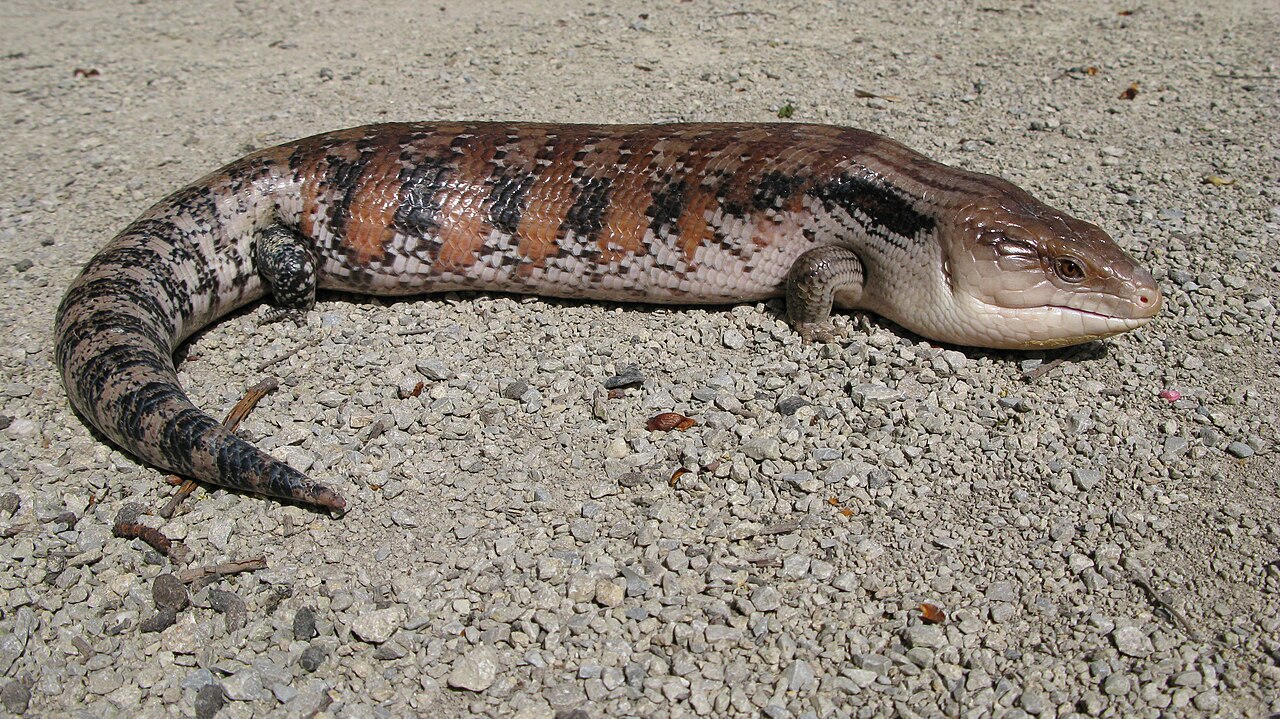
Photo: Stefan3345, CC BY-SA 4.0
Lizard
Beginner
Tiliqua scincoides
Lifespan
15-20 years (up to 30+)
Adult size
45-60 cm
Temperament
Calm and sturdy, usually handles well
Temperature
18–32°C
Humidity
40–60%
Vivarium
120 x 60 x 60 cm minimum (adult); larger is better
Wikipedia →
Native to northern, eastern and south-eastern Australia, with one subspecies on the Tanimbar Islands of Indonesia, living in open woodland, grassland and even suburban gardens. A heavy, short-legged skink with smooth glossy scales, a broad head and the famous bright blue tongue that it flashes with a hiss when threatened. Keepers like its calm, sturdy nature, its varied omnivorous diet and the fact that it is active by day. It grows large and needs a roomy vivarium, and its bite is strong though non-venomous.
Care information is provided for educational purposes only and does not replace professional veterinary advice.
🔥 Heating
Heat one end from above with halogen flood lamps on a dimming thermostat over a flat basking stone, aiming for a basking zone of about 32-35 °C air with a stone surface of about 38-45 °C, and keep the skink's back at least 25 cm from the lamp. Keep the cool end at about 22-26 °C and let it fall to 18-22 °C at night, adding a ceramic heater on a thermostat only if the room gets colder; avoid heat rocks.
💡 Lighting
UVB is needed: a T5 tube (about 6% in a 60 cm high vivarium) covering about half the length, giving a UVI of about 3-5 at the basking spot and zero in the shade (Ferguson zone 2-3), with albino and other pale morphs kept to UVI 3 or less. Run lights 12 hours on and 12 off on a timer, and replace tubes as the maker advises.
🪨 Substrate
About 10 cm of natural soil or a soil and sand mix that holds burrows. Avoid calci-sand, beech chips, corn cob, crushed walnut shell and pine or cedar shavings, which can cause impaction or breathing problems.
🍽 Feeding
Omnivorous: adults need about 50-60% animal protein (snails, dubia roaches, locusts, crickets, earthworms, or a good-quality wet dog or cat food without fish) and 40-50% greens and vegetables, with fruit under 10%; young skinks need 70-80% protein. Feed babies daily, juveniles (3-8 months) about three times a week and adults once or twice a week, dusting with calcium. Weigh monthly, as they easily become obese.
💧 Water
Keep a large, heavy, shallow water dish at the cool end and change it daily. Lightly spray daily or every other day as needed to hold about 40-60% humidity and let it drink droplets.
🏠 Enrichment
Provide hides at both ends, a deep diggable substrate for burrowing, cork bark, logs and flat basking stones. It is a ground dweller, so floor space matters more than height.
🩺 Health Considerations
Common problems are metabolic bone disease (a dip in the spine or jaw changes) from too little UVB or calcium, obesity, stuck shed on toes and tail tips when humidity is too low, mites and intestinal parasites, and vitamin A deficiency causing skin changes and infection around the eyes and lips. A winter slowdown (brumation) is normal, but sudden appetite loss outside that needs a reptile vet.
🤲 Handling
Usually calm and tolerant once settled: scoop it up with both hands supporting all four legs and keep sessions to about 10-15 minutes. It has a strong, crushing bite and sharp claws, so leave it alone if it hisses or flashes its tongue. Non-venomous.
⚖️ Legal Restrictions
No licence needed in the UK. It is not on the Dangerous Wild Animals Act 1976 schedule or the GB invasive species list. Since June 2022 the Eastern and Northern subspecies have been on CITES Appendix III (listed by Australia), which only affects import and export paperwork; buying, keeping and selling captive-bred animals within the UK needs no Article 10 certificate.
📋 Additional Notes
Three subspecies: the Northern (T. s. intermedia, the largest and the one most kept in the hobby, with orange or yellow blotches on the sides and no dark eye stripe), the Eastern (T. s. scincoides, with a dark band behind each eye) and the Tanimbar (T. s. chimaerea, from Indonesia). It gives birth to live young, usually 5-25 per litter; males and females look very alike, so sexing is difficult, and adults must be housed alone as they are territorial. Indonesian blue-tongues (Tiliqua gigas and relatives) are separate species that need much higher humidity (60-80%).