
← Species Repository
Desert Hairy Scorpion
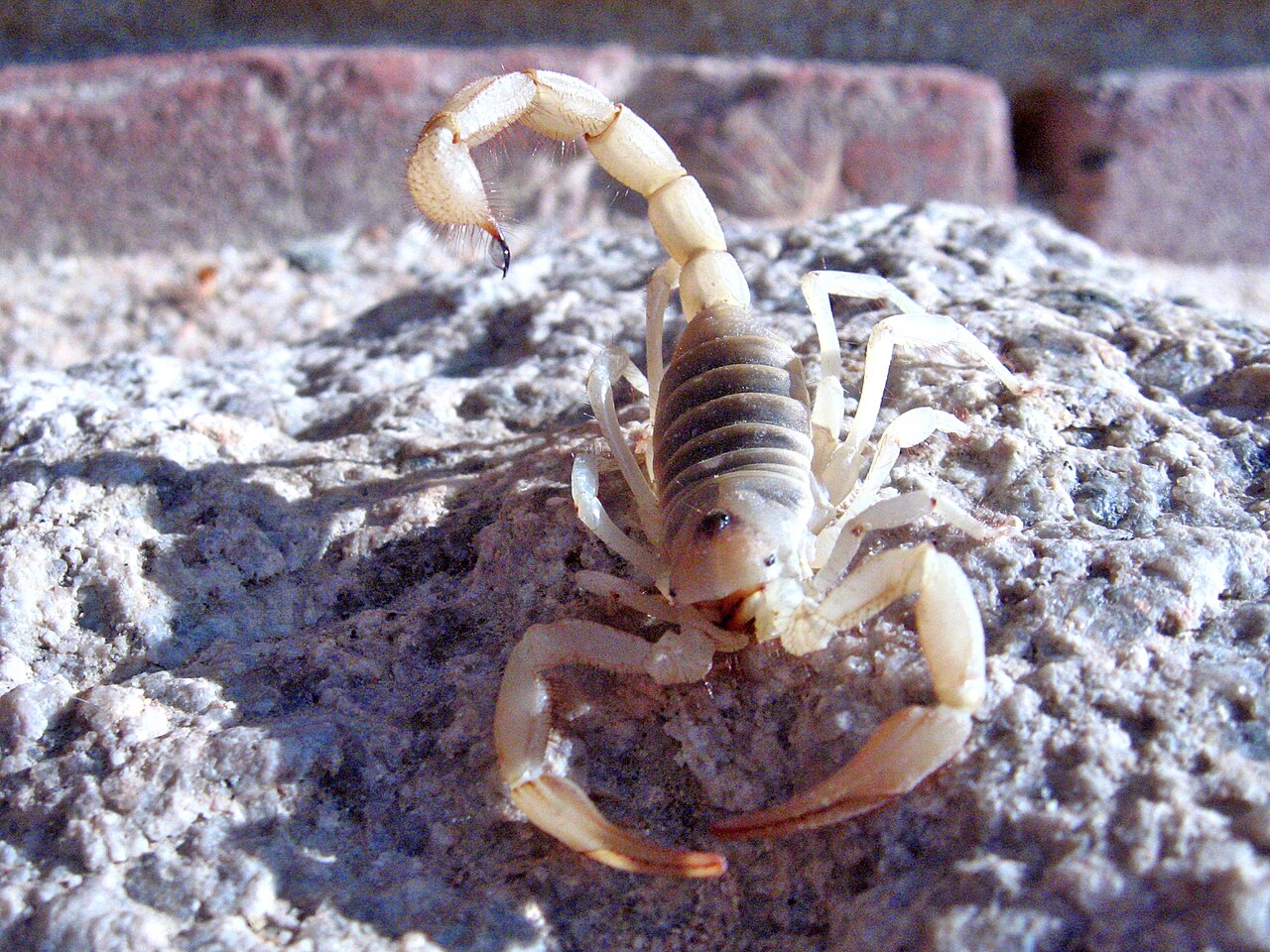
Photo: Robb Hannawacker (Joshua Tree National Park), public domain
Scorpion
Intermediate
Hadrurus arizonensis
Lifespan
F 15-20 years, M 7-10 years
Adult size
Body 10-14 cm
Temperament
Active, bold and defensive
Temperature
20–32°C
Humidity
20–45%
Vivarium
45 x 30 x 30 cm (floor space over height)
Wikipedia →
North America's largest scorpion, from the Sonoran and Mojave deserts of the south-western USA and north-western Mexico, where it digs burrows up to 2.5 m deep. It is yellow with a darker back and brown sensory hairs on the tail and legs. Keepers like it because it is big, active and often visible at night. Its sting is very painful, roughly like a bee sting, but not medically significant for healthy adults.
Care information is provided for educational purposes only and does not replace professional veterinary advice.
🔥 Heating
A room temperature of 21-29°C is often enough. If extra heat is needed, use a heat mat on one side wall run on a thermostat (never underneath, as it burrows) or a low-wattage overhead bulb so the warm end reaches about 30°C, with a cooler end and a night drop.
💡 Lighting
No UVB needed; it is nocturnal. Normal room daylight gives the day/night cycle, and any lamp is only for heat or viewing.
🪨 Substrate
A firm, dry mix of sand with clay or soil that holds a burrow, at least 15 cm deep for adults (deeper is better). Pack it down and, if needed, lightly moisten only the bottom layer; never saturate it.
🍽 Feeding
Scorplings 1-2 small crickets or roach nymphs once or twice a week, juveniles weekly, adults 2-4 large crickets or a roach every 10-14 days. Remove uneaten prey after 24 hours and wait 5-10 days after a moult before feeding.
💧 Water
Provide a small, shallow water dish. Do not mist; keep the enclosure dry and well ventilated.
🏠 Enrichment
A flat cork bark slab or piece of slate laid on the substrate gives it somewhere to start a burrow. Keep the enclosure low to prevent falls.
🩺 Health Considerations
Excess humidity and poor ventilation cause fungal infections (mycosis), the main cause of losses, and falls from height cause internal injuries. Moults can go wrong in captivity, and wild-caught animals may carry mites or nematodes, so quarantine new arrivals.
🤲 Handling
Do not handle: it is quick, defensive and stings when disturbed. The venom is mild (LD50 168 mg/kg in mice) and not medically significant for healthy adults, but the sting is very painful and allergic reactions are possible.
⚖️ Legal Restrictions
No licence needed in the UK. It is in the Hadruridae, not the Buthidae, so it is not covered by the Dangerous Wild Animals Act 1976 schedule (which lists scorpions only as 'Family Buthidae: All species' and Hemiscorpius lepturus); it is not CITES-listed and not on the GB invasive species list.
📋 Additional Notes
Now in the family Hadruridae; older sources place it in Iuridae, Caraboctonidae or Vaejovidae. Captive breeding is difficult, so many animals in the trade are wild-caught; ask about origin and quarantine. Some keepers give a cooler winter rest, and the similar black hairy scorpion (Hadrurus spadix) needs the same care.