
← Species Repository
Western Hognose Snake
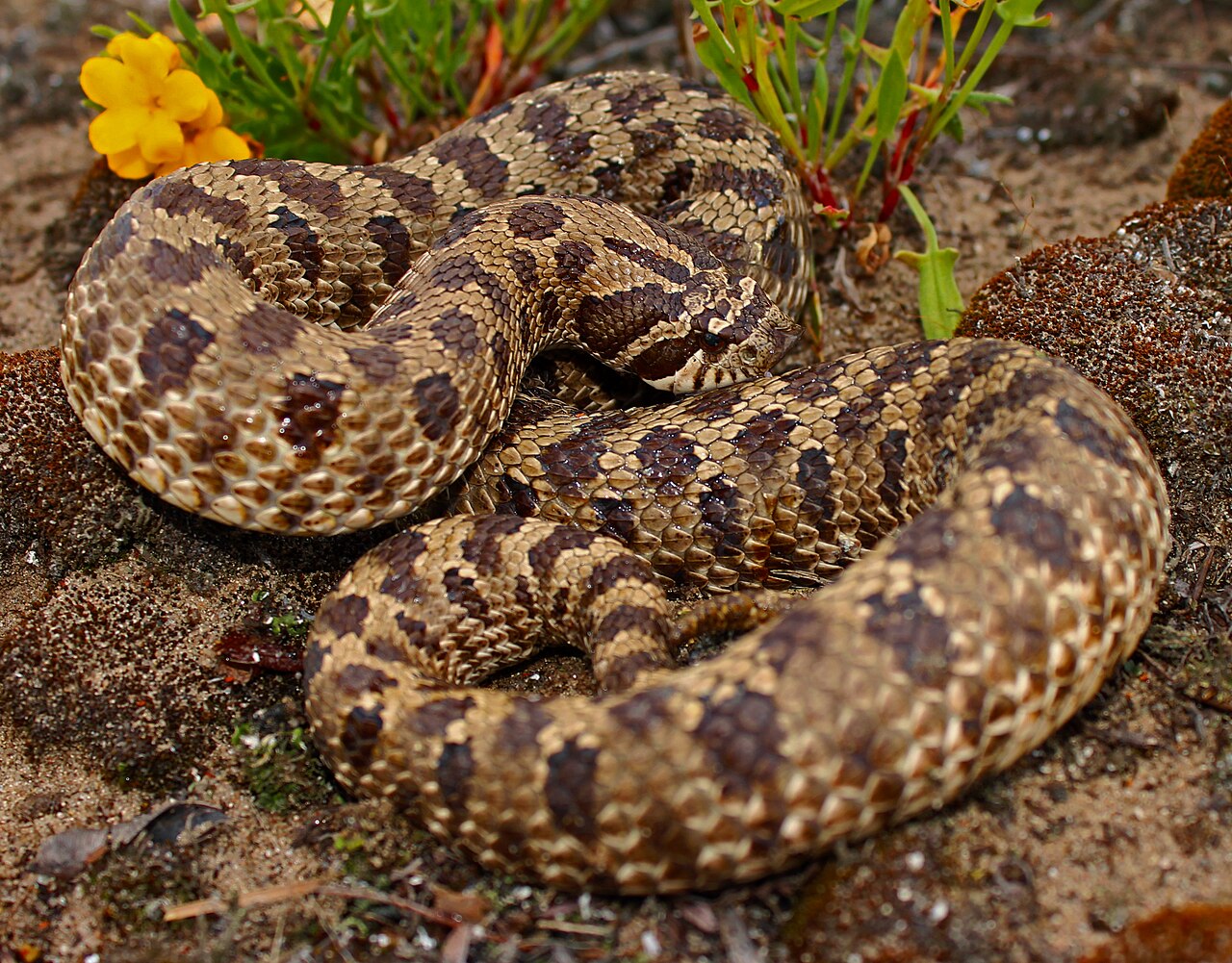
Photo: Peter Paplanus from St. Louis, Missouri, CC BY 2.0
Snake
Beginner
Heterodon nasicus
Lifespan
10-20 years
Adult size
F 60-90 cm, M 35-60 cm
Temperament
Docile; bluffs by hissing, hooding and playing dead
Temperature
18–30°C
Humidity
30–50%
Vivarium
90 x 45 x 40 cm (female); 76 x 33 x 33 cm (male)
Wikipedia →
Found from southern Canada through the central United States into northern Mexico, on sandy or gravelly prairie, grassland and semi-desert. A small, stocky snake with an upturned snout for digging, usually tan with dark blotches, and now bred in many morphs. Keepers love its comical defensive display of hissing, flattening its neck and playing dead. It is rear-fanged with mild venom aimed at amphibians; bites are rare and usually harmless to people.
Care information is provided for educational purposes only and does not replace professional veterinary advice.
🔥 Heating
Use an overhead halogen or incandescent lamp on a dimming thermostat at one end, giving a basking surface of 32-35 °C and a general gradient of about 24-29 °C. Heating can go off at night as long as the vivarium stays above about 18 °C; many keepers cool adults for a 2-3 month winter brumation.
💡 Lighting
A 12-hour day on a timer, or longer days in summer and shorter in winter. UVB is recommended: a 5-6% T5 tube giving a UVI of 2-3 at the basking spot.
🪨 Substrate
A loose, diggable substrate such as a topsoil and play sand mix (about 70:30) or aspen, at least 8 cm deep and 10-13 cm for large females. Avoid cedar, pine, coconut fibre and gravel.
🍽 Feeding
Frozen-thawed mice no wider than the snake's head: juveniles every 4-5 days and adults about once a week, with smaller meals for males. They gain weight easily, so feed lean and weigh regularly. Fussy hatchlings can be tempted by warming the pinky or scenting it with tinned tuna or salmon water.
💧 Water
A heavy water bowl, refreshed often and disinfected weekly. Keep the vivarium dry overall; mist lightly or add a humid hide only when a shed is due.
🏠 Enrichment
Several hides at both ends, cork flats and bark, and leaf litter to dig under. They spend much of their time buried, so substrate depth matters more than height.
🩺 Health Considerations
Common issues are obesity, food refusal (especially in autumn and winter), stuck sheds and respiratory infections in damp or cold vivaria. Swallowed sand or loose substrate can cause impaction, so feed with tongs or on a dish.
🤲 Handling
Usually easy to handle once it learns you are not a threat; give a bluffing snake time to calm down. Use tongs at feeding time as they strike enthusiastically at food. Rear-fanged and mildly venomous: bites are rare and generally harmless, but a prolonged chewing bite can occasionally cause local swelling.
⚖️ Legal Restrictions
No licence needed in the UK. Despite being rear-fanged it is not listed under the Dangerous Wild Animals Act 1976 (as amended in 2007), and it is not CITES-listed.
📋 Additional Notes
Females are much larger than males; males have longer, thicker tails and sex is confirmed by probing or popping. Popular morphs include albino, anaconda, superconda, arctic, axanthic, lavender, toffeebelly and pink pastel. Some authorities treat the Mexican hognose as a separate species, Heterodon kennerlyi.