
← Species Repository
Honduran Milk Snake
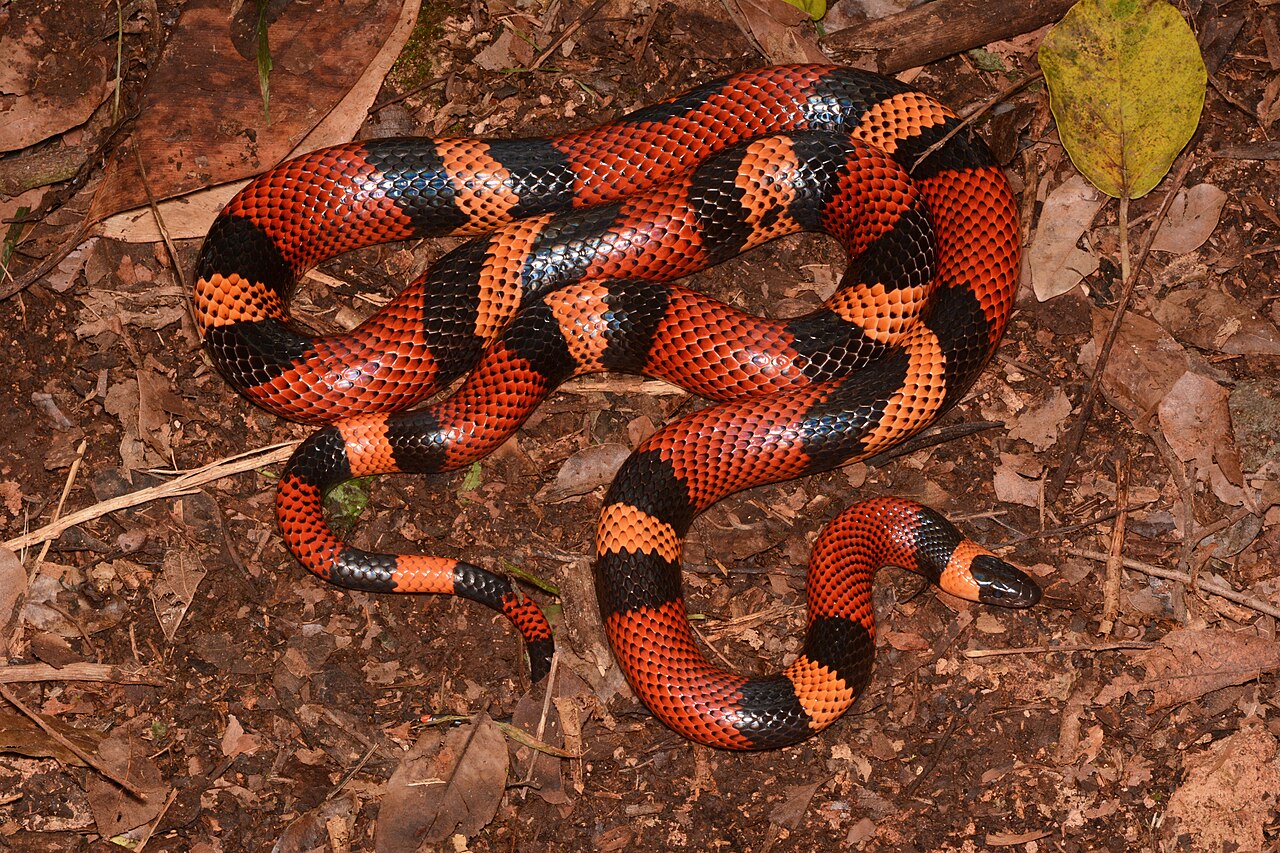
Photo: Amdubois, CC BY-SA 4.0
Snake
Beginner
Lampropeltis abnorma
Lifespan
15-20+ years
Adult size
100-150 cm
Temperament
Nervous and musky when young, calms with handling
Temperature
20–30°C
Humidity
50–70%
Vivarium
120 x 60 x 60 cm (adult)
Wikipedia →
Native to the Caribbean lowlands of Honduras and Nicaragua and north-eastern Costa Rica, in tropical forest at low to middle elevations. One of the largest milk snakes, banded red, black and yellow (orange in the 'tangerine' phase), mimicking venomous coral snakes. Keepers like its vivid colours, hardiness and strong appetite. Hatchlings are flighty and musky, but most settle with regular handling.
Care information is provided for educational purposes only and does not replace professional veterinary advice.
🔥 Heating
Heat one end with halogen lamps or a heat mat on a thermostat, giving a basking surface of 29-32 °C and a cool end of 21-26 °C. Keep nights above about 20 °C, using a ceramic heater or radiant panel on a thermostat if the room gets colder.
💡 Lighting
A 12-hour day and night cycle, or longer days in summer and shorter in winter. Low-output UVB giving a UVI of about 1-3 at the basking spot is recommended but not essential.
🪨 Substrate
A topsoil, coir and sand mix or coconut husk, about 10 cm deep so it can burrow. Aspen can be used but moulds quickly if kept damp.
🍽 Feeding
Frozen-thawed mice, moving to small rats for large adults, no wider than 1.5 times the snake's widest point. Hatchlings every 5-7 days, juveniles every 7-10 days and adults every 10-14 days. Strong feeders, so use tongs.
💧 Water
A large water bowl always available, cleaned weekly. Mist lightly and provide a humid hide with damp moss at the cool end, especially before a shed.
🏠 Enrichment
Several snug hides, branches and cork for climbing, leaf litter and plants for cover, and deep substrate for burrowing.
🩺 Health Considerations
Hardy; the main problems are stuck sheds if too dry, respiratory infections if cold and damp, mites and obesity. Milk snakes eat other snakes, so always house them alone.
🤲 Handling
Hatchlings are jumpy and may musk or nip, but adults usually become calm and easy to handle. Handle briefly and often, support the body, and avoid handling for 48 hours after a meal or while in shed. Non-venomous.
⚖️ Legal Restrictions
No licence needed in the UK. It is not CITES-listed and not covered by the Dangerous Wild Animals Act 1976 or any invasive-species restriction.
📋 Additional Notes
Long sold as Lampropeltis triangulum hondurensis; a 2014 revision split the milk snake complex and Reptile Database places it in L. abnorma, although some authors include it in L. polyzona. Colour forms include tricolour, tangerine, hypomelanistic, albino, ghost and snow. Males have longer, thicker tails; probe to confirm sex.