
← Species Repository
Giant Prickly Stick Insect
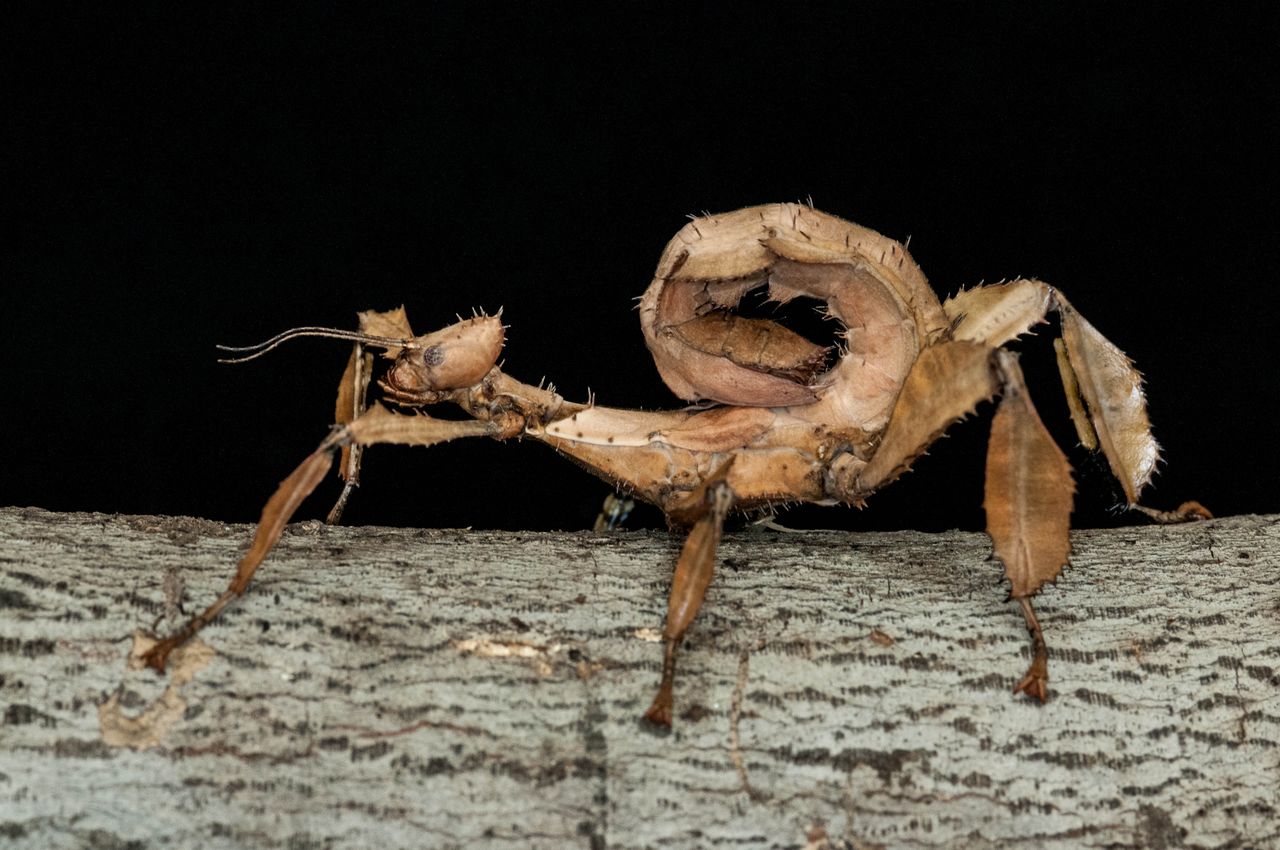
Photo: Rosa Pineda, CC BY-SA 3.0
Other Inverts
Beginner
Extatosoma tiaratum
Lifespan
F about 18 months, M 6-8 months
Adult size
Body F 12-20 cm, M about 11 cm
Temperament
Calm, scorpion-like threat pose
Temperature
17–27°C
Humidity
55–80%
Vivarium
30 x 30 x 60 cm (tall, for two adult females)
Wikipedia →
From the rainforests of eastern Queensland and New South Wales, Australia. Females are heavy, spiny, leaf-like insects up to about 20 cm that curl the abdomen over the back like a scorpion, while males are slim, about 11 cm long and fly well. Keepers love its size, colour variety and calm nature, and it is one of the most popular stick insects in the UK. Spines on the hind legs can prick skin, and adults may release a harmless toffee-scented defensive spray.
Care information is provided for educational purposes only and does not replace professional veterinary advice.
🔥 Heating
Room temperature of about 20-26 °C suits it, staying above about 17-18 °C. Avoid overheating, which causes weak growth, smaller females and misshapen eggs.
💡 Lighting
No UVB needed; normal room light for a day/night cycle.
🪨 Substrate
Paper towel or a thin layer of coco fibre; paper makes it easy to find the eggs, which females flick across the cage.
🍽 Feeding
Bramble at all ages, also eucalyptus, oak, rose, raspberry, hawthorn or pyracantha, with stems in a plugged water pot. Keep fresh leaves available at all times and throw out damp or mouldy eucalyptus, which is dangerous to young nymphs.
💧 Water
Mist lightly two or three times a week for drinking droplets, with enough ventilation that leaves and substrate do not stay wet.
🏠 Enrichment
Plenty of height and branches to hang from when moulting, and mesh sides for airflow.
🩺 Health Considerations
Failed moults in cramped or low enclosures are the main risk, so give enough height for the insect to hang straight down. Mould on old food plants can kill nymphs.
🤲 Handling
Tolerates gentle handling well once used to it; support the body and watch for the spiny hind legs, which can puncture skin. Harmless, with no venom; the defensive spray is rarely used by handled captive animals.
⚖️ Legal Restrictions
No licence needed in the UK; it is not CITES-listed or a GB invasive species of special concern. As a non-native animal it must never be released, nor viable eggs discarded outdoors (Wildlife and Countryside Act 1981, section 14).
📋 Additional Notes
Also called Macleay's spectre or the spiny leaf insect; colours range from brown and green to cream and reddish, and young nymphs mimic ants. Unmated females lay eggs that hatch into females only and can take up to 9 months, against about 4 months for fertilised eggs (the PSG gives 8 months); keep eggs below 25 °C or few will hatch. Adults live about 10-11 months after the final moult.