
← Species Repository
Axolotl
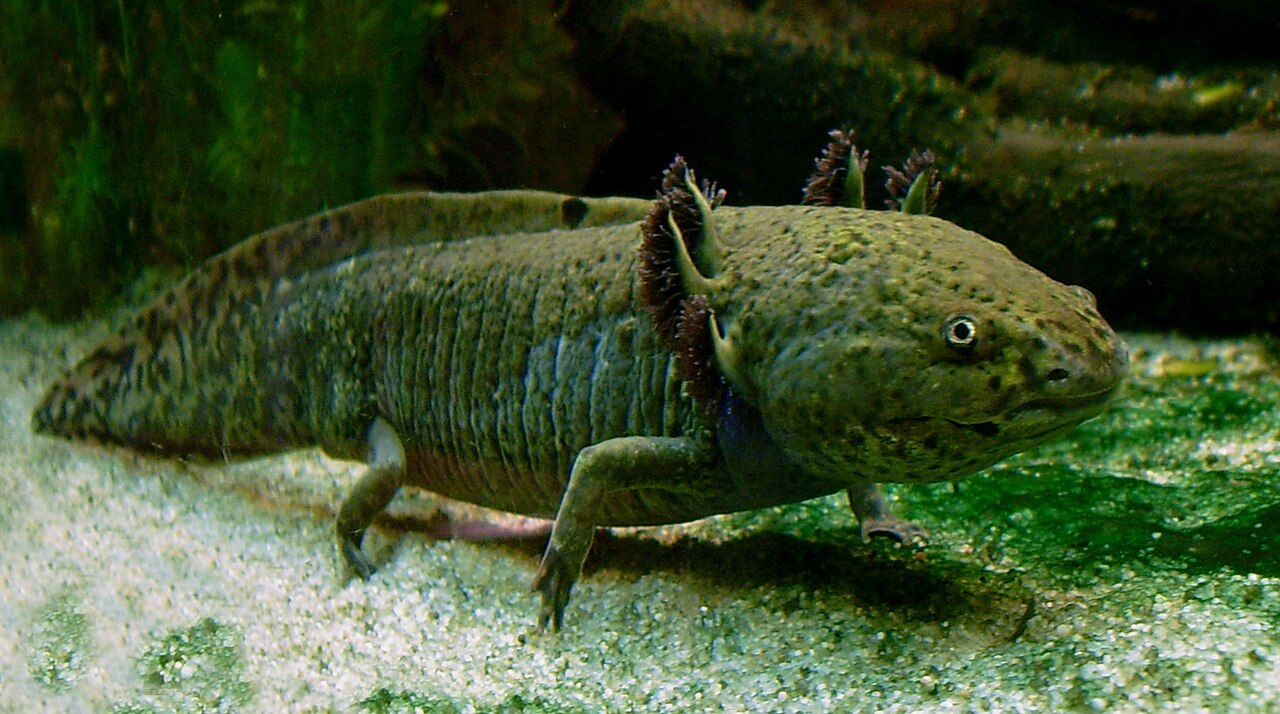
Photo: LoKiLeCh, CC BY-SA 3.0
Amphibian
Intermediate
Ambystoma mexicanum
Lifespan
10-15 years (up to 20+)
Adult size
20-30 cm (rarely 45 cm)
Temperament
Placid and curious; not for handling
Temperature
12–20°C
Vivarium
90 x 30 x 30 cm tank (about 80 L) for one adult
Wikipedia →
Native only to Lake Xochimilco and formerly Lake Chalco near Mexico City, where it is now critically endangered in the wild. A salamander that stays in its larval, fully aquatic form for life (neoteny), keeping its feathery external gills and finned tail, and is bred in wild-type, leucistic, golden albino, melanoid and other colours. Keepers love its permanent smile, its ability to regrow lost limbs and its calm, curious nature. It must be kept in cool, clean, well-cycled water, which is the main challenge in warm UK summers.
Care information is provided for educational purposes only and does not replace professional veterinary advice.
🔥 Heating
No heater is needed: these are WATER temperatures, and axolotls must be kept cool, ideally at 16-18 °C and never above 24 °C, which quickly causes stress, disease and death. In summer keep the tank out of sunlight and away from radiators, and use a fan blowing across the water surface or an aquarium chiller if the water climbs above about 20 °C; below about 10 °C they slow down and eat little.
💡 Lighting
No UVB or basking light is needed. Axolotls are mostly active at night and are sensitive to bright light, UVB and sudden lighting changes, so keep any aquarium light dim, provide shade, and avoid lights that warm the water.
🪨 Substrate
Use a thin layer of fine aquarium sand or a bare-bottomed tank. Never use gravel or any stones small enough to fit in the mouth: axolotls swallow substrate while feeding, and gravel can cause a fatal gut blockage (impaction).
🍽 Feeding
Carnivorous: feed earthworms (the best staple), sinking salmon or trout pellets and bloodworms, with daphnia and small worms for larvae. Feed juveniles daily and adults 2-3 times a week, offering only what is eaten in a few minutes and removing leftovers; avoid feeder fish and food from wild ponds, which can carry parasites and disease.
💧 Water
Cycle the tank for several weeks before adding an axolotl, then keep ammonia and nitrite at zero and nitrate low with weekly 10-20% water changes guided by a test kit, aiming for pH 7.4-7.6 (6.5-8.0 tolerated). Treat all tap water with a dechlorinator that removes chlorine and chloramine, and use gentle filtration (a sponge filter or a spray bar), as strong flow stresses them.
🏠 Enrichment
Provide hides such as caves, pipes and plant pots, plus hardy or artificial plants for shade; many keepers skip live plants as axolotls uproot them. Keep the tank in a quiet, vibration-free spot, and house axolotls singly or with others of the same size, never with fish, which nip the gills.
🩺 Health Considerations
Warning signs of stress are forward-curled gills, a curled tail tip and loss of appetite, usually from warm water, strong flow or poor water quality. Common problems are ammonia or nitrite poisoning in uncycled tanks, gravel impaction, fungal infections (white cotton-like growths) and bacterial infections such as red leg; many aquarium medicines are toxic to amphibians, so treat only on expert advice and keep sick animals in cool, clean water.
🤲 Handling
Avoid handling: the skin is delicate and easily damaged by toxins or rough contact. Move it with a soft net or a container, never by hand unless essential. Bites are harmless, as the teeth rarely break human skin.
⚖️ Legal Restrictions
No licence needed in the UK. It is not on the Dangerous Wild Animals Act 1976 schedule or the GB invasive species list. Because the wild population is critically endangered it is on CITES Appendix II (Annex B of the UK wildlife trade regulations), so no Article 10 certificate is needed to keep or sell captive-bred axolotls, but keep proof of legal origin such as a breeder's receipt.
📋 Additional Notes
Axolotls stay aquatic for life and only very rarely change into a land-living salamander, so never try to force metamorphosis. Sexually mature males have a swollen cloaca and slimmer bodies, while females are rounder. Common colour forms include wild type, leucistic (pink with dark eyes), white and golden albino, melanoid and axanthic; young axolotls can be cannibalistic, so keep different sizes apart.