
← Species Repository
Shiny Burrowing Scorpion
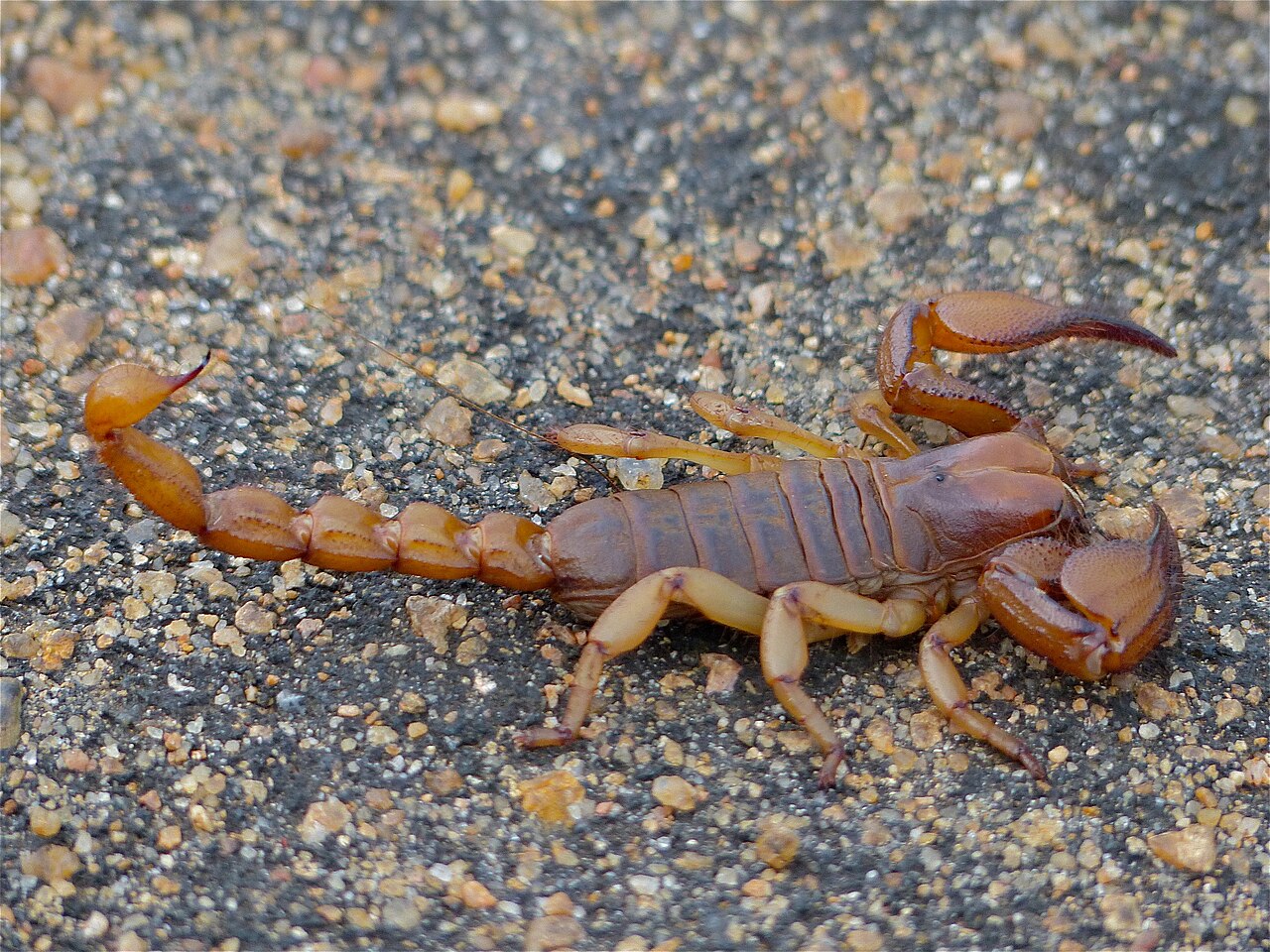
Photo: Bernard Dupont from France, CC BY-SA 2.0
Scorpion
Intermediate
Opistophthalmus glabrifrons
Lifespan
Poorly recorded; slow-growing
Adult size
Body 9-15 cm (sources vary)
Temperament
Defensive, hisses and stings readily
Temperature
20–30°C
Humidity
35–60%
Vivarium
40 x 25 x 30 cm (deep substrate)
Wikipedia →
A heavy-bodied burrowing scorpion from dry savanna in southern and eastern Africa, including South Africa, Botswana, Zimbabwe, Mozambique and Tanzania. It is glossy dark brown with yellowish legs, tail and claws, and adults reach 9-15 cm depending on the source. Keepers like its colours and the loud hissing (stridulation) it makes when disturbed. It stings readily and pinches hard, but its venom is not considered medically significant for healthy people.
Care information is provided for educational purposes only and does not replace professional veterinary advice.
🔥 Heating
Use a heat mat on one side wall run on a thermostat, giving about 27-30°C at the warm end and room temperature at the cool end, with a night drop.
💡 Lighting
No UVB needed. It is nocturnal and an obligate burrower, so expect to see little of it.
🪨 Substrate
At least 12-15 cm of firm, burrowable sand mixed with clay or soil, compacted while slightly damp and allowed to dry on top. Avoid loose sand, which collapses burrows.
🍽 Feeding
Juveniles weekly on small crickets or roach nymphs; adults 2-3 prey items every 7-14 days, with leftovers removed.
💧 Water
Provide a shallow water dish, and moisten one corner of the substrate now and then while keeping the rest dry.
🏠 Enrichment
Place a flat stone or piece of cork on the surface for it to dig under, as wild burrows usually start beneath a rock.
🩺 Health Considerations
Stagnant humidity causes mycosis, and very dry substrate with no moist layer can cause moulting problems. It grows slowly, so feed moderately.
🤲 Handling
Hands-off is recommended: it stings readily and the claws give a painful pinch. Venom data are limited; it is not regarded as medically significant for healthy people, but stings are painful and allergic reactions are possible.
⚖️ Legal Restrictions
No licence needed in the UK. It is in the Scorpionidae, not the Buthidae, so it is not covered by the Dangerous Wild Animals Act 1976 schedule (which lists scorpions only as 'Family Buthidae: All species' and Hemiscorpius lepturus); it is not CITES-listed and not on the GB invasive species list.
📋 Additional Notes
Also called the yellow-legged burrowing or creeping scorpion. Males have longer, thicker tails and more elongated claws than females. Do not confuse it with Opisthacanthus, a different genus with a similar name; other Opistophthalmus species are sold as 'tri-colour' scorpions and are often mislabelled.