
← Species Repository
Spotted Python
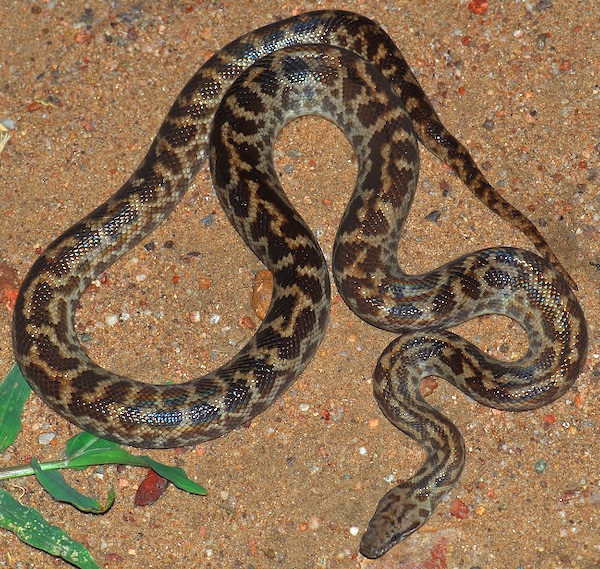
Photo: Stewart Macdonald, CC BY-SA 2.5
Snake
Beginner
Antaresia maculosa
Lifespan
20-30 years
Adult size
90-140 cm
Temperament
Docile; hatchlings can be defensive
Temperature
20–32°C
Humidity
20–80%
Vivarium
90 x 45 x 45 cm (adult); larger for active males
Wikipedia →
Native to eastern Queensland, northern New South Wales and southern Papua New Guinea, favouring rocky hillsides and outcrops with caves and crevices. The largest Antaresia, a slim python with ragged dark blotches on a pale brown background that it keeps for life. It is popular for its small size, calm temperament, reliable feeding and easy care, and is often recommended as a first python.
Care information is provided for educational purposes only and does not replace professional veterinary advice.
🔥 Heating
Use halogen lamps on a thermostat, plus a heat mat under the warm hide if wanted, giving a basking surface and warm hide of about 32 °C and a cool end of 26-29 °C. Heating can go off at night if temperatures stay above about 20 °C.
💡 Lighting
A 12-hour day and night cycle. Low-output UVB (about 6% T5 or a ShadeDweller-type unit) giving a UVI of 2-3 at the basking spot is recommended.
🪨 Substrate
Aspen, coconut husk, play sand or a sandy soil and clay mix, about 5-8 cm deep. Paper and carpet are best kept for quarantine only.
🍽 Feeding
Frozen-thawed mice about 10% of body weight, or 1-1.5 times the snake's widest point. Juveniles every 7-10 days and adults every 10-21 days; juveniles naturally favour lizards and frogs, and variety (rats, quail, chicks) is good for adults.
💧 Water
A small, clean bowl of fresh water always available and scrubbed weekly. Provide a humid hide with damp moss; general misting is rarely needed.
🏠 Enrichment
Several snug hides including a raised 'sky hide' (popular with juveniles), cork, sturdy branches and firmly fixed rock stacks to climb.
🩺 Health Considerations
Hardy; stuck sheds usually point to incorrect temperatures. Watch for mites, respiratory infections and obesity, and expect breeding males to fast for a few weeks.
🤲 Handling
Usually docile; hatchlings may strike or hide their heads but tame quickly with short, regular sessions. Lift from below, support the body and avoid handling for 48 hours after feeding. Non-venomous.
⚖️ Legal Restrictions
No Dangerous Wild Animals licence needed in the UK. It is CITES Appendix II (UK Annex B): keep proof of captive-bred origin; no certificate is needed for captive-bred pets.
📋 Additional Notes
Also called the eastern small-blotched python. Males have longer tails and bigger spurs; probe to confirm sex. Captive morphs include albino, leucistic, ebony, melanistic and piebald.