
← Species Repository
Venezuelan Suntiger
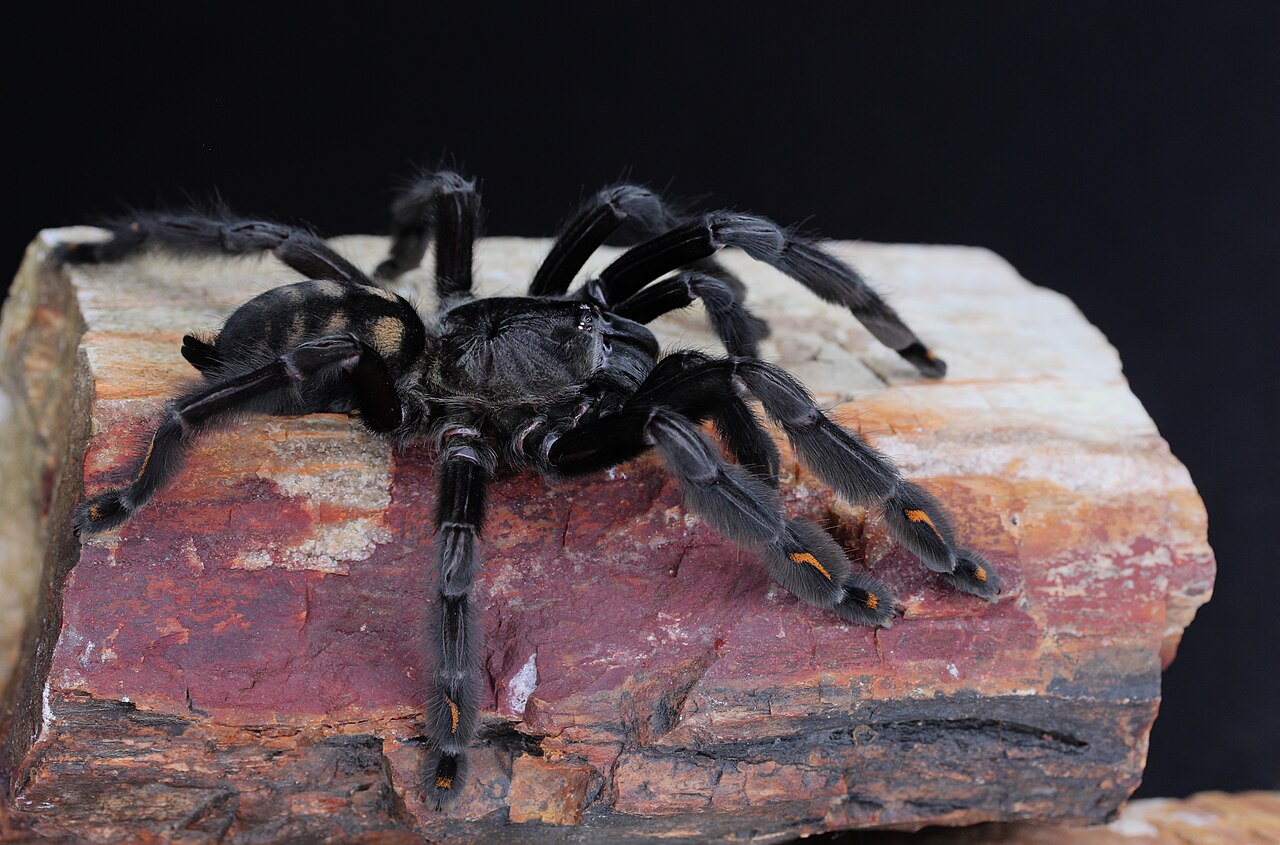
Photo: Quengsalinas, CC BY-SA 4.0
Spider
Advanced
Psalmopoeus irminia
Lifespan
F 10-12 years, M 3-4 years
Adult size
DLS 13-15 cm
Temperament
Very fast, skittish and defensive
Temperature
20–28°C
Humidity
60–80%
Vivarium
30 x 30 x 45 cm (arboreal adult)
Wikipedia →
An arboreal New World tarantula from Venezuela, Guyana and northern Brazil that builds webbed retreats in crevices and holes above the ground. Females are velvety black with bright orange markings on the legs and abdomen, making it one of the most colourful display species, and it grows quickly and feeds eagerly. It has no urticating hairs, so it bolts or bites instead, and its venom is reported to be stronger than that of most New World tarantulas.
Care information is provided for educational purposes only and does not replace professional veterinary advice.
🔥 Heating
Room temperature of about 20-26°C suits it in most UK homes. If extra heat is needed, use a heat mat on the side of the enclosure on a thermostat, never underneath. No basking spot is needed.
💡 Lighting
No UVB or special lighting is needed. A normal room day and night cycle is enough, and keep the enclosure out of direct sunlight, which can overheat it quickly.
🪨 Substrate
Around 5-8 cm of coco fibre or a soil mix, kept slightly moist in the lower layer. Slings often burrow before they move up, so give them generous depth for their size.
🍽 Feeding
Feed slings small crickets or roach nymphs twice a week, juveniles every 7-10 days and adults several large crickets or a large roach every 1-3 weeks. It is a voracious feeder but refuses food in premoult, so wait about a week after a moult and remove uneaten prey within 24 hours.
💧 Water
Provide a water dish and occasionally dribble water onto the webbing or mist one side of the enclosure. Keep part of the substrate moist, especially for slings, while keeping good ventilation.
🏠 Enrichment
Give a vertical cork bark slab or tube as a retreat, with sphagnum moss or artificial plants as web anchors. Leave open height above the substrate for it to build its silk retreat.
🩺 Health Considerations
Stagnant, humid air leads to mould and moulting problems, so tall enclosures need good cross ventilation. Escapes during rehousing and maintenance are the biggest danger because of its speed.
🤲 Handling
Do not handle. It has no urticating hairs but is extremely fast, can bolt and jump, and will bite when cornered, and bites are painful with venom reported as stronger than most New World species (hobby reports describe cramps, nausea and dizziness). Use tongs, a catch cup and a second container whenever the enclosure is open.
⚖️ Legal Restrictions
No licence needed in the UK. Tarantulas are not on the Dangerous Wild Animals Act 1976 schedule (as modified in 2007), and this species is not CITES-listed, not in the Wildlife Trade Regulations annexes and not on the UK invasive species lists.
📋 Additional Notes
Mature males turn grey to grey-brown and keep orange marks only on the feet, while females keep their black and orange colours. Growth is fast: females can mature in about 18 months to 3 years and males slightly earlier, so sex from moulted skins early on. It breeds readily in captivity.