
← Species Repository
Brazilian Salmon Pink Birdeater
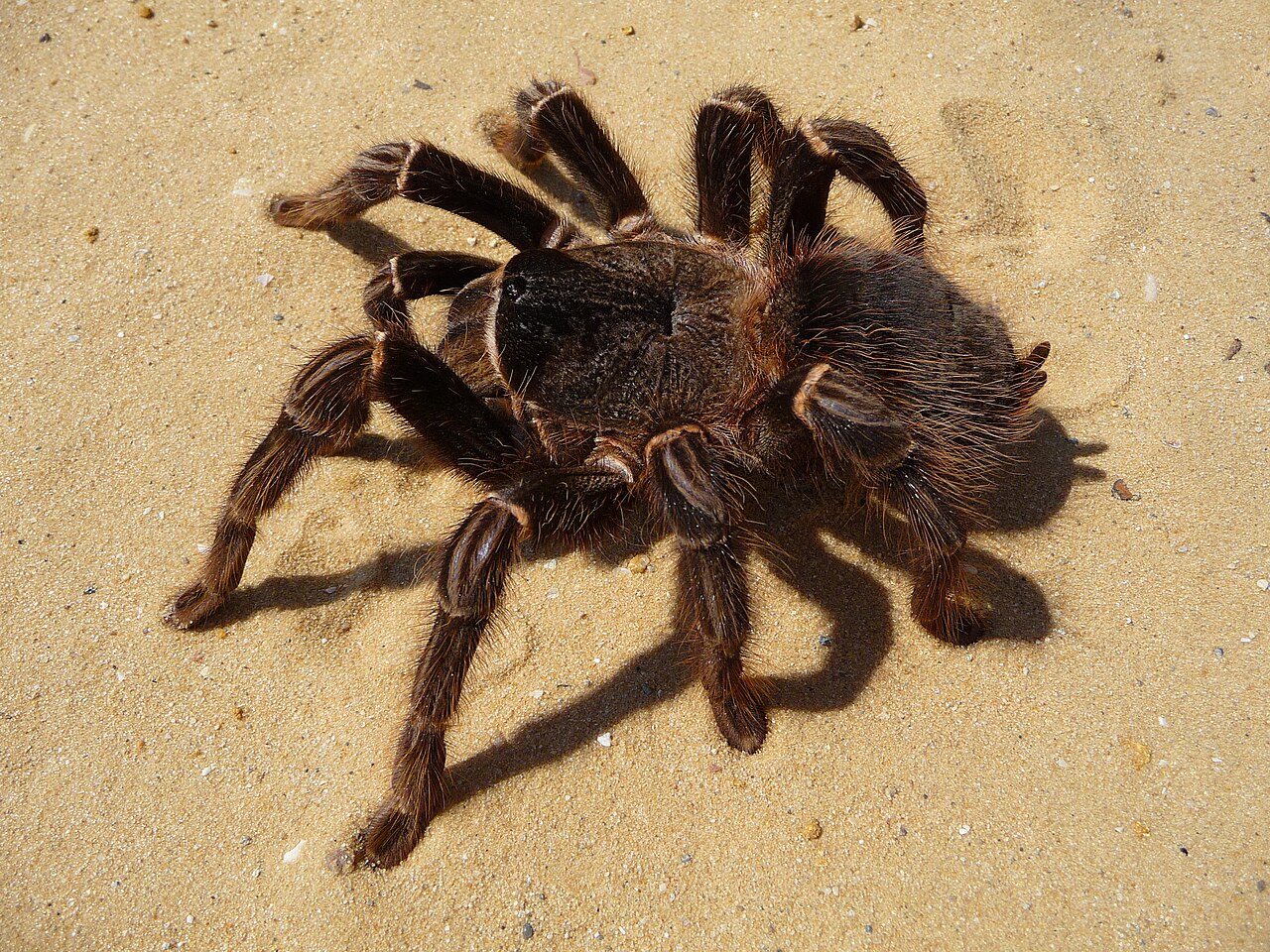
Photo: George Chernilevsky, public domain
Spider
Beginner
Lasiodora parahybana
Lifespan
F 12-15 years, M 3-5 years
Adult size
DLS 20-25 cm (up to 28 cm)
Temperament
Bold, usually tolerant, kicks hairs readily
Temperature
20–28°C
Humidity
55–75%
Vivarium
60 x 45 x 30 cm (terrestrial adult, low to limit falls)
Wikipedia →
One of the largest tarantulas in the world, endemic to the Atlantic forest region of north-eastern Brazil, where it lives on the forest floor among leaf litter, logs and burrows. It is black with long salmon-pink hairs on the legs, chelicerae and abdomen, and heavy-bodied females can weigh over 100 g. Keepers like its huge size, fast growth, hardiness and big appetite, but its urticating hairs are notoriously irritating and even a short fall can rupture its heavy abdomen.
Care information is provided for educational purposes only and does not replace professional veterinary advice.
🔥 Heating
Room temperature of about 20-26°C suits it in most UK homes. If extra heat is needed, use a heat mat on one side of the enclosure (never underneath, where a burrowing spider can overheat) controlled by a thermostat. No basking surface is needed.
💡 Lighting
No UVB or special lighting is needed. Keep the enclosure in a room with a normal day and night light cycle and out of direct sunlight.
🪨 Substrate
10-15 cm of coco fibre or topsoil, slightly damp in the lower layers and drier on top, as slings and juveniles will burrow. Fill the enclosure so the climbing height above the substrate is no more than about the spider's leg span, because this heavy species can be killed by a short fall.
🍽 Feeding
Feed slings twice a week and juveniles every 7-10 days on crickets, roaches or locusts sized to their body, and adults several large insects every 1-3 weeks. Do not overfeed, as a swollen abdomen makes a fall more dangerous. Expect refusals in premoult, wait at least a week after a moult and remove uneaten prey within 24 hours.
💧 Water
Always provide a wide, shallow water dish, and occasionally overflow it into one corner to keep the lower substrate slightly damp. Misting is not needed.
🏠 Enrichment
Give a large cork bark hide or half-log with a starter burrow dug beneath it in deep substrate. Keep decor low and stable so it cannot climb high and fall.
🩺 Health Considerations
Falls are the main danger for this heavy species, so keep enclosures low and avoid handling. Also watch for dehydration, stuck moults (it moults on its back, so do not disturb it), mould or mites in substrate kept too wet, nematodes (white discharge around the mouthparts) and DKS (jerky, uncoordinated movement), for which no reliable treatment is known.
🤲 Handling
Hands-off is recommended. It readily kicks urticating hairs that are notoriously irritating, causing itchy rashes on skin and painful inflammation if they reach the eyes, so wear gloves and eye protection when working in the enclosure and wash your hands afterwards. Its venom is weak and not medically significant, but its fangs can be up to about 2.5 cm long, so a bite would be very painful.
⚖️ Legal Restrictions
No licence needed in the UK. It is not listed under CITES or the UK Wildlife Trade Regulations, is not on the Dangerous Wild Animals Act schedule and is not an invasive species.
📋 Additional Notes
Often called the LP, it was described by Mello-Leitão in 1917. It is very fast-growing and has types I and III urticating hairs. Mature males are leggier, slimmer and more vividly coloured, with palpal bulbs and tibial hooks, and live only a short time after maturing, so sex juveniles from a moult.