
← Species Repository
Pinktoe Tarantula
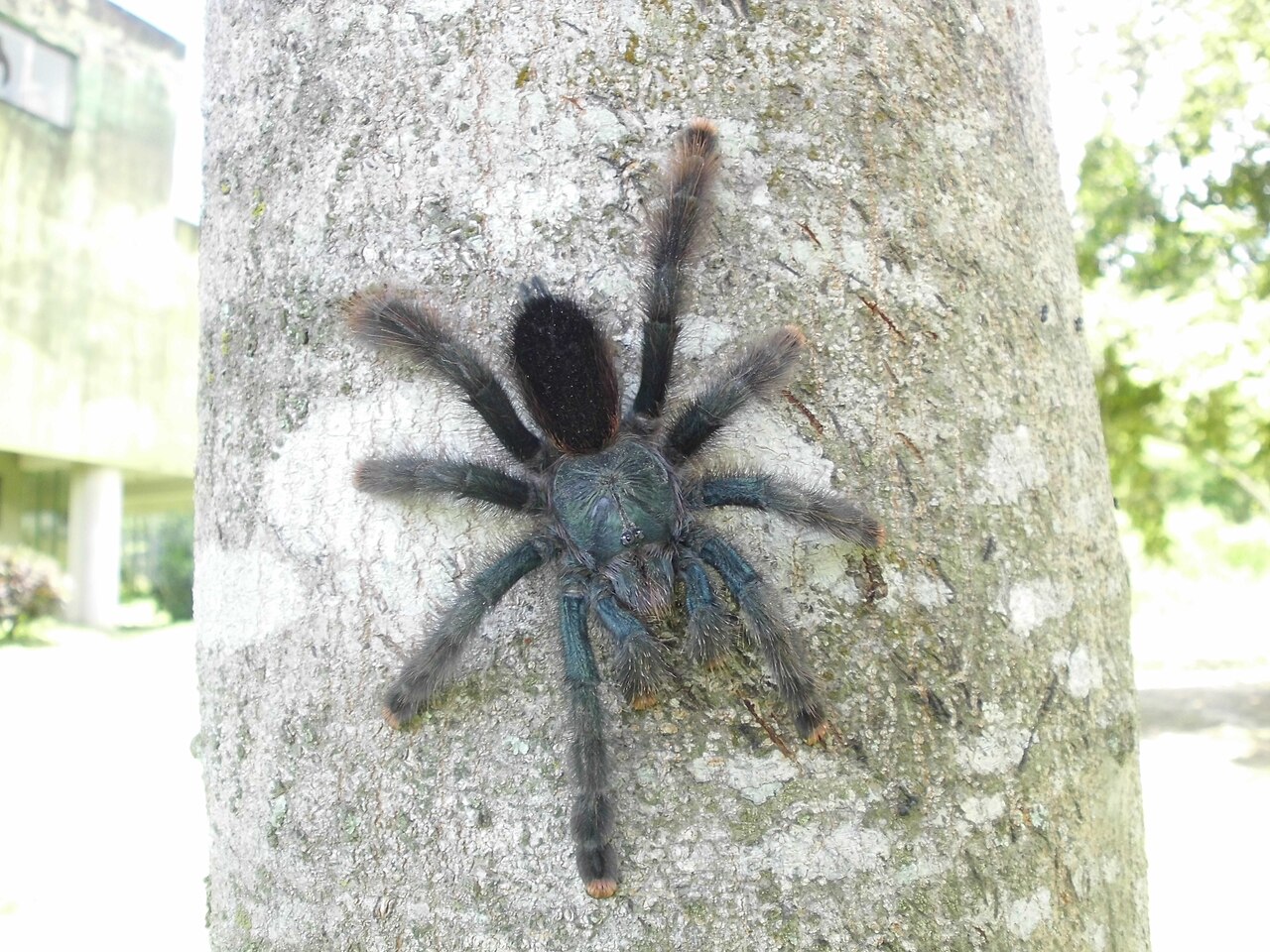
Photo: Luis Alejandro Cisneros, CC BY-SA 3.0
Spider
Beginner
Avicularia avicularia
Lifespan
F 6-12 years, M 2-4 years
Adult size
DLS 12-15 cm
Temperament
Docile but fast and jumpy
Temperature
20–28°C
Humidity
55–75%
Vivarium
30 x 30 x 45 cm (arboreal adult, cross-ventilated)
Wikipedia →
A tree-dwelling tarantula from the humid rainforests of northern South America and Trinidad and Tobago, including Venezuela, the Guianas, Brazil, Peru and Bolivia, where adults web retreats in the mid to upper canopy. Adults are dark, almost black, with a sheen and contrasting pink to orange toe tips, while slings are pinkish with dark feet. It is a classic first arboreal tarantula because it is calm, hardy and rarely defensive, but it is fast, jumps and does badly in stuffy, wet enclosures.
Care information is provided for educational purposes only and does not replace professional veterinary advice.
🔥 Heating
Normal UK room temperature of about 20-26°C is usually enough. If the room regularly drops below 20°C, fit a small heat mat to one side of the enclosure (never underneath) controlled by a thermostat. No basking surface is needed.
💡 Lighting
No UVB or special lighting is needed. Keep the enclosure in a room with a normal day and night light cycle and out of direct sunlight, which can overheat it quickly.
🪨 Substrate
5-8 cm of coco fibre or plain topsoil, kept mostly dry, with the rest of the height left for climbing and webbing. A lightly damp corner is enough for slings.
🍽 Feeding
Feed slings small crickets or roach nymphs twice a week, juveniles every 7-10 days and adults a few large crickets or roaches every 1-3 weeks. Expect refusals in premoult, wait about a week after a moult before feeding and remove uneaten prey within 24 hours.
💧 Water
Keep a shallow water dish on the floor and, for adults, a second small dish higher up. Lightly mist the webbing or one side about once a week rather than soaking the enclosure, and let it dry out in between.
🏠 Enrichment
A vertical cork tube or bark slab with artificial plants and branches near the top gives anchor points for its web tunnels and hammocks. A front-opening enclosure lets you work without destroying the upper retreat.
🩺 Health Considerations
The main killer is stagnant, overly humid air (historically blamed on 'sudden Avicularia death syndrome'), so ensure cross-ventilation low and high and keep the substrate mostly dry. Also watch for dehydration, stuck moults, abdomen injuries from falls, mould, mites, nematodes (white discharge around the mouthparts) and DKS (jerky, uncoordinated movement), for which no reliable treatment is known.
🤲 Handling
Handling is not recommended, as it is fast, jumps unpredictably and a fall can rupture its abdomen. It does not flick urticating hairs, but its hairs can irritate skin on contact and it may squirt faeces at a perceived threat, and its bite is painful but medically insignificant. Use a soft brush and a catch cup for rehousing.
⚖️ Legal Restrictions
No licence needed in the UK. It is not listed under CITES or the UK Wildlife Trade Regulations, is not on the Dangerous Wild Animals Act schedule and is not an invasive species, so no paperwork is needed to keep or sell it.
📋 Additional Notes
Fukushima and Bertani (2017) revised the genus, recognised several colour forms (morphotypes) within A. avicularia and sank names such as A. velutina into it, and the trade name A. metallica is now treated as doubtful, so many pinktoes sold under either name are of uncertain form or locality. Growth is medium to fast. Mature males are slimmer and leggier with palpal bulbs, but tibial hooks may be indistinct, so sexing from a moult is the most reliable method.