
← Species Repository
Royal Python
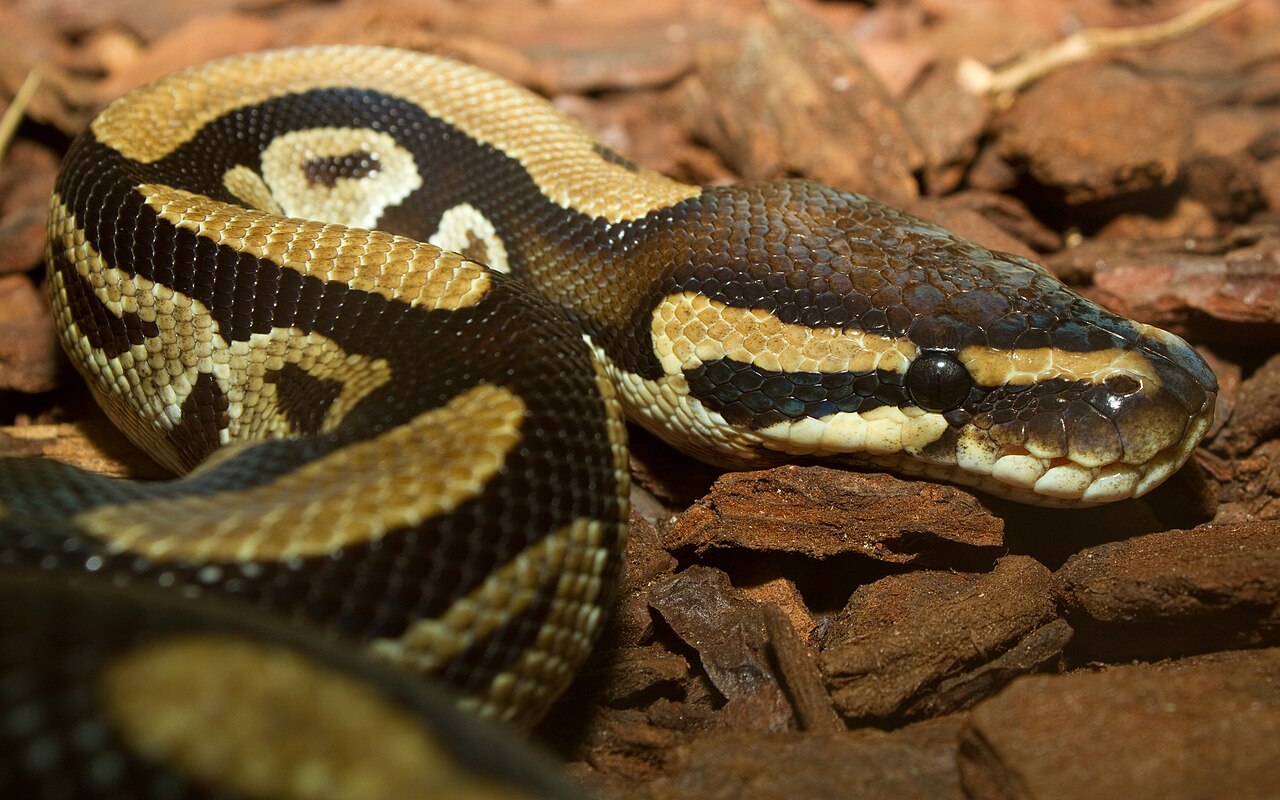
Photo: Brian Gratwicke, CC BY 2.0
Snake
Beginner
Python regius
Lifespan
20-30 years (record 62)
Adult size
100-150 cm (females larger)
Temperament
Shy and docile, curls into a ball when stressed
Temperature
21–32°C
Humidity
50–80%
Vivarium
120 x 60 x 60 cm (adult)
Wikipedia →
Native to West and Central Africa, from Senegal to Sudan and Uganda, where it lives in grassland, savanna and farmland and spends much of its time in burrows. A stocky python with a small head, dark brown with light brown blotches in the wild form, and bred in thousands of colour morphs. Its modest size, calm nature and habit of balling up rather than biting make it the most popular python in the UK. Some individuals refuse food for weeks or months, which worries new keepers but is often normal.
Care information is provided for educational purposes only and does not replace professional veterinary advice.
🔥 Heating
Heat one end with a guarded ceramic heater, halogen lamp or radiant panel on a thermostat; a heat mat on a thermostat can warm the hide. Aim for a warm hide of 30-32 °C (basking surface up to about 35 °C), a cool end of 22-27 °C and nights no lower than 21 °C. Air should never exceed 35 °C.
💡 Lighting
A 12-hour day and night cycle, fully dark at night. UVB is beneficial but not essential; if used, choose a low-output (Ferguson zone 1-2) T5 tube giving a UVI of up to about 2-3 at the basking spot.
🪨 Substrate
A humidity-holding substrate such as coconut husk chips, coir or a topsoil, coir and sand mix, about 5-10 cm deep, with sphagnum moss in the humid hide. Avoid pine and cedar; aspen goes mouldy in humid set-ups.
🍽 Feeding
Frozen-thawed mice or rats weighing about 10-15% of the snake's weight. Hatchlings and juveniles eat every 7-10 days and adults every 2-6 weeks depending on body condition; multimammate mice or rat pups can tempt fussy feeders. Weigh monthly: fasting is only a concern if it loses more than about 10% of its weight or looks unwell.
💧 Water
Provide a large, heavy bowl the snake can soak in, refreshed every 2-3 days or when soiled. Mist lightly and keep damp moss in a hide to hold humidity up, especially before a shed, but never let the substrate become waterlogged.
🏠 Enrichment
At least two tight-fitting hides, one at each end, plus cork bark, low branches and plenty of foliage cover. Royals feel insecure in open, bare vivaria and may stop feeding.
🩺 Health Considerations
Watch for stuck sheds (especially eye caps and tail tip), respiratory infections (wheezing or mucus), mites, obesity and burns from unguarded heaters. The spider gene is linked to a 'wobble' (head tremor and poor coordination), and inclusion body disease and nidovirus affect pythons, so quarantine new arrivals.
🤲 Handling
Usually very tolerant of handling, though hatchlings can be defensive at first. Wait two weeks or until it is eating regularly, handle 1-2 times a week, support the body with both hands and avoid handling for 48 hours after a meal or while in shed. Non-venomous; bites are uncommon and minor.
⚖️ Legal Restrictions
No Dangerous Wild Animals licence needed in the UK. It is CITES Appendix II (Annex B of the UK wildlife trade regulations): no certificate is needed to keep or sell captive-bred animals, but keep proof of legal, captive-bred origin.
📋 Additional Notes
Also called the ball python. Females are usually larger; sex by probing or popping. Morphs include pastel, albino, piebald, clown, banana, mojave, lesser, enchi, axanthic and countless combinations; the International Herpetological Society banned the sale of spider morphs at its events from 2018 because of the wobble.