
← Species Repository
Antilles Pinktoe Tarantula
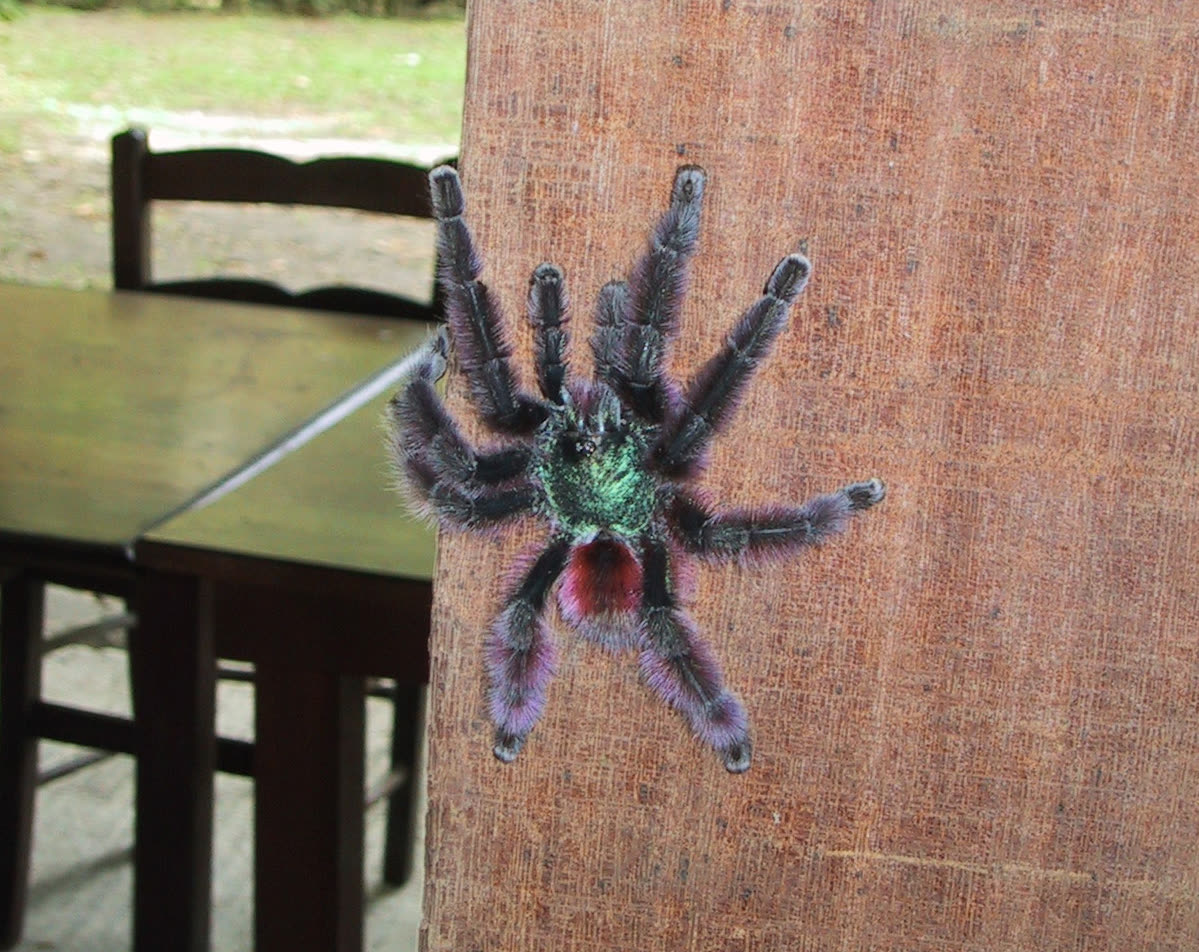
Photo: Graphicos, CC BY-SA 3.0
Spider
Intermediate
Caribena versicolor
Lifespan
F 10-12 years, M 3-4 years
Adult size
DLS 12-15 cm
Temperament
Docile but skittish and prone to jumping
Temperature
20–28°C
Humidity
55–75%
Vivarium
30 x 30 x 45 cm (arboreal adult, cross-ventilated)
Wikipedia →
An arboreal tarantula endemic to the Caribbean island of Martinique, where it spins silk retreats in trees, shrubs and banana plantations. Spiderlings are bright metallic blue with a dark pattern on the abdomen and change to a green carapace, red abdomen and green legs with pink tips and purple hairs as they mature, making it one of the most colourful tarantulas kept. Keepers love its looks and generally calm nature, but slings are delicate and the species dies quickly in stuffy, wet, poorly ventilated enclosures.
Care information is provided for educational purposes only and does not replace professional veterinary advice.
🔥 Heating
Normal UK room temperature of about 20-26°C is usually enough. If the room regularly drops below 20°C, fit a small heat mat to one side of the enclosure (never underneath) controlled by a thermostat. No basking surface is needed.
💡 Lighting
No UVB or special lighting is needed. Keep the enclosure in a room with a normal day and night light cycle and out of direct sunlight, which can overheat it quickly.
🪨 Substrate
5-8 cm of coco fibre or plain topsoil, kept mostly dry, with a lightly damp corner for slings. It spends little time on the floor, so the substrate mainly holds moisture around the water dish and catches dropped prey.
🍽 Feeding
Feed slings small crickets, roach nymphs or pre-killed prey twice a week, juveniles every 7-10 days and adults one to three suitably sized crickets or roaches every 1-3 weeks, placed near the web entrance. Expect refusals in premoult, wait about a week after a moult before feeding and remove uneaten prey within 24 hours.
💧 Water
Provide a shallow water dish on the floor and, for adults, a second small dish higher up. Rather than heavy misting, lightly spray or dribble water onto the webbing about once a week so it can drink, and let the enclosure dry out in between, as condensation on the walls means it is too wet.
🏠 Enrichment
Provide a tall cork bark slab or cork tube against one side, plus artificial plants or branches reaching the top as anchor points for its silk retreat. A front-opening enclosure lets you feed and clean without tearing down the web.
🩺 Health Considerations
The main killer is stagnant, overly humid air (historically blamed on 'sudden Avicularia death syndrome'), so ensure cross-ventilation low and high and keep the substrate mostly dry. Also watch for dehydration (shrivelled abdomen), stuck moults, falls, mould, mites, nematodes (white discharge around the mouthparts) and DKS (jerky, uncoordinated movement), for which no reliable treatment is known.
🤲 Handling
Handling is not recommended, as it is fast, jumps when startled and can be badly injured by a fall. It does not usually flick urticating hairs like terrestrial species, but its hairs can irritate skin on contact, it may squirt faeces when disturbed, and its bite is painful but medically insignificant. Use a soft brush and a catch cup for rehousing.
⚖️ Legal Restrictions
No Dangerous Wild Animals Act licence is needed and it is not on any UK invasive species list. Since 23 February 2023 it has been in Annex C of the UK Wildlife Trade Regulations (CITES Appendix III, listed by the EU for Martinique), so captive-bred animals can be kept and sold within the UK without paperwork, but imports into the UK need an import notification and those from the EU also need an EU export permit.
📋 Additional Notes
Formerly Avicularia versicolor, moved to the new genus Caribena by Fukushima and Bertani (2017). Growth is moderate to fast and the blue fades to adult colours from roughly 10 cm leg span. Mature males are slimmer, longer-legged and slightly brighter, with palpal bulbs, but tibial hooks are often absent or hard to see, so sexing from a moult is the most reliable method.