
← Species Repository
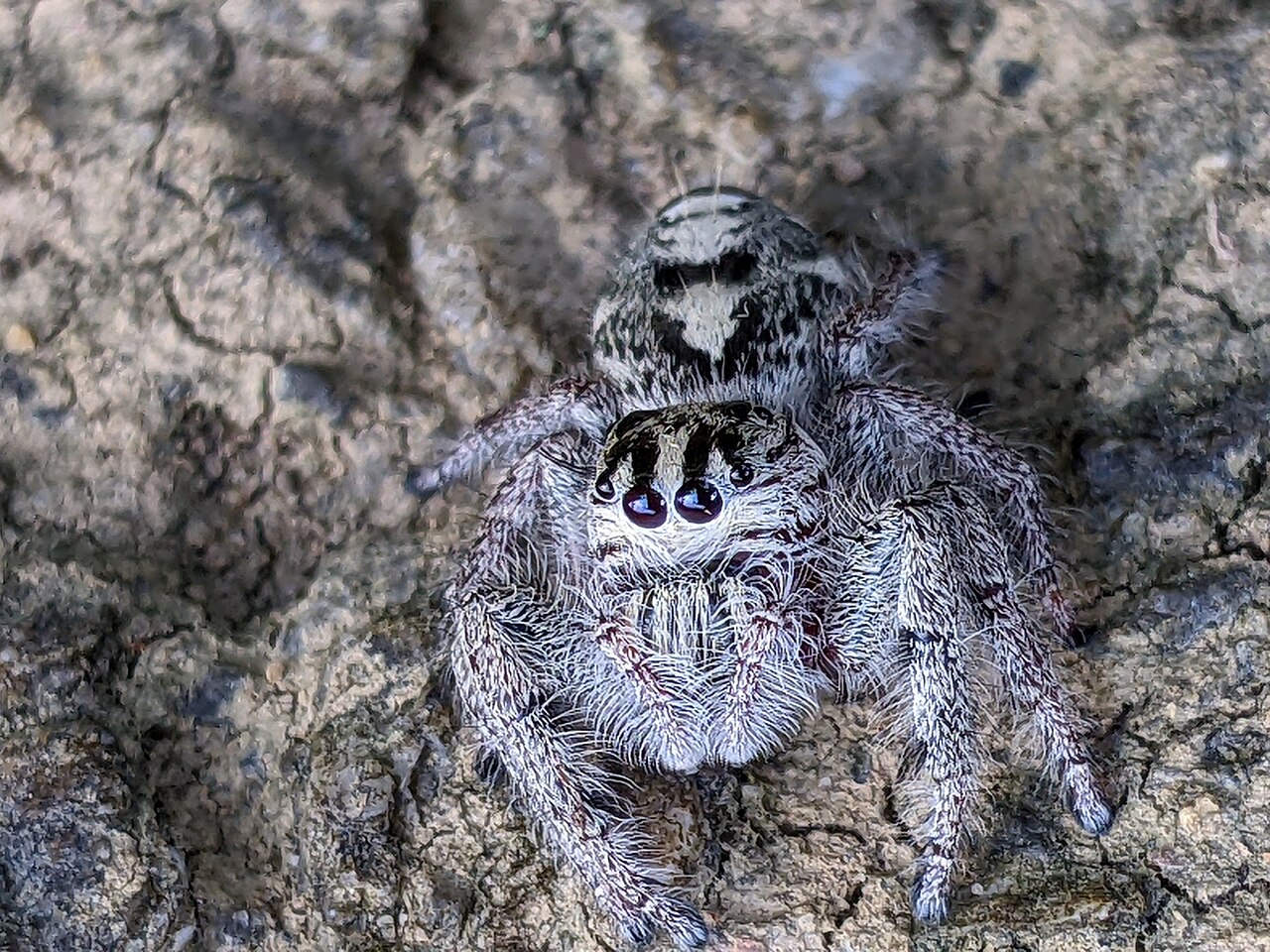
Heavy Jumping Spider
Spider
Intermediate
Hyllus diardi
Lifespan
F 2-3 years, M 1-1.5 years
Adult size
Body 10-20 mm, F larger
Temperament
Bold, fast and reactive
Temperature
22–29°C
Humidity
60–80%
Vivarium
20 x 20 x 30 cm (arboreal, taller than wide)
Wikipedia →
Found across South-East Asia and southern China in forests, gardens and urban areas. A large, heavy-bodied jumping spider in brown, grey and yellow tones with metallic hairs; females have tufts of long dark hairs above the eyes, which gives it the 'eyelash' name. Keepers value its size, boldness and strong hunting response, but it needs warmer and more humid conditions than Phidippus. Its bite is not medically significant.
Care information is provided for educational purposes only and does not replace professional veterinary advice.
🔥 Heating
Needs warmth: aim for 25-28 °C and avoid long spells below 22 °C, which cause lethargy and refusal to feed. Use a heat mat on the side or back wall (never underneath) on a thermostat, or keep it in a warm room.
💡 Lighting
Give a bright 12-hour day from room daylight or an LED light, which also supports live plants. No UVB is needed.
🪨 Substrate
2-5 cm of coco fibre, sphagnum moss or a bioactive tropical mix that holds moisture; avoid sand and gravel.
🍽 Feeding
Spiderlings: fruit flies (Drosophila hydei) every 1-2 days. Juveniles: small crickets or flies every 2-3 days; adults: flies, crickets or small roach nymphs no larger than the abdomen every 3-5 days. Remove leftovers within 24 hours.
💧 Water
Mist the walls and plants lightly every day or two so it can drink droplets, keeping cross-ventilation so the air never becomes stagnant.
🏠 Enrichment
Tall cork bark, branches and live plants with plenty of anchor points near the top for its silk retreat. Keep singly.
🩺 Health Considerations
Humidity below about 60% raises the risk of failed moults, while stagnant wet air quickly causes mould. Leave it undisturbed in its retreat before a moult and for several days afterwards.
🤲 Handling
Bolder, faster and more reactive than Phidippus, so it is a poor choice for frequent handling; if needed, let it walk onto an open hand over a soft surface. The bite is not medically significant but is more noticeable than a Phidippus bite.
⚖️ Legal Restrictions
No licence needed in the UK. It is not on the Dangerous Wild Animals Act 1976 schedule (which lists only Phoneutria, Atrax, Loxosceles and Latrodectus spiders), is not CITES-listed and is not a GB invasive species of special concern. As a non-native animal it must never be released (Wildlife and Countryside Act 1981, section 14).
📋 Additional Notes
Also sold as the eyelash jumping spider or giant jumping spider; Hyllus giganteus is a different species sold under similar names, so check the Latin name. Sexing: males mature a moult or two earlier, are slimmer and show enlarged pedipalps; females are bulkier with wider abdomens. Synonyms include Attus diardi and several Plexippus names (P. mutillarius, P. janthinus).